
 Deutsch
 Русский
 Español
 Français
No products in the cart.

Lash Mapping & Styling, Eyelash Knowledge & Education
Mixing Lash Curls: A Practical Guide for Lash Artists
12
Jul
Jul
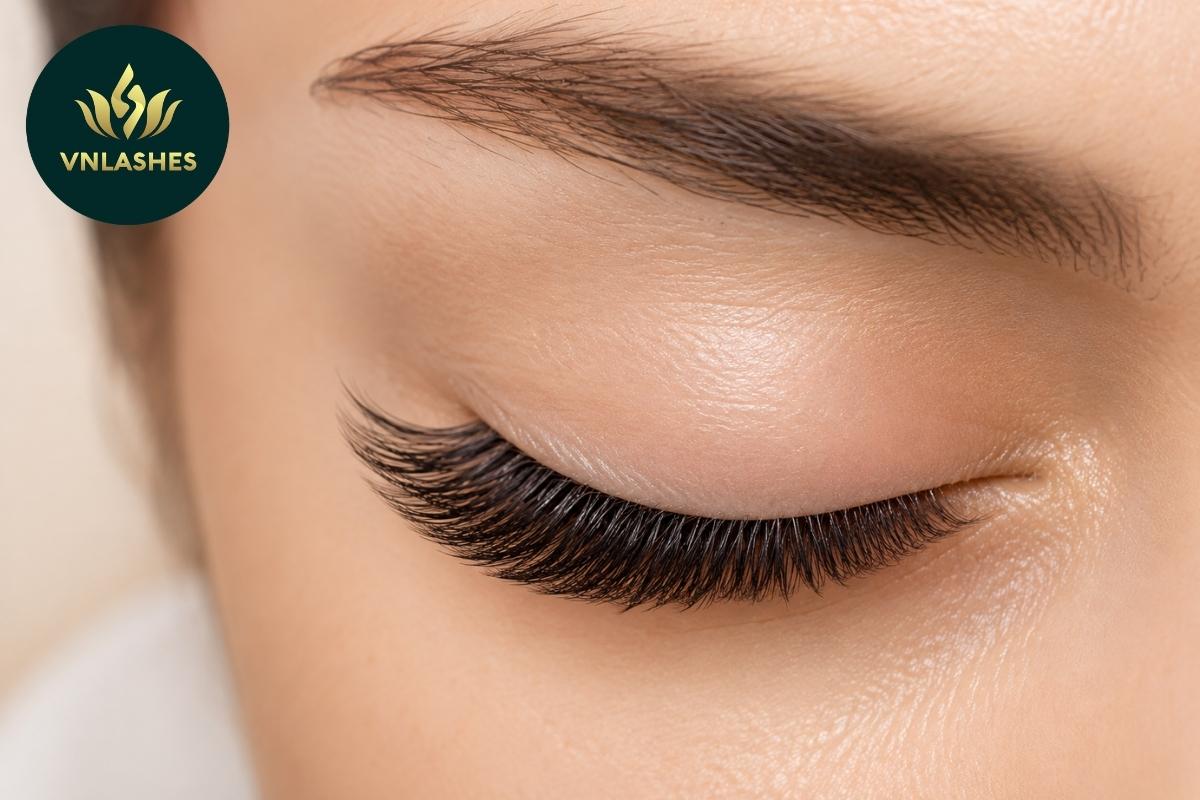
Mixing lash curls helps lash artists create balanced, customized, and professional eyelash extension sets. Instead of using one curl across the entire lash line, artists can combine different curl types to suit the client’s natural lashes, eye shape, and preferred style.
When performed correctly, mixing lash curls creates smoother transitions, improves eye-shape correction, and gives lash artists greater styling flexibility. As an eyelash extension manufacturer and wholesale supplier, VNLASHES produces multiple curl options for professional lash mapping, salon services, training, wholesale distribution, and private label development.
What Is Mixing Lash Curls?
Mixing lash curls is the technique of applying two or more eyelash extension curls within one lash set. The curls may be distributed across different sections of the lash line or used in separate layers to create lift, texture, and dimension.
For example, a lash artist may use a softer curl in the inner corner and gradually introduce a stronger curl toward the center or outer corner.
The purpose of mixing lash curls is not simply to add variety. A successful lash curl combination should create a smooth transition, support the selected lash map, and complement the client’s natural eye structure.
Why Is Mixing Lash Curls Important?
Create a Customized Lash Design
Every client has a different eye shape, eyelid structure, natural lash direction, and preferred result. Mixing lash curls allows lash artists to adjust each design instead of applying the same curl pattern to every client.
A customized curl combination can make the final lash set appear more balanced and better suited to the wearer.
Enhance the Eye Shape
Different eyelash extension curls create different visual effects. Softer curves provide natural definition, while stronger curls can open, lift, or elongate the eyes.
Strategic curl placement may help:
- Lift downturned outer corners
- Open hooded or deep-set eyes
- Elongate round eyes
- Soften the inner corner
- Create a more balanced lash line
Produce a Smoother Transition
Using one dramatic curl from the inner to the outer corner can make a lash set appear stiff. Mixing lash curls creates gradual changes in direction, helping the final set look smoother and more natural.
Expand Styling Options
Mixing different lash curls gives artists more flexibility when creating classic, hybrid, volume, wispy, doll-eye, cat-eye, fox-eye, and eyeliner-effect lash sets.
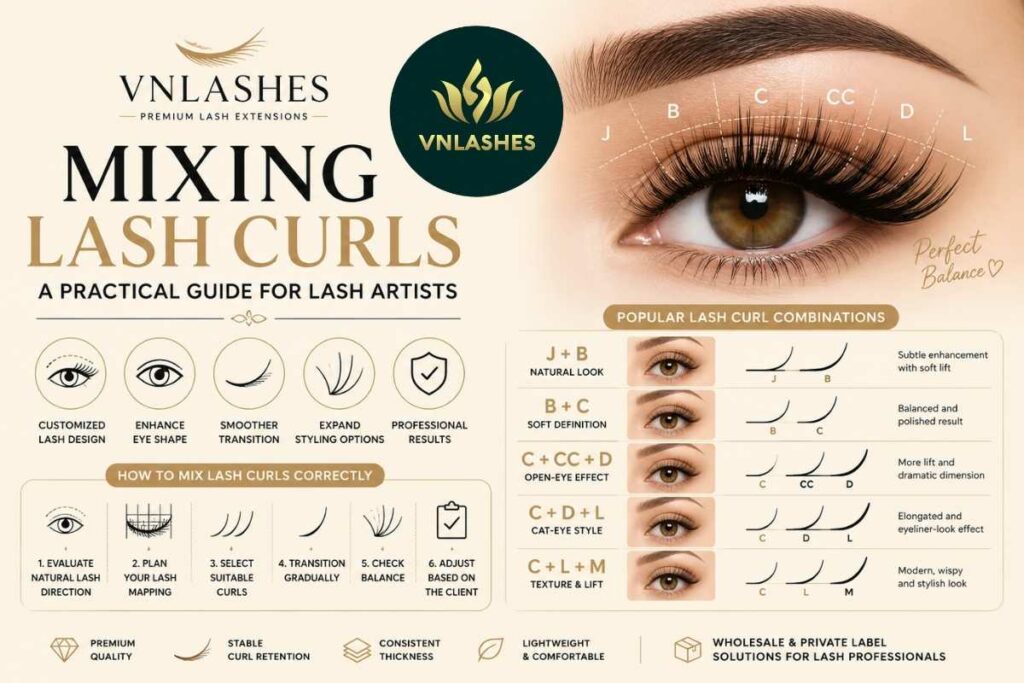
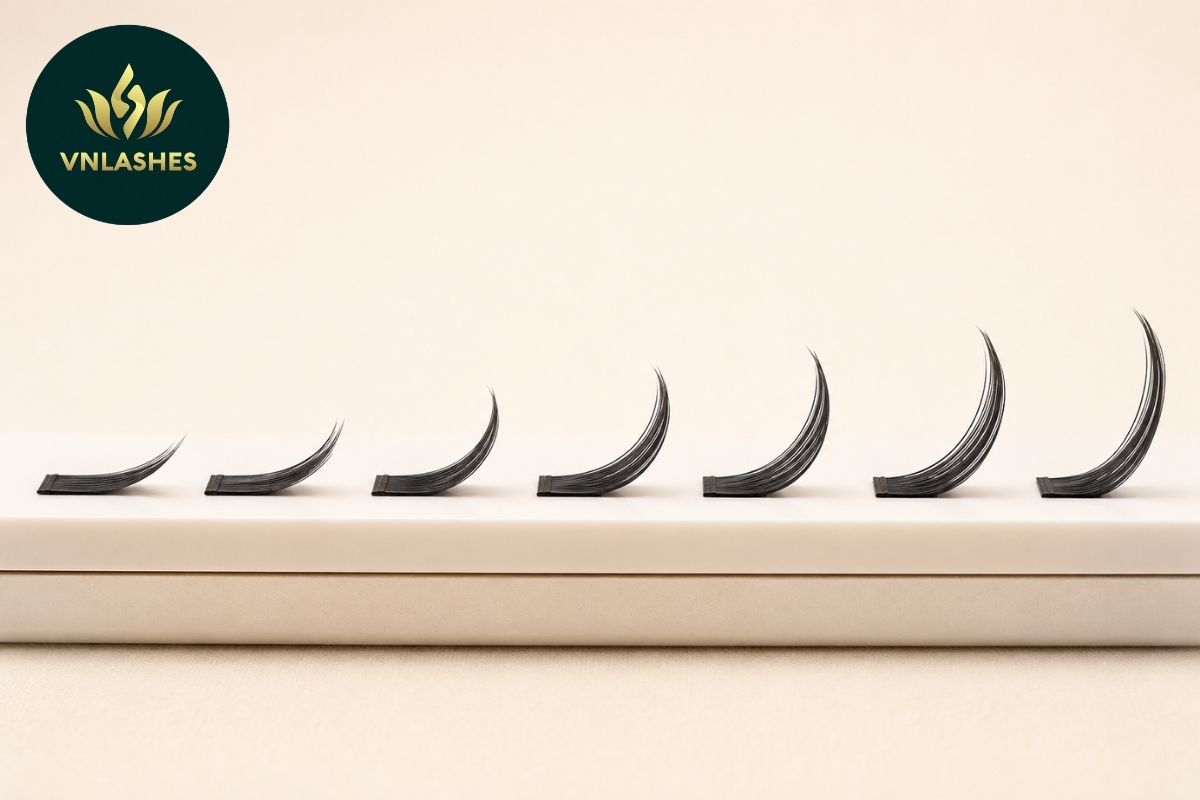
Popular Lash Curl Combinations
J and B Curls for a Natural Look
J curl has a relatively straight base with minimal lift, while B curl creates a soft curve at the tip.
This lash curl combination is suitable for clients who want subtle enhancement without an obviously dramatic extension set.
J and B curls work best on naturally straight or slightly upward-growing lashes. They may be less suitable for strongly downward-growing lashes because the soft curl can emphasize the downward direction.
B and C Curls for Soft Definition
B and C curls create a gradual transition from a natural-looking base to moderate lift.
This pairing is commonly used for classic lash sets, mature clients, and customers who prefer a polished but understated result.
When mixing lash curls in this style, B curl can be applied near the inner corner before transitioning into C curl through the middle and outer sections.
C, CC, and D Curls for an Open-Eye Effect
C curl provides moderate lift, CC offers a stronger curve, and D creates a more pronounced upward direction.
This is one of the most popular lash curl combinations for doll-eye, open-eye, and glamorous volume styles.
A practical placement may include:
- C curl in the inner corner
- CC curl through the main lash line
- D curl near the center
When mixing lash curls with different levels of lift, the transition should remain gradual to avoid an uneven top line.
C, D, and L Curls for a Cat-Eye Style
L curl has a straighter base followed by a sharp upward lift, making it suitable for elongated and eyeliner-inspired lash designs.
C or D curl can be used in the inner and middle sections before transitioning into L curl near the outer area.
For clients with downturned eyes, the longest extensions should not be placed at the very end of the lash line, as this may pull the eye shape downward.
C, L, and M Curls for Texture and Lift
L and M curls are often used in modern, wispy, fox-eye, and textured lash sets.
M curl provides noticeable lift with a softer transition than L curl. C curl can be placed in the inner corner before moving into L or M curls through the middle and outer sections.
This mixed lash curl design creates definition without making the inner area appear too sharp.
How to Mix Lash Curls Correctly
Evaluate the Natural Lash Direction
Before mixing lash curls, examine whether the client’s natural lashes grow upward, straight, or downward.
The same extension curl can produce different results depending on the natural lash direction. Downward-growing lashes may require stronger lift, while upward-growing lashes may look better with a softer curve.
Consider the Client’s Eye Shape
The selected lash curl combination should support the intended visual effect.
Common considerations include:
- Almond eyes can suit many curl combinations.
- Round eyes often benefit from an elongated outer section.
- Downturned eyes may need stronger lift before the outer corner.
- Hooded eyes may require curls with a straighter base and visible lift.
- Deep-set eyes may need more projection to remain visible.
Build a Gradual Curl Transition
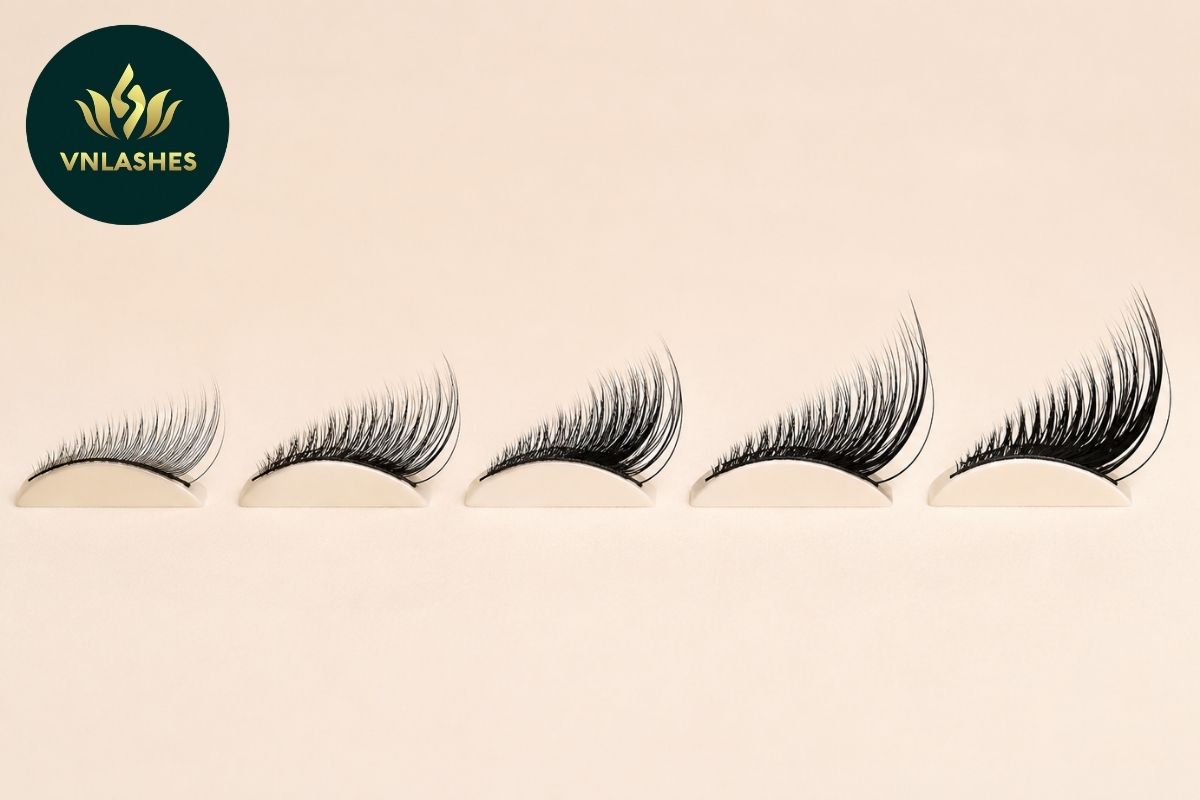
Avoid changing directly from a soft curl to an extremely strong curl. Sudden transitions can create gaps, uneven direction, or an unnatural lash line.
An intermediate curl often creates a smoother result.
For example:
C curl → CC curl → D curl
This usually blends more naturally than moving directly from C curl to D curl.
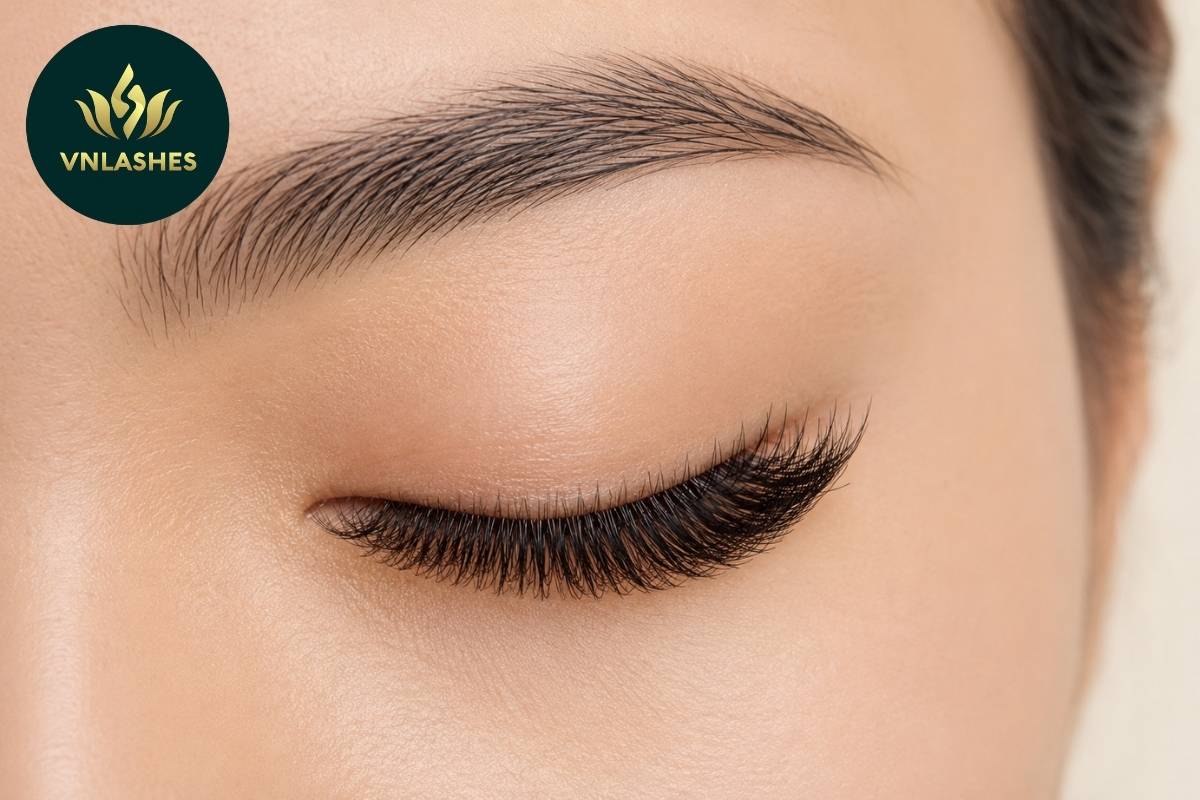
Adjust Lengths When Changing Curls
Stronger curls may appear shorter from the front because more of the fiber length is used in the curve.
A 12 mm D curl may therefore look shorter than a 12 mm C curl. When mixing lash curls, artists may need to adjust the extension lengths to maintain a balanced top line.
Maintain Clean Attachment
Even when different lash curls are used, each extension should have a clean and stable attachment area.
Consistent bases help support retention and prevent the mixed-curl lash set from appearing disorganized.
Common Mistakes When Mixing Lash Curls
Using Too Many Curl Types
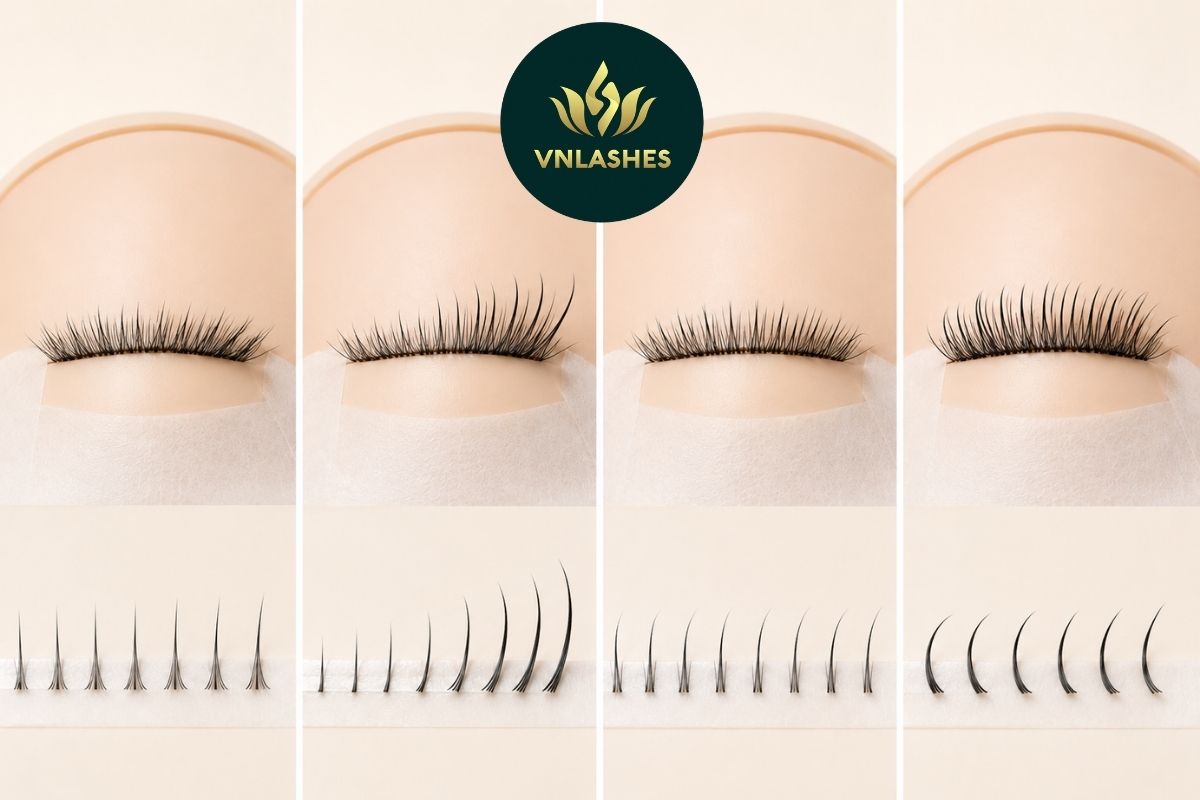
Applying too many curls without a clear purpose can make the lash map difficult to control. Most professional mixed-curl designs only require two or three compatible curl types.
Ignoring Natural Lash Growth
Choosing curls based only on the desired style may create inconsistent results. Natural lash direction should always be evaluated before mixing lash curls.
Creating Abrupt Changes
A direct change between dramatically different curls may make the lash line look disconnected. Transitional curls can help create a more seamless blend.
Using the Same Length for Every Curl
Different curl patterns create different visible heights. Length adjustments may be required to maintain symmetry.
Prioritizing Style Over Lash Condition
The strongest curl or longest extension is not always the best option. Diameter, fan weight, natural lash strength, and attachment quality should also be considered.
Choosing Wholesale Lashes for Mixing Lash Curls
Professional lash artists, salons, distributors, and beauty brands need reliable curl consistency when creating repeatable lash maps.
As a wholesale eyelash extension manufacturer, VNLASHES supplies lash trays and premade fans in multiple curls, lengths, thicknesses, and volume options.
Consistent Curl Formation
Stable curl patterns help lash professionals maintain similar results across trays, production batches, and salon applications.
High-Quality Fiber Finish
Korean PBT fiber provides a lightweight structure, smooth surface, and even black appearance suitable for professional lash extension products.
Wide Range of Specifications
A broad selection of curls, lengths, diameters, and fan volumes allows lash businesses to support different eye shapes, styling techniques, and customer preferences.
OEM and Private Label Options
Lash brands can customize product specifications, tray layouts, labels, boxes, and packaging according to their target market and business model.
Mixing Lash Curls for Popular Lash Styles
Natural Lash Set
Suitable combinations include:
- J and B curls
- B and C curls
These lash curl combinations provide soft definition and gentle lift.
Doll-Eye Lash Set
Suitable combinations include:
- C, CC, and D curls
- CC and D curls
Stronger curls near the center help create a brighter and more open appearance.
Cat-Eye Lash Set
Suitable combinations include:
- C, D, and L curls
- C, CC, and M curls
The strongest lift is usually placed toward the outer section to create elongation.
Wispy Lash Set
Suitable combinations include:
- C and CC curls
- CC, D, and M curls
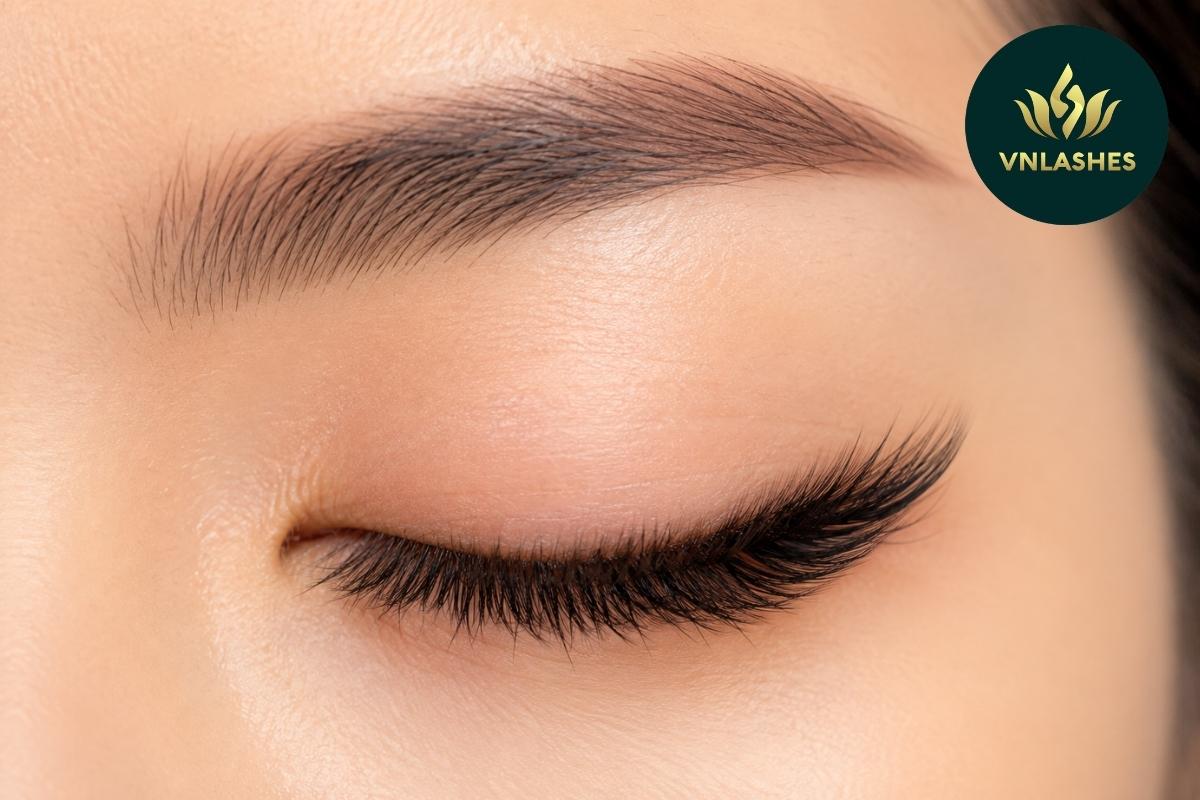
When mixing lash curls for wispy sets, different curves may be used for the base layer and spikes to create controlled texture.
Frequently Asked Questions About Mixing Lash Curls
Can You Mix Different Lash Curls in One Set?
Yes. Mixing lash curls is a common professional technique used to customize the lash shape, create smoother transitions, and improve the overall design.
Which Lash Curls Blend Well Together?
Curls with similar structures are usually easier to combine. Popular lash curl combinations include B and C, C and CC, CC and D, or C, D, and L.
How Many Curls Should Be Used in One Lash Set?
Most mixed-curl lash sets use two or three curl types. The exact number depends on the client’s eye shape, natural lashes, and desired result.
Can Different Curls Be Used in the Same Layer?
Yes. Advanced lash artists may use different curls across separate sections or layers to create texture and direction. However, the placement should remain controlled and easy to follow.
Do Stronger Curls Look Shorter?
Yes. A stronger curl may appear shorter from the front even when the measured extension length is the same. Length adjustments may therefore be required when mixing lash curls.
Conclusion
Mixing lash curls is an important technique for creating customized, balanced, and professional eyelash extension sets. Effective curl blending requires careful evaluation of the natural lashes, eye shape, extension length, transition points, and desired style.
For salons, distributors, and lash brands, access to consistent wholesale lash curls makes it easier to support a broad range of professional designs. VNLASHES manufactures customizable eyelash extension products for wholesale distribution, OEM, and private label development.


Bài viết liên quan
Zero Time Promade Fan Lashes – Wholesale Manufacturer & OEM Services
For lash salons and professional eyelash brands, application efficiency and consistent quality are important factors...
Oct
Magic Fan And Zero Time Promade Fan – A Faster, Time-Saving Lash Extension Solution
In the professional lash extension industry, application speed and product consistency are important factors for...
Oct
Custom Magic Fans Manufacturing and OEM Services: Production Process
When sourcing Magic Fans in bulk, buyers need more than just an attractive lash tray....
Aug
Lash Extension Removal: Common Mistakes and Safe Techniques
Lash extension removal is an important part of professional lash care. When extensions are removed...
Jul
Lash Foam Cleansers: A Practical Guide for Lash Professionals
Lash foam cleansers are essential products for cleaning natural lashes, eyelids and eyelash extensions. They...
Jul
Lash Adhesive Remover: A Must-Have Product for Professional Lash Businesses
In the lash industry, a beautiful lash set is not only about application. Safe, clean,...
Jul