
 Deutsch
 Русский
 Español
 Français
No products in the cart.

Eyelash Knowledge & Education, Lash Extension Guides
How to Practice Lash Extensions at Home Effectively
11
Jul
Jul
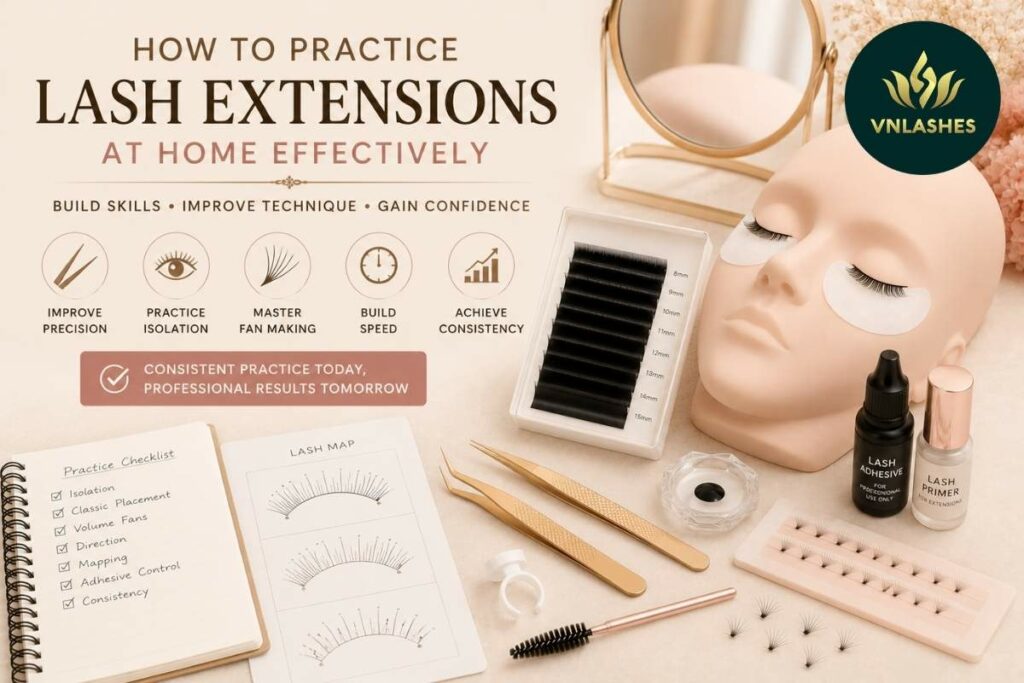
Learning how to practice lash extensions at home is one of the most effective ways for beginner lash artists to improve isolation, placement, adhesive control, and fan-making skills. A structured home lash practice routine allows learners to repeat each technique, identify mistakes, and develop better hand control before working on real clients.
As an eyelash extension manufacturer and wholesale supplier, we understand that consistent lash materials are important during training. Stable curls, uniform fibers, clean bases, and easy-release strips help students focus on technique instead of struggling with inconsistent products.
Why Practice Lash Extensions at Home?
Knowing how to practice lash extensions at home gives learners more time to strengthen basic techniques at their own pace.
Improve Tweezer and Hand Control
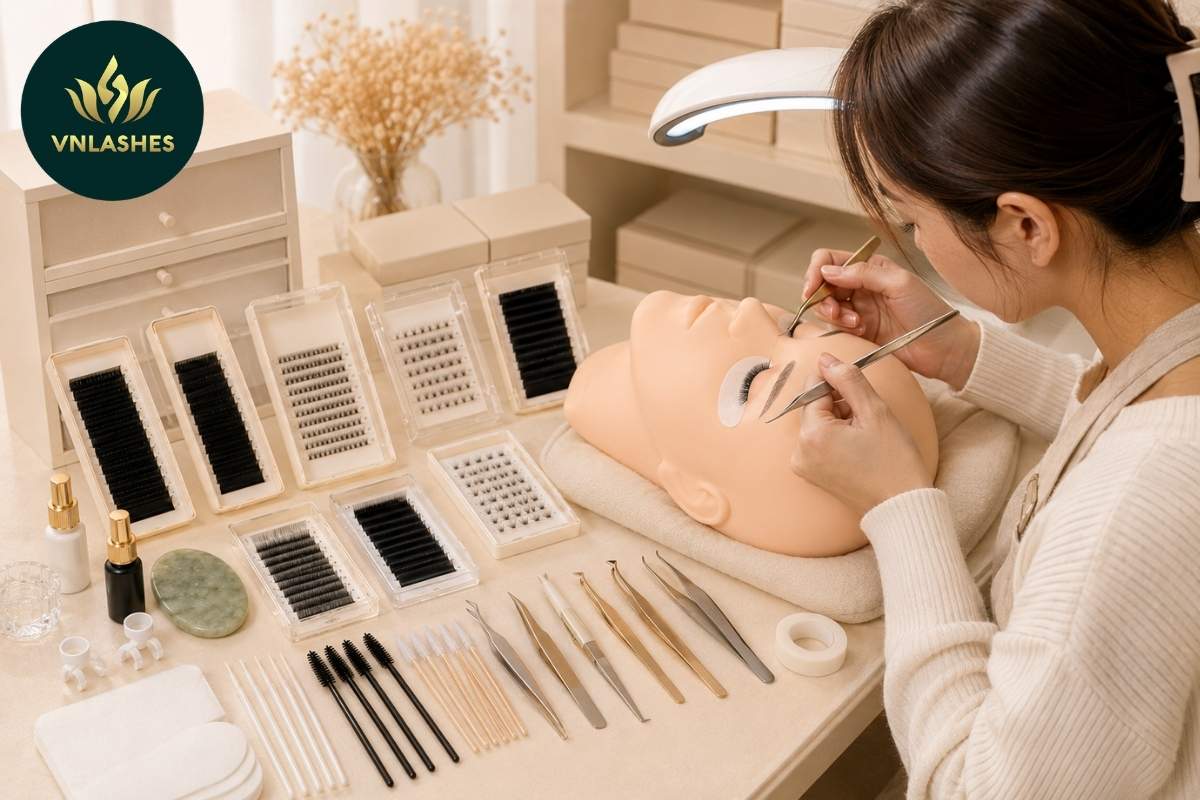
Regular lash extension practice helps develop hand stability, tweezer control, and placement accuracy. These skills are essential when isolating fine natural lashes and attaching lightweight extensions.
Build Application Speed Gradually
Beginner lash artists often need more time to complete a full set. Consistent home lash practice can improve speed while maintaining clean isolation, correct direction, and proper attachment.
Reduce Additional Training Costs
Professional courses provide important technical and safety knowledge. Practicing lash extensions at home afterward allows students to continue improving without attending repeated training sessions.
Focus on Individual Techniques
Home training makes it easier to concentrate on one skill at a time, including:
- Isolation
- Classic lash placement
- Volume fan creation
- Adhesive control
- Lash mapping
- Lash direction
Essential Supplies for Lash Extension Practice at Home
The right tools make it easier to practice lash extensions at home effectively.
Eyelash Extension Trays
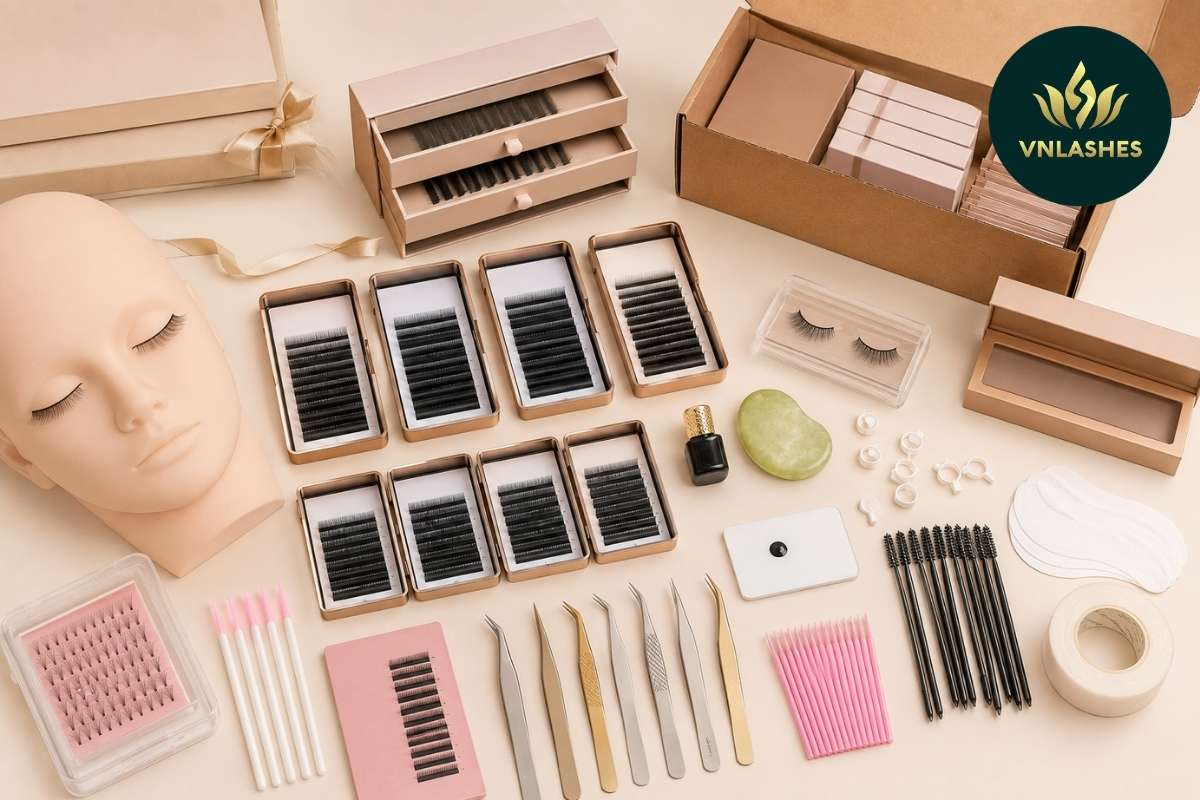
Choose trays with consistent curls, uniform diameters, and easy-release strips. Suitable options for beginners include:
- Classic lashes in 0.10 mm or 0.15 mm
- Volume lashes in 0.03 mm, 0.05 mm, or 0.07 mm
- C, CC, or D curls
- Mixed lengths from 8 mm to 15 mm
Mixed-length trays are practical for lash students and academies because they provide several sizes in one box.
Lash Tweezers
A basic lash practice kit should include:
- One isolation tweezer
- One application or volume tweezer
The tweezer tips should close evenly and provide a secure grip without excessive hand pressure.
Practice Adhesive
Use a professional lash adhesive that matches the temperature and humidity of the workspace. Beginners should avoid extremely fast-drying adhesive until their placement becomes more stable.
Additional Practice Tools
Useful training supplies include:
- Mannequin head
- Practice lashes
- Strip lashes
- Lash tile
- Micro brushes
- Glue rings
- Adhesive stone
- Under-eye pads
- Lash tape
- Sponges
- Disposable mascara wands
How to Set Up a Lash Practice Area at Home
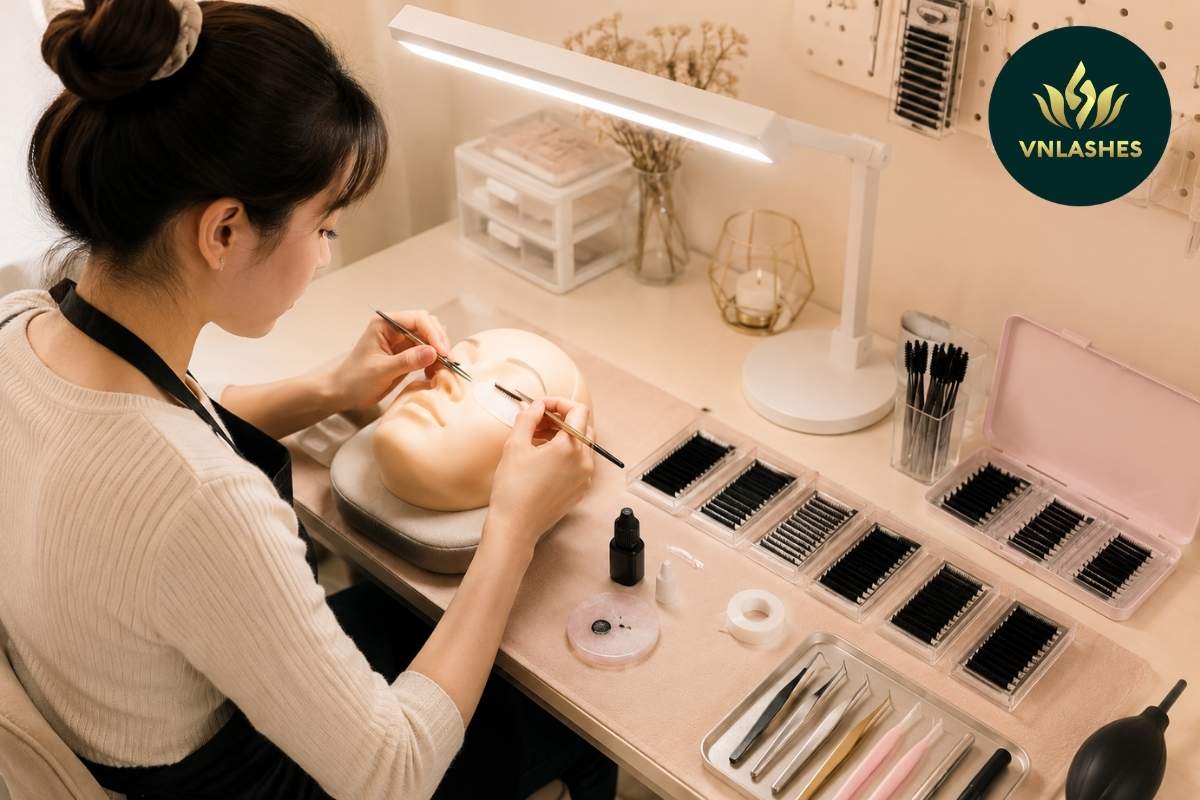
A clean and organized workspace helps improve concentration and application accuracy.
Choose a Stable Work Surface
Use a lash bed, treatment table, or sturdy desk. The mannequin head or training surface should remain secure throughout the practice session.
Arrange Tools Within Reach
Keep lash trays, tweezers, adhesive, tape, and brushes close to your dominant hand. An organized setup reduces unnecessary movement and helps maintain focus.
Use Proper Lighting
Bright lighting is essential for clean isolation and accurate placement. A lash lamp or magnifying lamp can reduce eye strain and make fine fibers easier to see.
Maintain a Comfortable Position
Keep the back supported, shoulders relaxed, and wrists in a neutral position. Good posture reduces fatigue and supports more precise application.
Best Ways to Practice Lash Extensions at Home
Different training methods can improve different lash extension techniques.
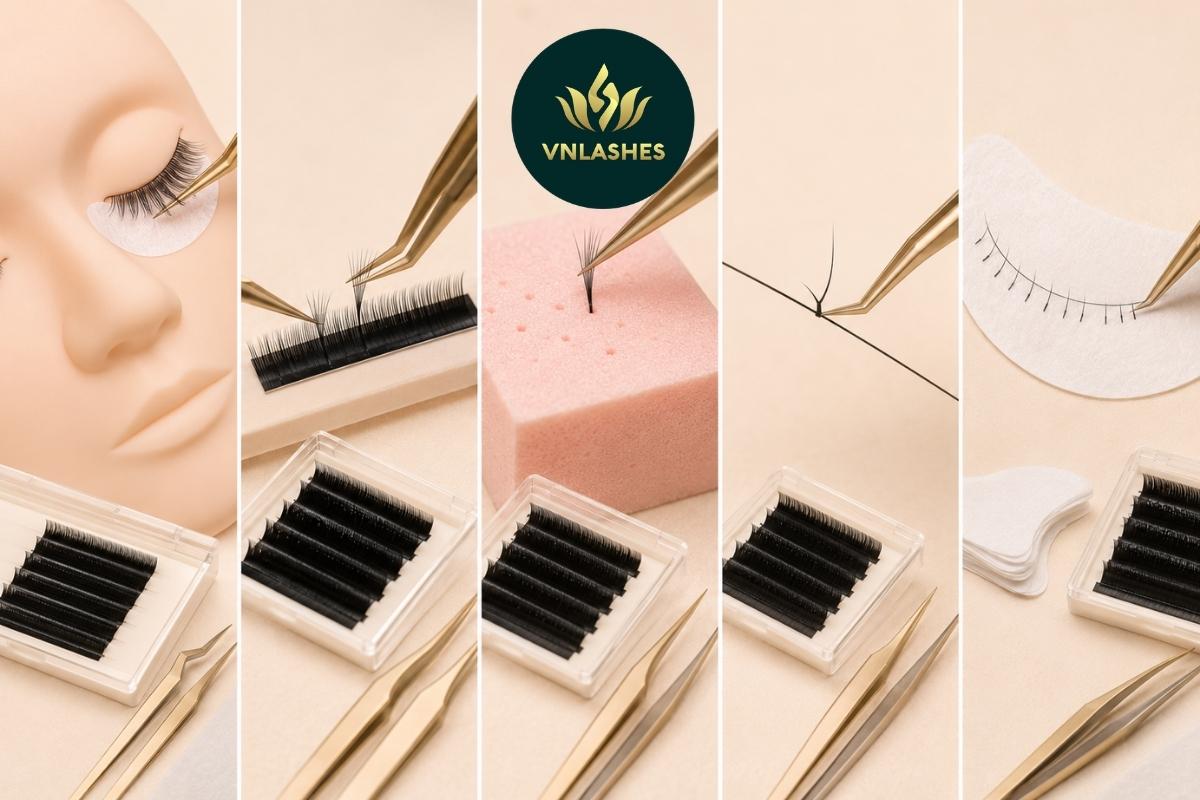
Practice on a Mannequin Head
A mannequin head is one of the most useful tools for beginner lash training.
Attach practice strips to the mannequin eyelids and work on:
- Lash isolation
- Classic placement
- Lash direction
- Distance from the lash line
- Basic lash mapping
This method helps students become familiar with working around the eye area before practicing on a live model.
Practice Isolation on Strip Lashes
Strip lashes are affordable and suitable for isolation drills. Secure them to a lash tile or mannequin head, then separate one lash at a time with an isolation tweezer.
The goal is to isolate each lash cleanly without pulling or crossing the nearby fibers.
Practice Placement on a Sponge
A sponge provides a simple surface for improving direction, spacing, and placement depth.
Insert individual extensions or premade fans while keeping them:
- Evenly spaced
- Properly angled
- Parallel
- Consistent in depth
This method is useful for developing neat and balanced lash rows.
Practice Volume Fan Creation
Volume lash practice requires repetition to create symmetrical and consistent fans.
Focus on:
- Picking up several fibers
- Opening the fan evenly
- Creating narrow and wide fans
- Maintaining a clean base
- Controlling the number of fibers
- Keeping both sides balanced
Consistent volume lash trays make the process easier because the fibers separate smoothly and maintain their shape.
Practice on a Single Hair Strand
Tape one hair strand across a cup or lash tile to simulate a natural lash.
This exercise helps improve:
- Adhesive pickup
- Fan attachment
- Base wrapping
- Placement angle
- Adhesive control
Because the hair strand moves slightly, it can also improve hand stability.
Practice Lash Mapping
Lash mapping is another important part of learning how to practice lash extensions at home.
Draw different maps on under-eye pads or printed sheets. Common styles include:
- Natural
- Doll eye
- Cat eye
- Squirrel
- Wispy
- Kim K-inspired mapping
Mapping practice helps artists understand length transitions, balance, and styling.
A Weekly Routine to Practice Lash Extensions at Home
A structured routine makes lash extension practice more productive.
Day 1: Isolation Practice
Spend 20 to 30 minutes isolating individual lashes without using adhesive.
Day 2: Classic Lash Placement
Attach single extensions while maintaining correct distance, direction, and attachment area.
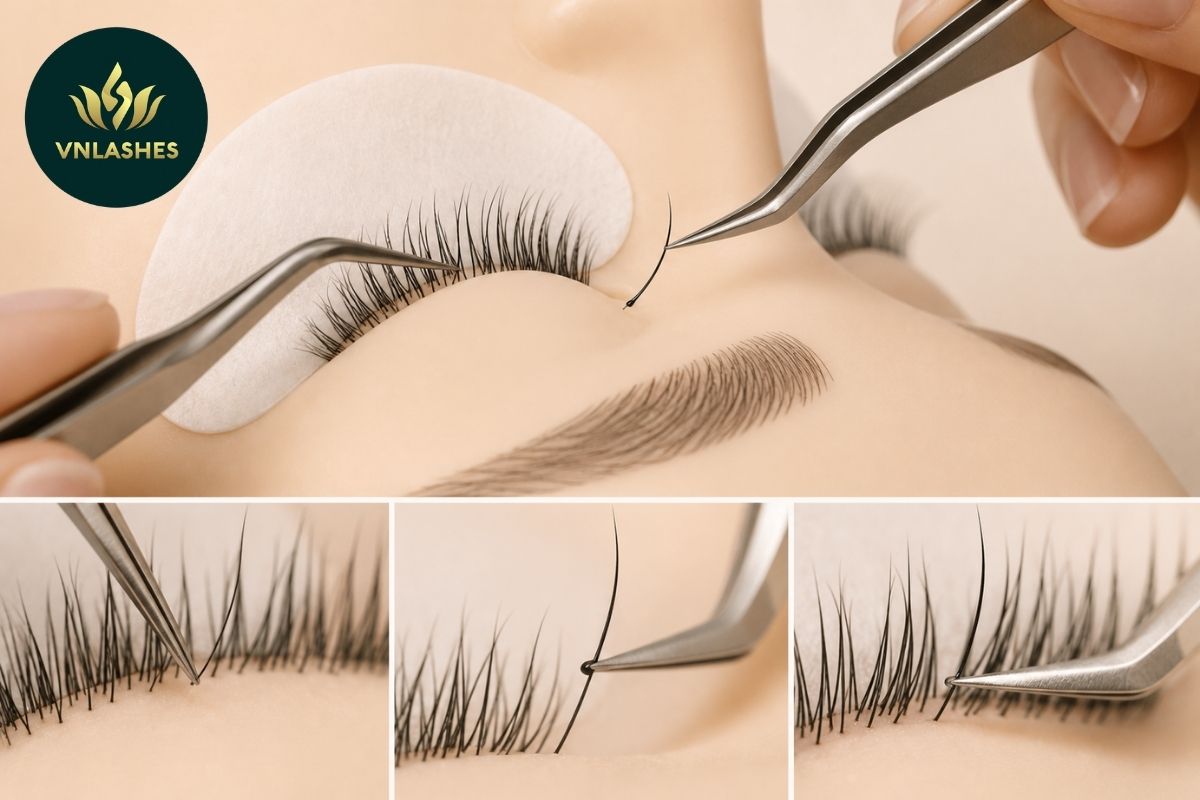
Day 3: Adhesive Control
Focus on creating a small and consistent adhesive bead without forming bulky bases.
Day 4: Volume Fan Practice
Create fans with the same number of fibers, similar width, and clean bases.
Day 5: Lash Mapping
Create a lash map and apply different lengths according to the selected style.
Day 6: Full Mannequin Set
Complete a full set on a mannequin head and record the total application time.
Day 7: Review and Correction
Check the set for crossed lashes, poor isolation, excess adhesive, uneven direction, and inconsistent spacing.
Common Mistakes During Home Lash Practice
Identifying mistakes early helps prevent poor application habits.
Using Too Much Adhesive
Excess adhesive can create thick bases and cause lashes to stick together. Use a small amount and refresh the adhesive drop regularly.
Placing Extensions Too Close to the Skin
Lash extensions should not touch the eyelid. Maintaining a consistent distance from the lash line improves comfort and supports safer application.
Ignoring Lash Direction
Uneven direction can make the finished set look untidy. Check each lash from the front and side before the adhesive cures.
Skipping Isolation Practice
Clean isolation is one of the most important lash extension skills. Beginners should include isolation drills in every weekly routine.
Using Inconsistent Lash Materials
Unstable curls, uneven diameters, and difficult strips can slow down progress. Consistent training products help learners assess their technique more accurately.
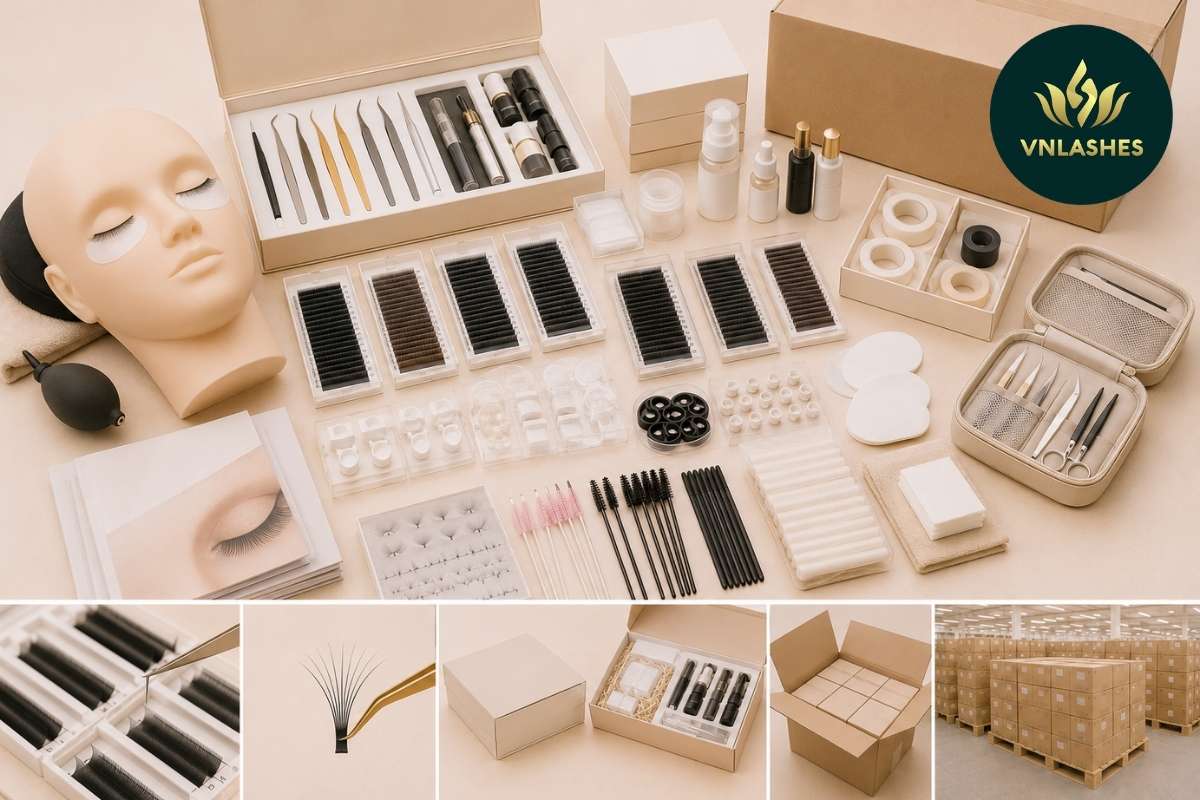
Choosing Wholesale Lash Supplies for Training
Lash academies, educators, and distributors often need larger quantities of training products. Wholesale lash supplies can improve consistency across student kits and help manage costs.
Consistent Product Specifications
Each tray should maintain uniform curl, diameter, color, fiber quality, and strip performance. This ensures that students train with similar materials.
Flexible Lash Options
A reliable eyelash manufacturer should provide multiple curls, thicknesses, lengths, colors, and packaging formats for different training levels.
Low Wholesale Minimums
Low minimum order quantities allow new academies and lash businesses to test products before placing larger orders.
Private Label Training Products
Lash schools and beauty brands may use private label lash trays, practice kits, labels, and packaging to build a consistent training range.
Is It Safe to Practice Lash Extensions on a Real Person?
Beginners should complete professional training and develop basic control before practicing on a live model.
When working on a real person:
- Use sanitized tools
- Follow professional hygiene procedures
- Work in a ventilated environment
- Prevent adhesive from touching the skin
- Follow product instructions
- Stop if irritation occurs
Students should first practice lash extensions at home on a mannequin head until isolation, placement, and adhesive control become more consistent.
How Long Does It Take to Improve Lash Extension Skills?
The time required to improve varies between learners. Most beginners progress faster through several short training sessions each week rather than one long session occasionally.
Progress can be measured through:
- Cleaner isolation
- Better lash direction
- Smaller adhesive bases
- More consistent fan shapes
- Faster application
- Fewer stickies
Accuracy and safety should always come before speed.
Frequently Asked Questions About Home Lash Practice
Can I Learn Lash Extensions Without Taking a Course?
Independent practice is useful, but it should not fully replace professional education. A qualified course teaches eye anatomy, hygiene, adhesive use, safety procedures, and correct application principles.
What Lashes Are Best for Beginners?
Classic lashes in 0.10 mm or 0.15 mm are suitable for basic placement practice. Volume beginners may start with 0.05 mm or 0.07 mm fibers because they are easier to control than very fine lashes.
Can I Practice Lash Extensions Every Day?
Yes. Short, focused sessions are usually more effective than long and irregular practice. Around 20 to 45 minutes per session can help develop muscle memory without excessive hand or eye fatigue.
Should Beginners Practice With Premade Fans?
Premade fans are useful for improving placement, direction, and adhesive control. Artists who plan to offer handmade volume services should also practice creating their own fans.
What Should a Lash Training Kit Include?
A complete lash training kit may include lash trays, tweezers, adhesive, practice strips, tape, under-eye pads, brushes, micro applicators, a mannequin head, and hygiene supplies.
Conclusion
Understanding how to practice lash extensions at home helps beginner lash artists build confidence and improve essential application techniques. A clean workspace, structured routine, suitable training methods, and consistent lash materials can make each session more effective.
For lash academies, distributors, and private label brands, reliable wholesale lash extension products also help maintain consistent training quality across student kits.


Bài viết liên quan
Zero Time Promade Fan Lashes – Wholesale Manufacturer & OEM Services
For lash salons and professional eyelash brands, application efficiency and consistent quality are important factors...
Oct
Magic Fan And Zero Time Promade Fan – A Faster, Time-Saving Lash Extension Solution
In the professional lash extension industry, application speed and product consistency are important factors for...
Oct
Custom Magic Fans Manufacturing and OEM Services: Production Process
When sourcing Magic Fans in bulk, buyers need more than just an attractive lash tray....
Aug
Lash Extension Removal: Common Mistakes and Safe Techniques
Lash extension removal is an important part of professional lash care. When extensions are removed...
Jul
Lash Foam Cleansers: A Practical Guide for Lash Professionals
Lash foam cleansers are essential products for cleaning natural lashes, eyelids and eyelash extensions. They...
Jul
Lash Adhesive Remover: A Must-Have Product for Professional Lash Businesses
In the lash industry, a beautiful lash set is not only about application. Safe, clean,...
Jul