
 Deutsch
 Русский
 Español
 Français
No products in the cart.

Eyelash Knowledge & Education, Lash Aftercare & Safety
Lash Extension Allergy: Causes, Symptoms and Prevention
11
Jul
Jul
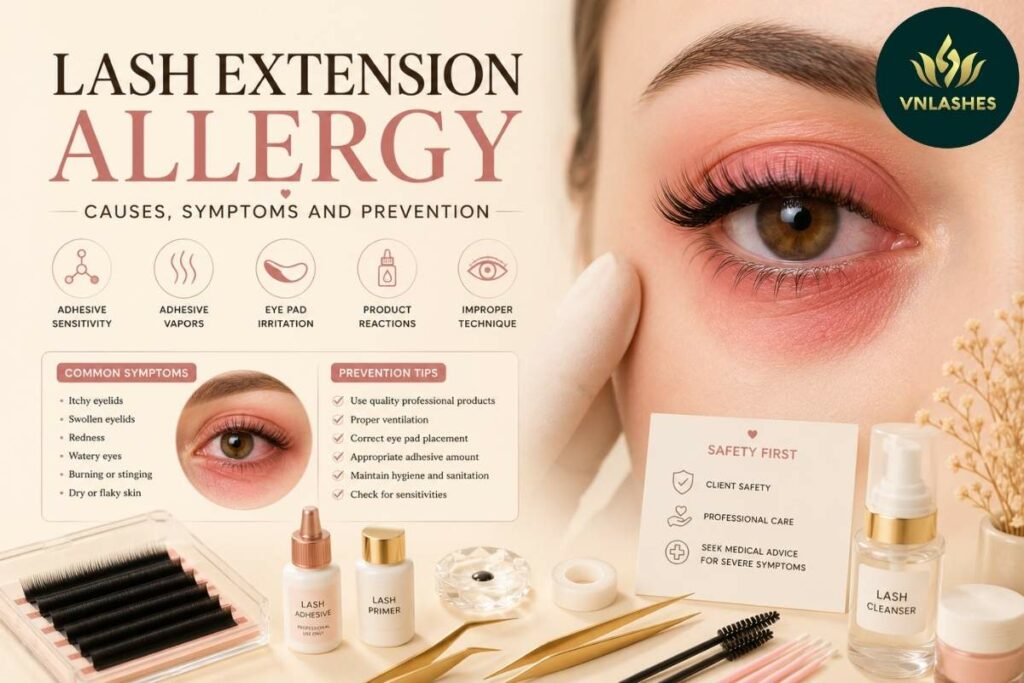
Eyelash extensions can create fuller, darker and more defined lashes. However, some clients may experience itching, redness or swollen eyelids after an appointment. These symptoms may indicate a lash extension allergy, although adhesive fumes, eye pads or incorrect application techniques can cause similar discomfort.
For lash artists, salon owners, wholesalers and lash product brands, understanding the causes and symptoms of an allergic reaction is important for improving client safety and choosing suitable professional products.
What Is a Lash Extension Allergy?
A lash extension allergy is an immune response to an ingredient or material used during the eyelash extension application process. The reaction usually affects the eyelids, lash line or surrounding skin rather than the natural lashes.
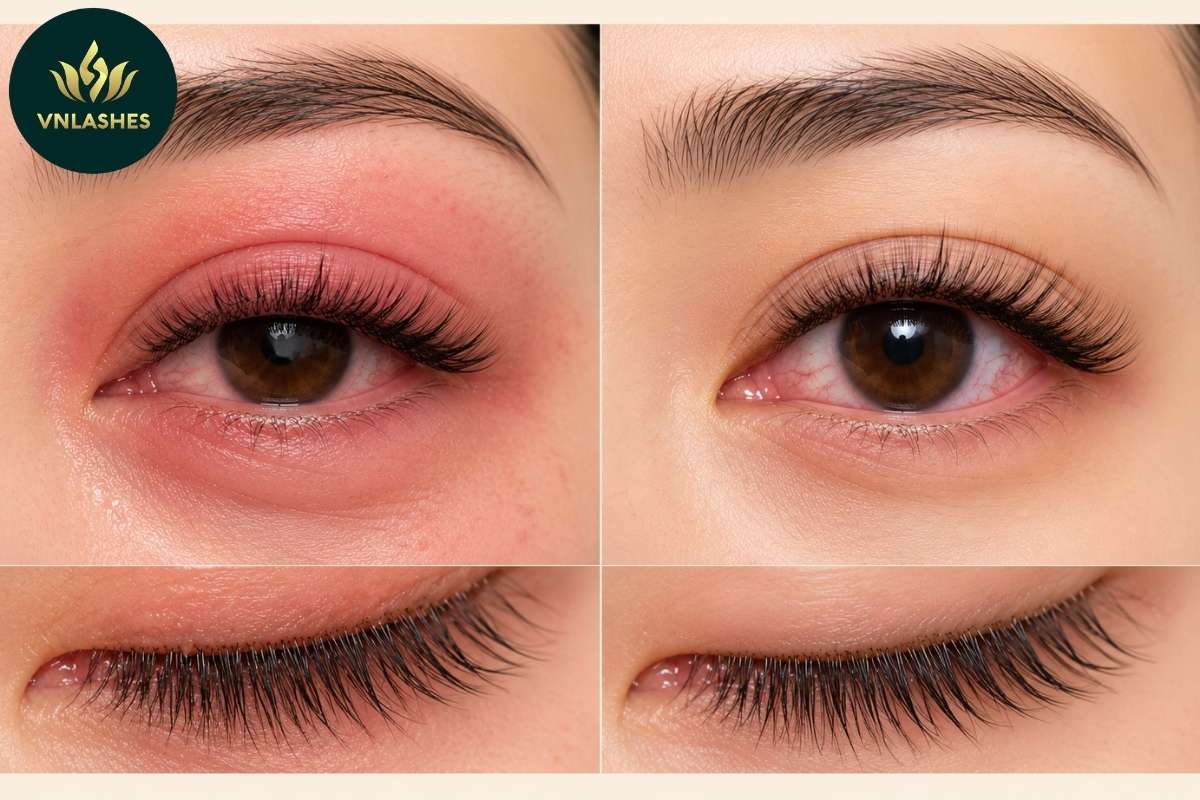
Common signs include itching, swelling, redness and irritated eyelid skin. A reaction may appear shortly after the appointment or develop several hours later.
Some clients can also develop a lash adhesive sensitivity after many successful appointments. Previous use without symptoms does not guarantee that an allergy will never occur.
What Causes Lash Extension Allergy?
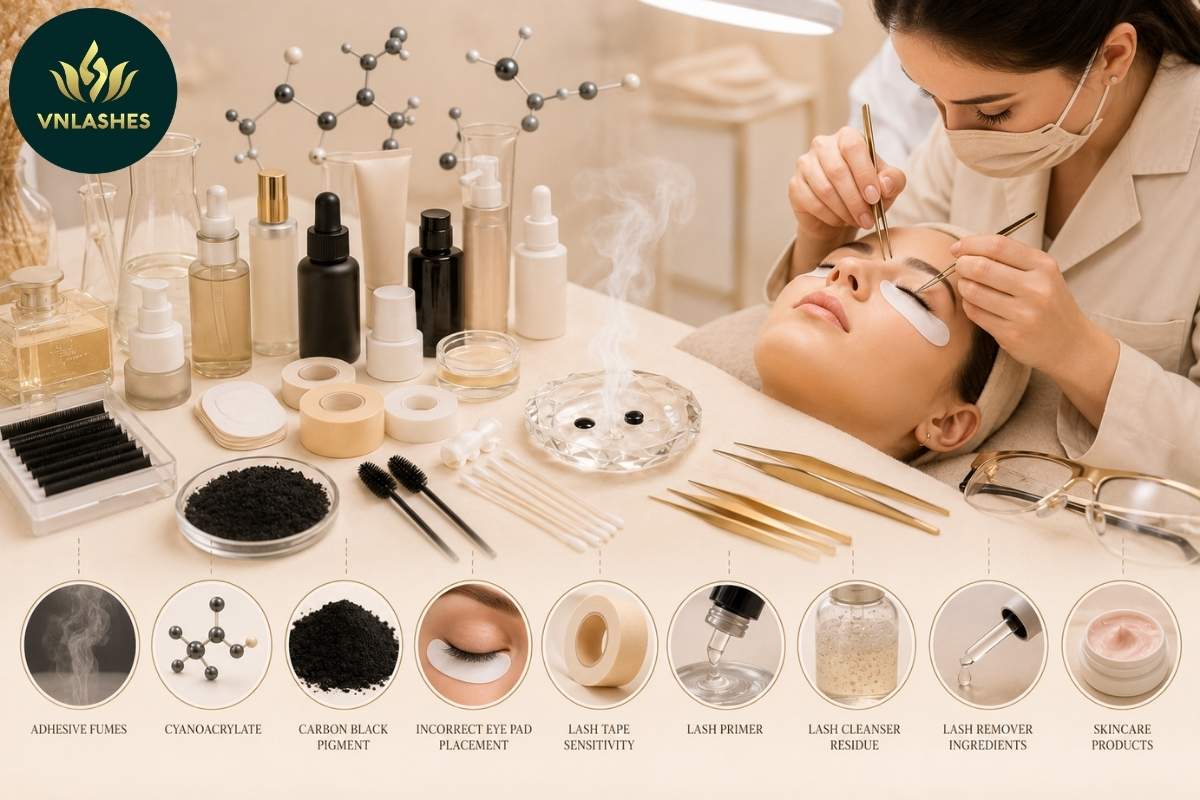
A lash extension allergy may be linked to the adhesive, pigments or another product used during the service.
Cyanoacrylate in Lash Adhesive
Cyanoacrylate is the main bonding ingredient in most professional eyelash extension adhesives. It allows the extension to attach quickly and remain securely bonded to the natural lash.
However, cyanoacrylate is also one of the most common substances associated with lash glue allergy. Some clients and lash technicians may become sensitive after repeated exposure.
Sensitive or low-fume adhesives may produce less odour or vapour, but they normally still contain a cyanoacrylate-based bonding agent. Therefore, they cannot be described as completely allergy-free.
Carbon Black Pigment
Black lash adhesive often contains carbon black pigment to create a deep and seamless bond line.
Pigment-related reactions are less common than cyanoacrylate sensitivity, but some clients may react to carbon black or another ingredient in the adhesive formula.
Clear glue does not contain black pigment, but it can still cause a lash extension allergy when the client is sensitive to the bonding agent.
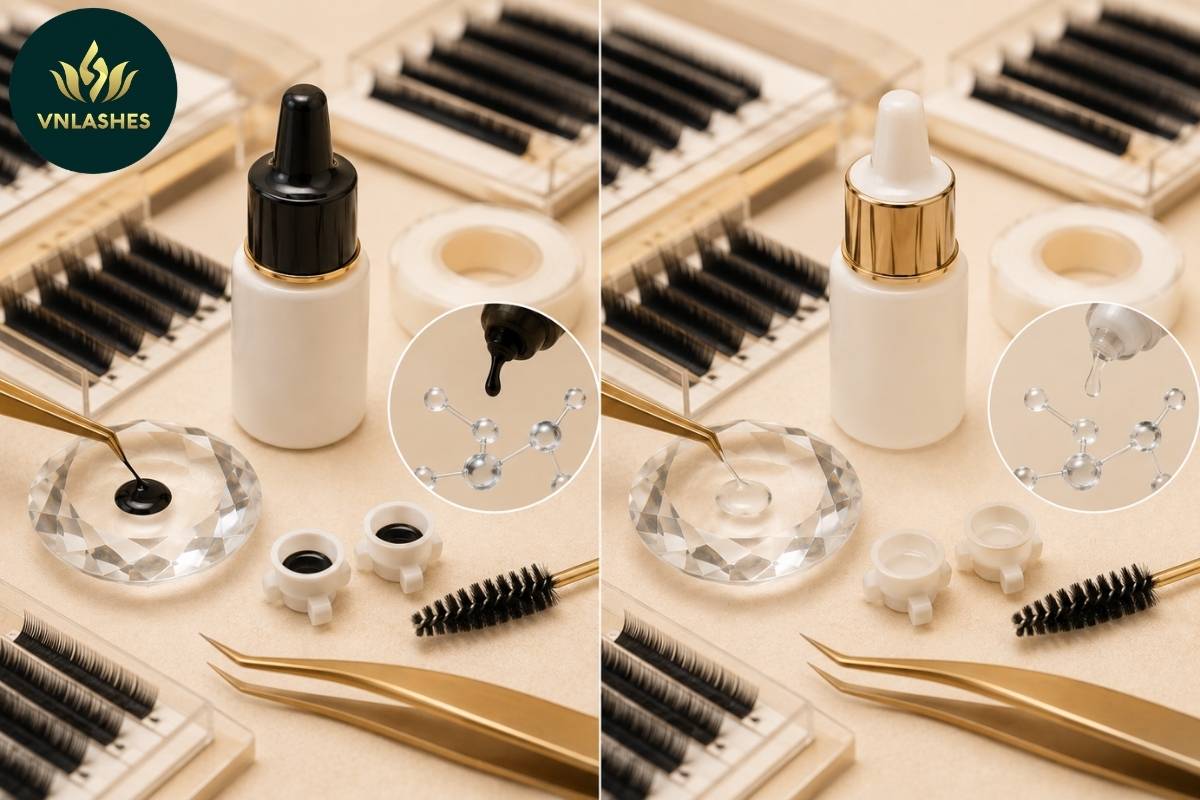
Lash Adhesive Fumes
Lash glue releases vapour while curing. These fumes may irritate the eyes when:
- The client’s eyes are not completely closed
- Too much adhesive is applied
- The glue cures too slowly
- Ventilation is insufficient
- The room temperature or humidity is unsuitable
This type of reaction may be chemical irritation rather than a true eyelash extension allergy.
Under-Eye Pads and Tape
Under-eye pads and tape may irritate sensitive skin or rub against the eye when positioned incorrectly.
Redness caused by poor placement is normally related to friction, pressure or direct contact rather than a lash glue allergy.
Primers, Cleansers and Removers
Other products used during the appointment may also cause irritation or sensitivity, including:
- Lash primers
- Cleansers
- Makeup removers
- Gel eye pads
- Extension removers
- Skincare products near the eyes
Lash artists should review all products used before assuming that every reaction is caused by the adhesive.
Lash Extension Allergy Symptoms
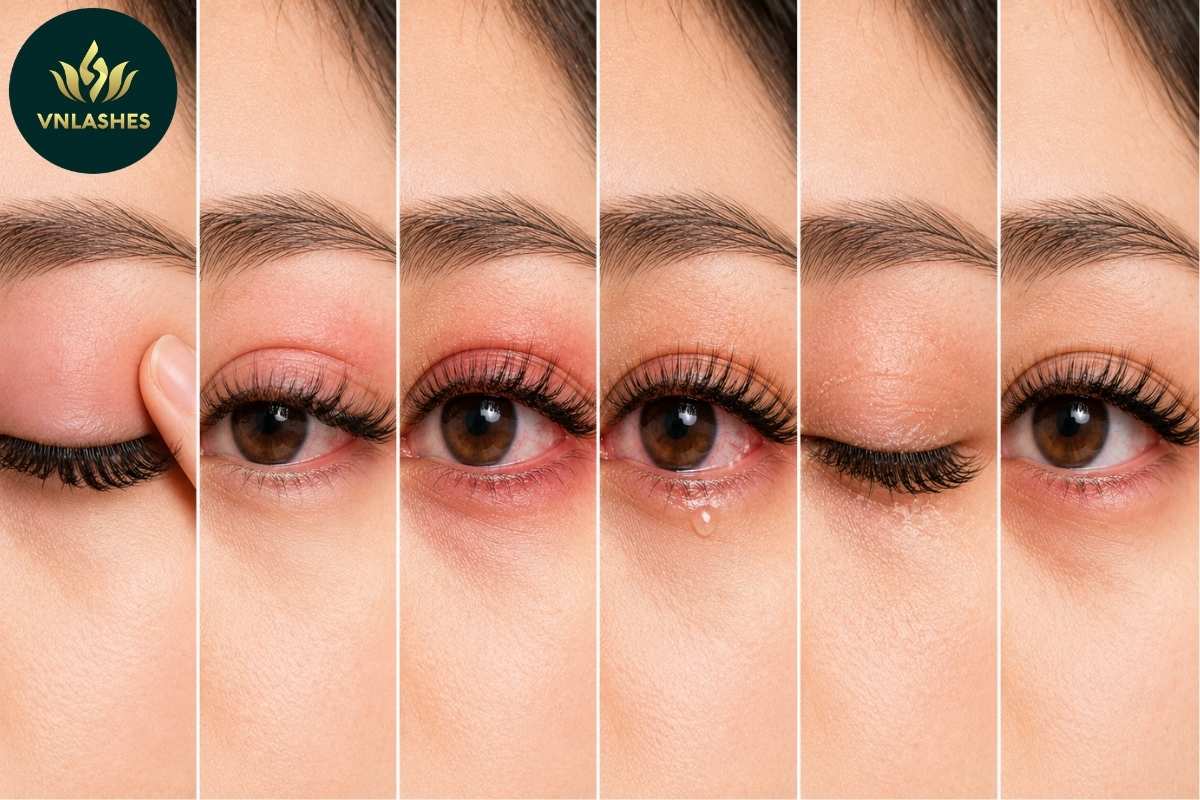
Common lash extension allergy symptoms may include:
- Itchy eyelids
- Swollen eyelids
- Redness around the lash line
- Puffy skin around the eyes
- Burning or stinging
- Watery eyes
- Dry or flaky eyelid skin
- Tenderness
- Persistent discomfort
Symptoms may affect one or both eyes and can vary in severity.
Eye pain, blurred vision, severe light sensitivity or breathing difficulty should not be treated as a normal reaction after lash extensions.
Lash Extension Allergy vs. Irritation
A lash extension allergy and eye irritation can look similar, but they do not have the same cause.
Signs More Commonly Associated With Allergy
An allergic reaction to lash extensions may involve:
- Persistent itching
- Noticeable eyelid swelling
- Inflamed skin around the lash line
- Dry or flaky eyelid skin
- Symptoms that increase after the appointment
- Reactions that return after repeated exposure
Signs More Commonly Associated With Irritation
Eye irritation after eyelash extensions may involve:
- Red or watery eyes
- Stinging during the appointment
- Discomfort caused by tape or pads
- Redness mainly in the white part of the eye
- Symptoms that improve after exposure stops
Lash artists should not attempt to diagnose whether a client has a lash extension allergy or another eye condition. Persistent or worsening symptoms require professional medical assessment.
What to Do After a Suspected Lash Extension Allergy
The correct response depends on the severity and type of symptoms.
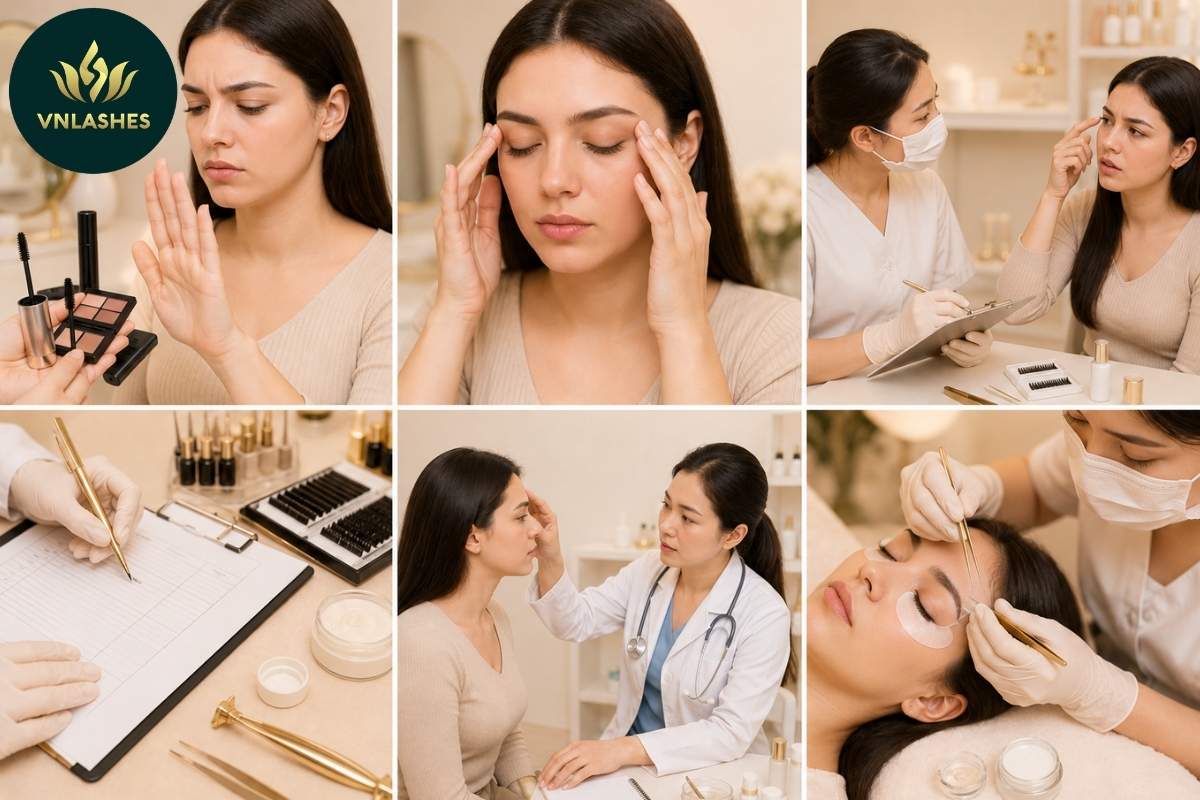
Stop Using Products Around the Eyes
Clients should avoid applying additional cosmetics, creams or lash products around the affected area.
Using more products may increase irritation and make it harder to identify the source of the reaction.
Avoid Rubbing the Eyes
Rubbing can worsen inflammation, damage natural lashes and transfer bacteria to sensitive skin.
Clients should also avoid pulling or twisting the extensions.
Inform the Lash Artist
The client should tell the lash technician:
- When the symptoms started
- Which areas are affected
- Whether the symptoms are improving
- Whether a similar reaction has happened before
The lash artist should document the adhesive, tape, pads and preparation products used during the service.
Seek Professional Medical Advice
Lash artists, retailers and manufacturers should not diagnose a lash extension allergy or recommend prescription treatment.
A doctor, pharmacist or eye-care professional can assess the reaction and determine whether treatment is necessary.
Arrange Professional Lash Removal When Recommended
A healthcare professional may recommend removing the extensions if continued exposure is contributing to the symptoms.
Removal should be completed by a trained lash technician using a professional remover. Clients should not pull, cut or dissolve the extensions at home.
When to Seek Urgent Medical Care
Urgent medical attention may be necessary when a client experiences:
- Significant eye pain
- Blurred vision or other vision changes
- Severe sensitivity to light
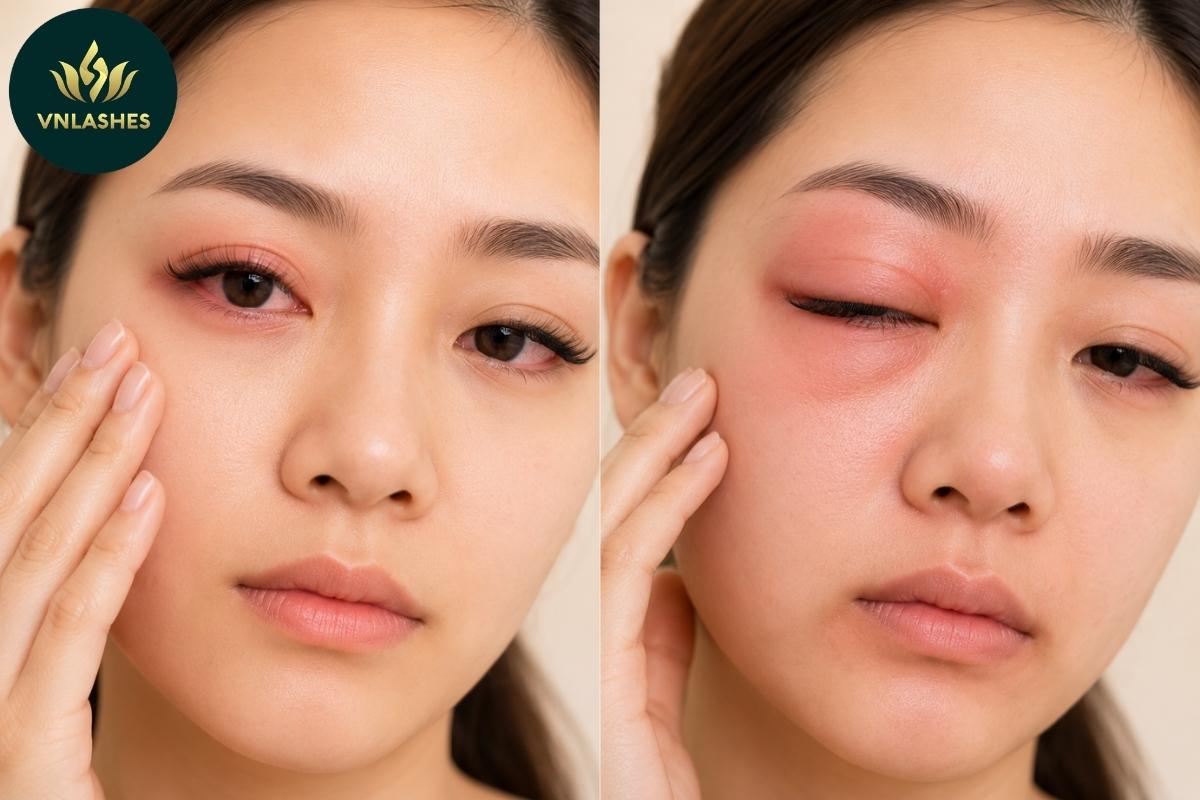
- Rapidly increasing swelling
- Difficulty opening the eye
- Blistering or spreading redness
- Difficulty breathing
- Swelling of the face, lips, tongue or throat
These symptoms are more serious than a mild lash extension allergy and require prompt medical assessment.
How Long Does a Lash Extension Allergy Last?
The duration of a lash extension allergy depends on the cause, severity and level of exposure.
Mild irritation may improve after the irritant is removed. A genuine allergic reaction may remain for several days and can continue when exposure is not properly managed.
Symptoms that become worse, remain unchanged or return repeatedly should be assessed by a qualified healthcare professional.
How Lash Artists Can Reduce Allergy and Irritation Risks
No lash application method can completely eliminate the possibility of an allergic reaction. However, correct procedures can reduce avoidable irritation and unnecessary adhesive exposure.
Complete a Client Consultation
Before the appointment, ask whether the client has:
- Experienced a previous lash extension allergy
- Reacted to adhesives or cosmetics
- Active eye redness or inflammation
- Sensitive skin around the eyelids
- Recently received eye treatment or surgery
The service should be postponed if the client has an active infection, unexplained swelling or significant eye discomfort.
Follow Adhesive Instructions
Professional lash glue should be used within the manufacturer’s recommended temperature and humidity range.
Incorrect working conditions may cause:
- Slow curing
- Excessive fumes
- Poor retention
- Sticky lash bases
- Increased adhesive exposure
Lash artists should also follow the supplier’s storage, opening and replacement instructions.
Use the Correct Amount of Adhesive
Using more glue does not automatically create better retention.
Excess adhesive can result in:
- Heavy lash bases
- Slow curing
- More vapour
- Sticky lashes
- Increased irritation risk
A small and controlled adhesive bond is generally more suitable for professional lash application.
Maintain Good Ventilation
A clean and well-ventilated workspace can reduce the concentration of adhesive fumes around the client and technician.
Ventilation should be combined with suitable room conditions and correct glue application.
Keep the Eyes Fully Closed
The client’s eyes should remain comfortably closed throughout the entire service.
Tape and under-eye pads should not:
- Touch the eye surface
- Pull the eyelid open
- Rub against the waterline
- Place unnecessary pressure on the skin
Maintain Professional Hygiene
Tweezers, hands, lash palettes, work surfaces and reusable tools should be cleaned according to professional hygiene procedures.
Good sanitation helps reduce the risk of infection and prevents unrelated conditions from being mistaken for a lash extension allergy.
Can a Patch Test Prevent Lash Extension Allergy?
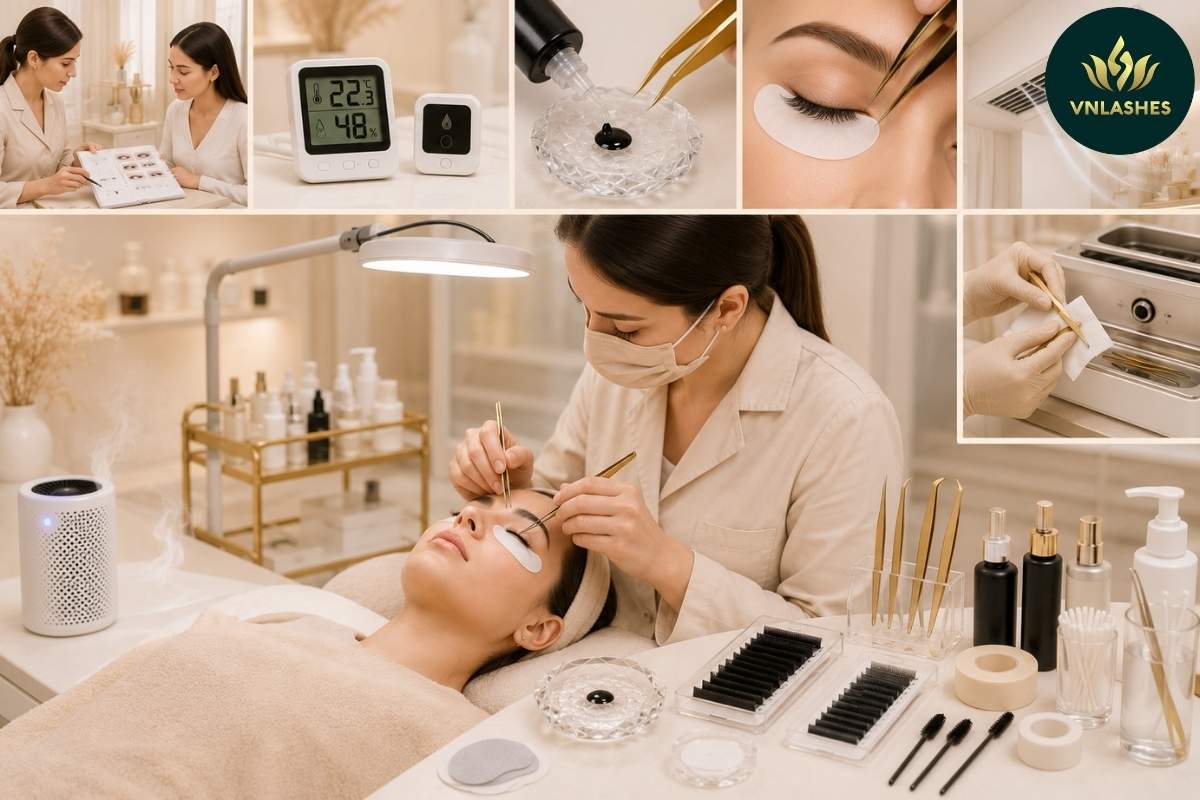
A patch test may help identify an obvious sensitivity, but it cannot guarantee that a full lash application will be reaction-free.
A patch test uses less adhesive and creates less exposure than a complete set. Some allergic reactions also develop only after repeated contact.
Patch testing should therefore be considered one part of the consultation and safety process rather than proof that a client cannot develop a lash extension allergy.
Can Sensitive Lash Glue Prevent Allergy?
Sensitive adhesives may offer:
- Lower fumes
- Reduced odour
- Slower curing
- Clear formulas without carbon black
These features may improve comfort for some clients. However, the terms “sensitive,” “low-fume” and “clear” do not mean that an adhesive cannot cause an allergic reaction.
Manufacturers, wholesalers and private-label lash brands should avoid claims such as:
- Completely allergy-free
- Safe for every client
- Guaranteed not to cause irritation
- Suitable for all sensitive eyes
Accurate product information is more responsible than absolute safety claims.
Can Clients Get Lash Extensions Again After an Allergy?
A client who has experienced a confirmed lash extension allergy should not immediately book another full set or simply change from black adhesive to clear glue.
Many lash adhesives contain similar cyanoacrylate bonding agents. Changing the pigment, brand or drying speed may not prevent another reaction.
The decision to receive lash extensions again should depend on:
- The suspected allergen
- The severity of the previous reaction
- Professional medical advice
- The ingredients in the new adhesive
- The client’s individual sensitivity
What Wholesale Lash Buyers Should Check
Salon owners, wholesalers, distributors and private-label brands should evaluate more than drying speed and retention when selecting professional lash adhesives.
Important purchasing information includes:
- Ingredient information where available
- Manufacturing and expiry dates
- Batch identification
- Recommended temperature and humidity
- Storage instructions
- Professional-use warnings
- Drying and curing information
- Packaging specifications
- Transportation conditions
- Supplier traceability
As a lash extension manufacturer and wholesale supplier, VNLASHES recommends choosing products with accurate specifications, stable quality records and clear professional-use instructions.

Frequently Asked Questions
Is Lash Extension Allergy Common?
A lash extension allergy is possible, but it should not be considered a normal part of the service. Some reactions may actually be caused by fumes, tape, pads or poor application technique.
What Is the Main Cause of Lash Extension Allergy?
Cyanoacrylate in lash adhesive is one of the most common substances linked to allergic reactions. However, pigments, tape, pads and preparation products may also contribute.
Is Clear Lash Glue Safer?
Clear glue does not contain black pigment, so it may be suitable for clients specifically sensitive to carbon black. However, it usually still contains cyanoacrylate and may still cause a lash extension allergy.
Can a Lash Artist Treat an Allergic Reaction?
No. Lash artists can stop the service, record the products used and arrange professional removal when appropriate. Medical diagnosis and treatment should be provided by a qualified healthcare professional.
Should Lash Extensions Be Removed Immediately?
Not every case of redness requires immediate removal. The correct response depends on the symptoms and their cause.
Severe or worsening symptoms should be medically assessed. If removal is recommended, it should be completed by a trained professional.
Can Lash Extension Allergy Develop Over Time?
Yes. A client may complete many appointments without problems and later develop a sensitivity to lash adhesive or another product used during the service.
Conclusion
A lash extension allergy may be associated with cyanoacrylate, adhesive pigments, repeated exposure or another material used during application. However, red and watery eyes may also result from fumes, incorrect tape placement, excessive adhesive or unsuitable salon conditions.
Careful client consultations, correct application techniques, controlled working environments and accurate product information can help reduce avoidable risks. However, no lash adhesive can be guaranteed to be completely allergy-free.
Severe, persistent or worsening symptoms should always be assessed by a qualified healthcare professional.


Bài viết liên quan
Private Label Lashes: Build Your Own Lash Brand With A Trusted Manufacturer
Building a successful business in today’s beauty industry involves more than simply selling high-quality products....
Oct
Zero Time Promade Fan Lashes – Wholesale Manufacturer & OEM Services
For lash salons and professional eyelash brands, application efficiency and consistent quality are important factors...
Oct
Magic Fan And Zero Time Promade Fan – A Faster, Time-Saving Lash Extension Solution
In the professional lash extension industry, application speed and product consistency are important factors for...
Oct
Custom Magic Fans Manufacturing and OEM Services: Production Process
When sourcing Magic Fans in bulk, buyers need more than just an attractive lash tray....
Aug
Lash Extension Removal: Common Mistakes and Safe Techniques
Lash extension removal is an important part of professional lash care. When extensions are removed...
Jul
Lash Foam Cleansers: A Practical Guide for Lash Professionals
Lash foam cleansers are essential products for cleaning natural lashes, eyelids and eyelash extensions. They...
Jul