
 Deutsch
 Русский
 Español
 Français
No products in the cart.

Lash Materials & Fibers, Eyelash Manufacturing & Factory
What Are Lashes Made Of? A Complete Guide to Eyelash Extension Materials
09
Jul
Jul
When people search for what are lashes made of, they usually want to understand the materials behind false lashes, eyelash extensions, lash trays, premade fans, and private label lash products. For lash artists, salon owners, distributors, and beauty brand owners, this question is more than basic product knowledge. The material used in lashes can affect softness, weight, curl retention, finish, comfort, and overall quality.
As a wholesale eyelash extension manufacturer, understanding what lashes are made of is important when developing a reliable lash product line. Whether the product is classic lash trays, volume trays, premade fans, easy fan lashes, magic fan lashes, or OEM lash products, the right eyelash extension material helps improve consistency and customer satisfaction.
This guide explains what are lashes made of, the most common eyelash extension materials, how synthetic lash fibers are used in production, and how to choose the right lash material for salon supply, wholesale orders, and private label lash brands.
What Are Lashes Made Of?
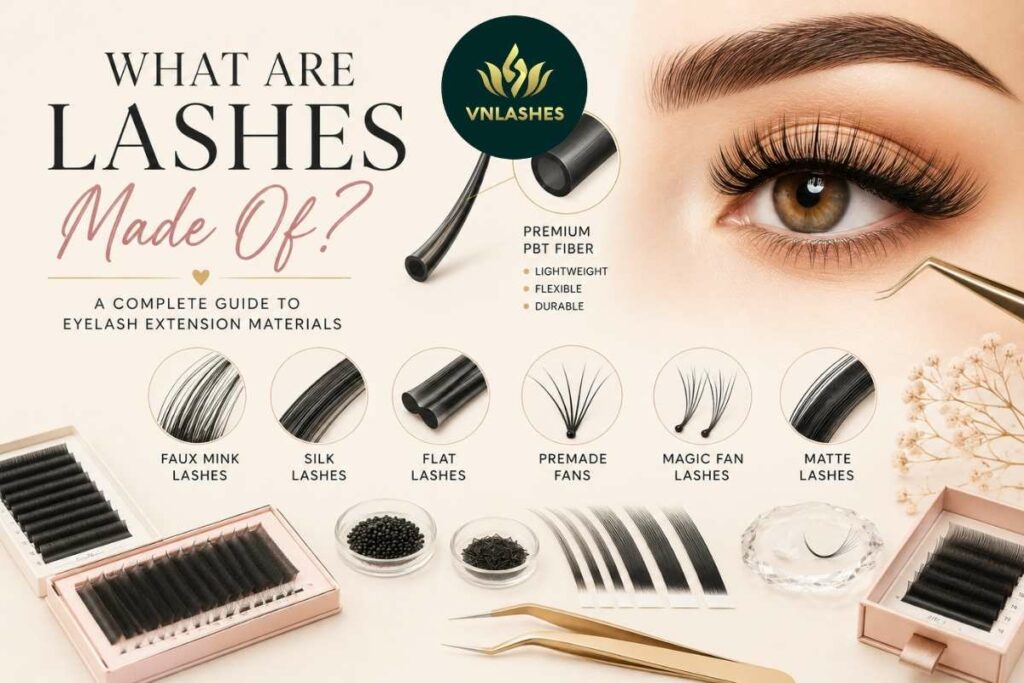
Most modern professional eyelash extensions are made from PBT, which stands for polybutylene terephthalate. PBT is a synthetic lash fiber widely used in the eyelash industry because it is lightweight, flexible, durable, and able to hold curl well after heat processing.
Many lash products are marketed as faux mink lashes, silk lashes, cashmere lashes, velvet lashes, flat lashes, or matte lashes. However, these names usually describe the look, texture, softness, finish, and design of the product rather than the exact raw material. In many cases, these eyelash extensions are still made from high-quality PBT fiber.
For example, faux mink lashes are not made from real mink fur. They are usually created from synthetic fibers designed to look soft, fluffy, and natural. Silk lashes are also commonly made from synthetic material, with a smoother surface and a slightly satin-like finish. Flat lashes are made with a special shape that gives a darker effect while keeping the product lightweight.
So, what are lashes made of in most professional lash products today? The answer is usually synthetic PBT fiber. This material is now the standard choice for eyelash extensions because it is consistent, cruelty-free, customizable, and suitable for bulk production.
Why Eyelash Extension Materials Matter
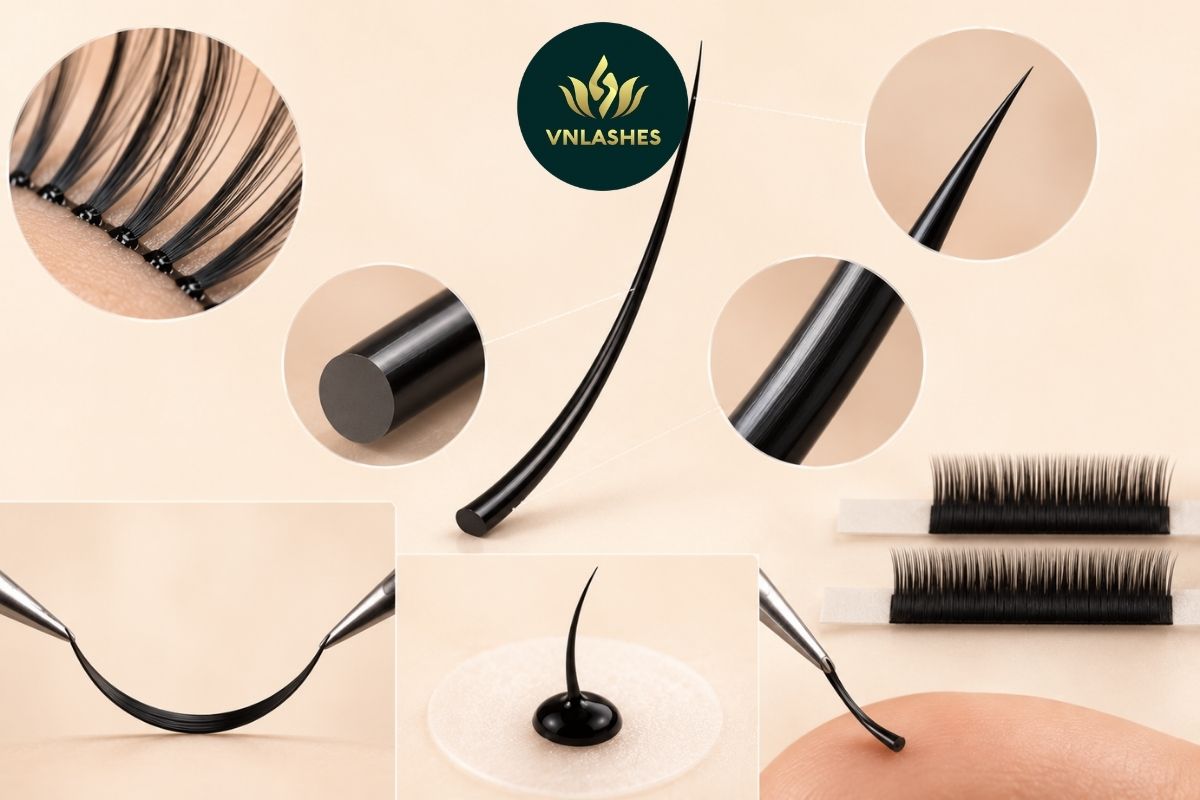
The material used in eyelash extensions affects the final result on the eyes and the experience during application. For lash artists, the right lash material can make pickup, placement, and styling easier. For clients, it can improve comfort and appearance. For lash brands, eyelash extension material quality can influence customer satisfaction, repeat orders, and long-term reputation.
Softness and Comfort
Softness is one of the first things customers notice when touching or wearing lash extensions. High-quality PBT lashes can feel soft and lightweight while still keeping a stable structure. This is especially important for volume lash sets, wispy styles, natural lash looks, and long-wear salon services.
If the lash fiber is too stiff, the finished set may feel heavy or uncomfortable. If the fiber is too weak, the lashes may lose curl or shape easily. A good eyelash extension material needs to balance softness, elasticity, and durability.
Curl Retention
Curl retention is another key factor when discussing what lashes are made of. Professional eyelash extensions are usually heat-treated to create curls such as J, B, C, CC, D, L, M, LC, and LD. A good synthetic lash fiber should keep its curl after production, packaging, shipping, and application.
For wholesale buyers, curl stability is very important. A C curl should look consistent from batch to batch, and a D curl should maintain its lifted effect. Stable curl retention helps reduce complaints and builds trust in the lash product line.
Matte or Glossy Finish
Different eyelash extension materials and surface treatments create different finishes. Some lashes have a deep matte black look, while others have a slightly glossy or satin effect. Matte lashes are often preferred for soft, natural, and premium-looking sets. Glossier lash products may suit clients who want a bolder and more noticeable lash line.
For lash brands, the right finish depends on the target market. Some salons prefer dark matte lash trays for daily professional use, while other customers may like a brighter finish for dramatic beauty styles.
Weight and Thickness
Lash material quality also affects product weight. Professional eyelash extensions are available in different thicknesses, such as 0.03, 0.05, 0.07, 0.10, 0.15, and 0.20 mm. Thin fibers are commonly used for volume lashes and mega volume fans, while thicker options are often chosen for classic lash sets.
High-quality synthetic fibers allow manufacturers to create lightweight lashes that still look full, dark, and defined. This is especially important for premade fans, magic fan lashes, and volume lash trays because each fan contains multiple lash fibers.
Common Eyelash Extension Materials
There are several common names used in the lash industry. Some refer to the actual fiber, while others describe the texture, finish, or product style. To fully understand what are lashes made of, it is important to know the difference between these material names.
PBT Eyelash Extensions
PBT is the most widely used material for professional eyelash extensions today. It is known for strength, flexibility, curl retention, and stable shape. This synthetic lash fiber can be made into different lengths, curls, thicknesses, and styles.
For bulk production, PBT eyelash extensions are popular because they offer consistent quality, stable black color, and reliable performance. PBT is suitable for classic lash trays, volume lashes, premade fans, easy fan lashes, laser lashes, flat lashes, and custom lash collections.
The main benefits of PBT lashes include:
- Lightweight feel
- Good curl stability
- Deep black appearance
- Flexible texture
- Suitable for large-volume production
- Cruelty-free alternative to animal fur
- Consistent quality between batches
For beauty brands, PBT is also practical because it can be customized into different eyelash extension product lines. Depending on processing and surface finish, the same base fiber can become matte lashes, glossy lashes, soft trays, flat lashes, or fan-based lash products.
Faux Mink Lashes
Faux mink lashes are one of the most popular categories in the professional lash market. Although the name includes “mink,” faux mink lashes are not made from real animal fur. Most faux mink eyelash extensions are made from synthetic PBT fibers designed to imitate the soft, fluffy, and natural look of mink.
This lash material category is popular because it offers a good balance of softness, darkness, flexibility, and curl retention. Faux mink lashes can be used for both natural and dramatic lash sets, depending on curl, length, thickness, and fan design.
For B2B buyers, faux mink lashes are a strong product line because lash artists are already familiar with the name. Many brands use faux mink lashes as a core collection for classic trays, volume trays, premade fans, and private label lash packaging.
Best Uses for Faux Mink Lashes
Faux mink lashes are suitable for:
- Classic lash sets
- Volume lash trays
- Premade fans
- Wispy lash styles
- Salon daily services
- Custom lash brands
- Distributor supply
They can be produced in many curls, lengths, and thicknesses to match different markets. For example, some customers prefer C and CC curl for soft enhancement, while others choose D curl for a more lifted and dramatic effect.
Silk Lashes
Silk lashes are another common category in eyelash extension products. Despite the name, most silk lashes are not made from real silk. They are usually made from synthetic fibers with a smooth surface and a slightly satin-like appearance.
Compared with faux mink lashes, silk lashes may look a little glossier and darker. They are often used for clients who want a fuller lash look without choosing very thick or heavy fibers. This eyelash extension material can create a clean, elegant, and noticeable lash style.
For lash artists, silk lash trays can be easy to work with because they offer a smooth texture and defined finish. For wholesale lash brands, silk lashes can be positioned as a professional, classic, or premium product line.
Best Uses for Silk Lashes
Silk lashes are suitable for:
- Classic lash sets
- Soft volume lash styles
- Clients who prefer a slightly darker finish
- Brands that want a smooth and elegant collection
- Markets that prefer a polished lash look
When creating an OEM lash collection, silk lashes can be offered as a separate line from faux mink lashes to give customers more choices.
Flat Lashes
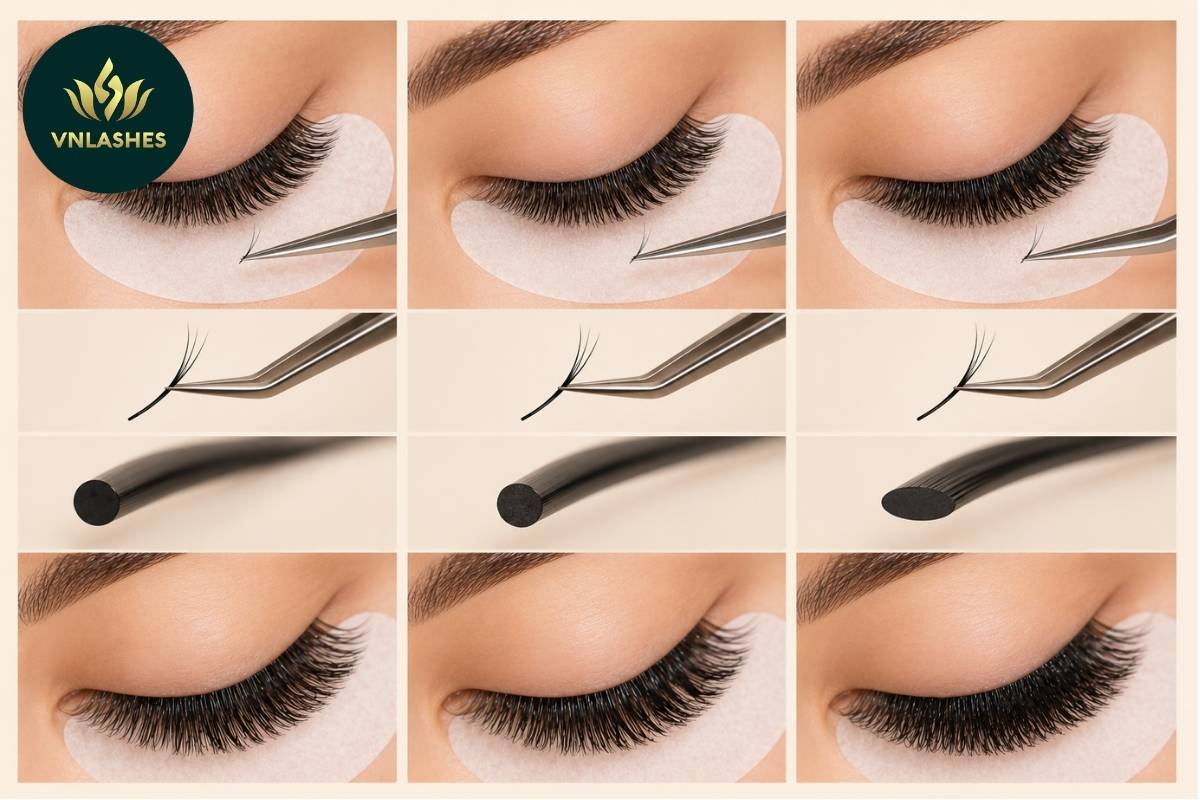
Flat lashes are made from synthetic fibers but have a different shape from traditional round eyelash extensions. Instead of a round base, flat lashes have a flatter or oval-shaped structure. This shape helps create a darker look while keeping the product lightweight.
Flat lashes are often used for classic application because they can create a more dramatic lash line without using a very thick fiber. The wider base may also provide better contact with the natural lash during placement.
For salons, flat lashes are useful when clients want a darker effect but still need comfortable wear. For wholesalers, this is a practical lash material category because it meets a common need: more definition with less weight.
Best Uses for Flat Lashes
Flat lashes are suitable for:
- Classic eyelash extensions
- Darker lash line effects
- Lightweight but bold sets
- Faster attachment
- Private label classic trays
Flat lashes can be customized in different curls and thicknesses, such as 0.15 or 0.20, depending on customer demand.
Real Mink Lashes
Real mink lashes are made from mink fur. In the past, they were marketed as a luxury option because they looked soft, fluffy, and natural. However, real mink lashes are now less common in professional lash production because of ethical concerns, animal welfare issues, sourcing difficulties, and inconsistent quality.
Many modern lash brands now choose faux mink lashes instead. High-quality synthetic lash fibers can create a similar soft and fluffy effect without using animal fur.
For wholesale and private label businesses, faux mink lashes are usually more practical because they are easier to source, more consistent in quality, and better aligned with cruelty-free beauty trends.
Human Hair Lashes
Human hair lashes are made from processed human hair. They are more commonly found in some strip lash products rather than professional eyelash extension trays. While they can provide a natural appearance, they are not widely used in professional lash extension manufacturing due to sourcing, hygiene, consistency, and production challenges.
For modern salon supply and large-scale eyelash extension production, synthetic PBT remains the more common and reliable choice.
Are Most Professional Lash Products Synthetic?
Yes, most professional eyelash extensions today are synthetic. Even when they are called faux mink lashes, silk lashes, cashmere lashes, velvet lashes, or matte lashes, they are usually made from PBT or similar synthetic fibers.
This is not a weakness. Synthetic lash fibers have become the industry standard because they are stable, customizable, and suitable for professional application. They can be produced in many forms, including classic lash trays, volume trays, premade fans, magic fan lashes, easy fan lashes, YY lashes, W lashes, flat lashes, and laser lashes.
For manufacturers, synthetic eyelash extension material allows better control over:
- Curl
- Thickness
- Length
- Taper
- Color
- Softness
- Finish
- Fan shape
- Tray design
- Batch consistency
For lash artists, distributors, and beauty brands, this means more reliable lash products and more choices for different client needs.
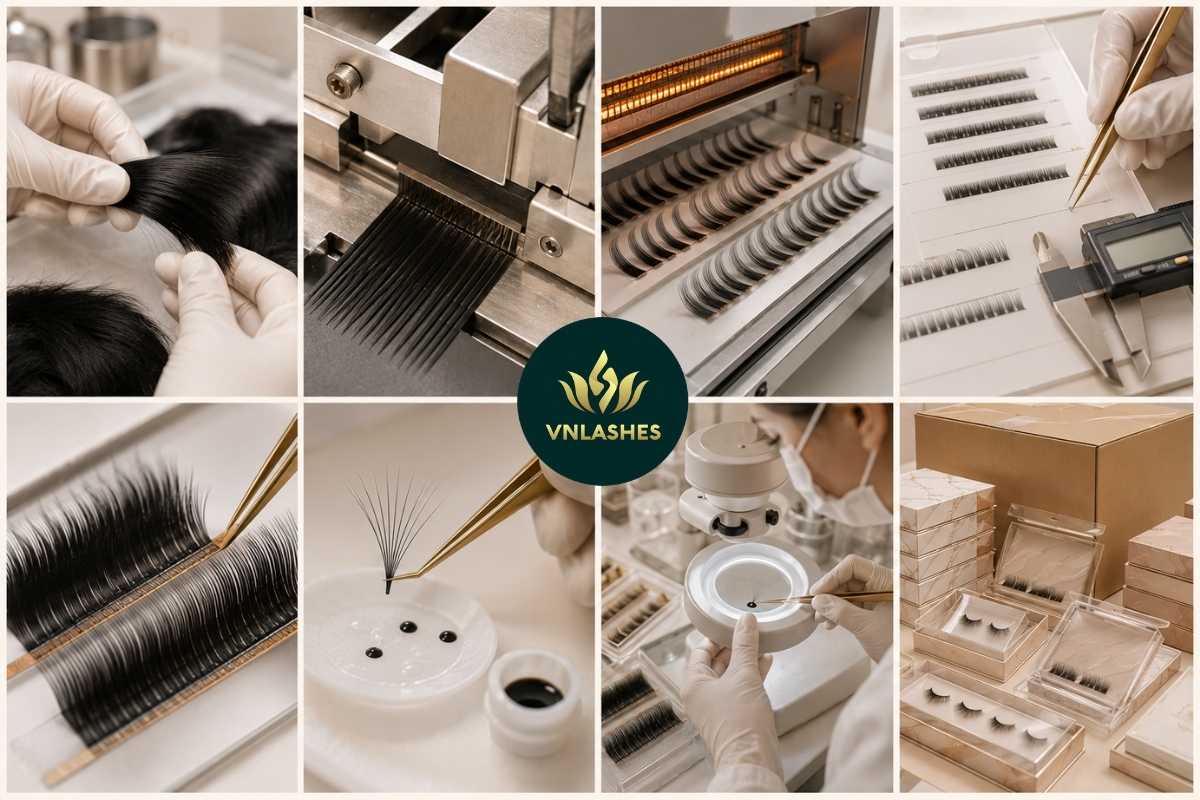
How Eyelash Extensions Are Made
Understanding what lashes are made of also means understanding how eyelash extensions are produced. A professional lash product is not just a simple fiber. It goes through multiple steps before becoming a finished lash tray, fan, or branded item.
Fiber Selection
The first step is choosing the right lash fiber. High-quality PBT should have good softness, elasticity, blackness, and stability. It must be suitable for heat processing and able to hold curl after production.
For wholesale manufacturing, fiber selection is extremely important because it affects final lash quality. Poor fiber may look uneven, feel stiff, lose curl, or create inconsistent results between batches.
Cutting and Shaping
After fiber selection, the material is cut and shaped into different lengths, thicknesses, and tapers. Professional eyelash extensions can range from short natural lengths to longer dramatic styles, depending on the product line.
The taper also affects the final lash look. A longer taper often creates a softer and more natural finish, while a shorter taper can create a darker and bolder appearance.
Curling and Heat Setting
The fibers are then curled through heat processing. This step creates different curl types such as J, B, C, CC, D, L, M, LC, and LD. The right temperature and timing help the curl stay stable without making the product too stiff.
Good curl setting is especially important for international wholesale orders because eyelash extensions may go through long shipping times and different climate conditions.
Arranging on Lash Trays
For lash trays, the fibers are arranged into neat lines on a strip. Each line should have consistent length, curl, and spacing. A clean tray helps lash artists pick up the fibers smoothly during application.
For volume trays and easy fan products, arrangement and base control are even more important because artists need to create fans quickly and evenly.
Making Premade Fans or Magic Fan Lashes
Premade fans and magic fan lashes require additional fan-making steps. Multiple lash fibers are arranged into a fan shape and fixed at the base. The base should be narrow, clean, and lightweight.
For salon owners, high-quality premade fans can save application time. For lash brands, fan-based lash products are valuable because they are popular with busy lash artists and salons that need faster service.
Quality Control
Quality control is one of the most important steps in eyelash extension manufacturing. Each batch should be checked for curl, length, thickness, fan shape, base quality, glue control, tray arrangement, and packaging condition.
For B2B orders and branded packaging projects, quality control helps ensure that sample quality and bulk order quality remain consistent. This is especially important for lash brands that want long-term customer trust.
How to Choose the Right Lash Material for Your Business
If you are a salon owner, distributor, or private label brand, choosing the right lash material depends on your target customers and brand positioning.
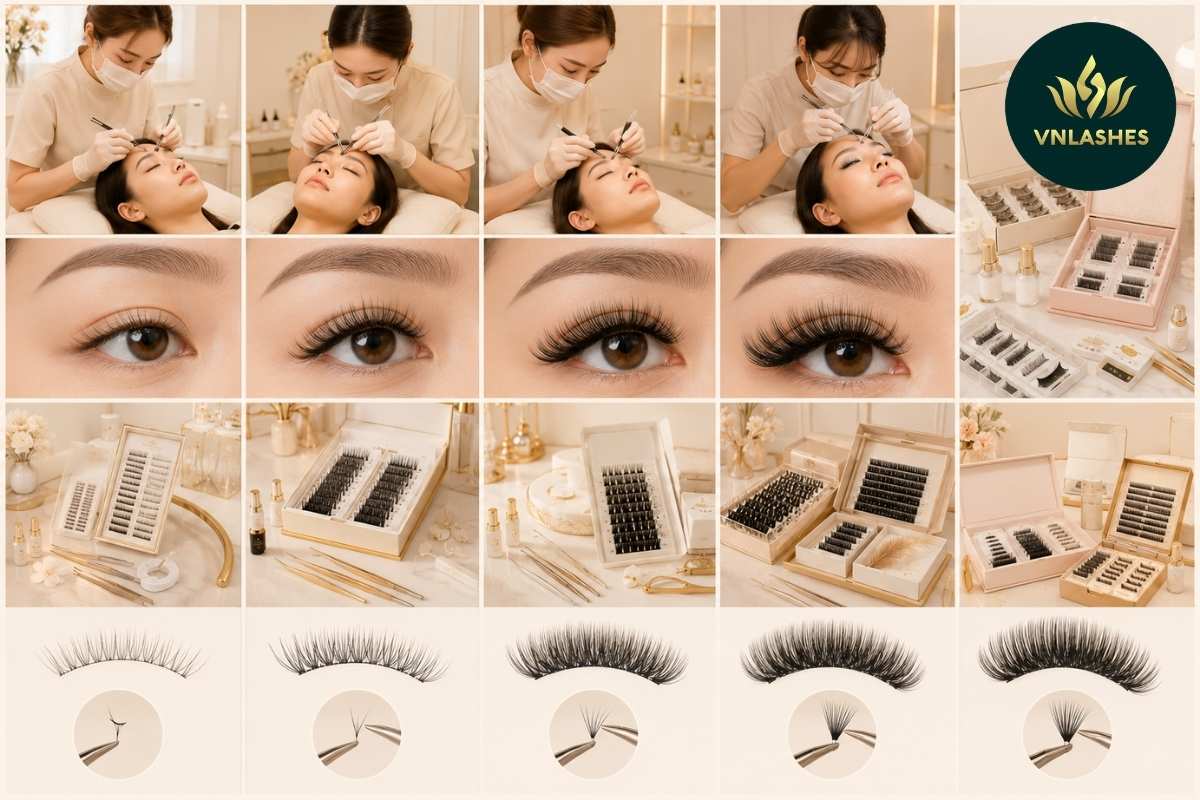
For Natural Lash Sets
For natural styles, soft faux mink lashes, silk lash trays, or thin classic fibers are good choices. These options can create a lightweight and comfortable look for everyday clients.
Recommended options include:
- Faux mink classic trays
- Silk classic trays
- 0.07 volume lashes
- C or CC curl trays
- Soft matte finish lashes
For Dramatic Volume Sets
For dramatic volume, lightweight PBT volume trays or premade fans are commonly used. Thin fibers such as 0.03, 0.05, or 0.07 can help create fuller sets without adding too much weight.
Recommended options include:
- Premade fans
- Magic fan lashes
- Volume lash trays
- 5D, 7D, 10D, or 14D fans
- D curl or CC curl
- Matte black finish
For Fast Salon Application
Busy salons often prefer eyelash extension products that save time. Premade fans, magic fan lashes, and easy fan lashes are good choices because they reduce the time needed to create volume fans by hand.
These products are especially useful for salons with many daily appointments or lash artists who want more consistent volume results.
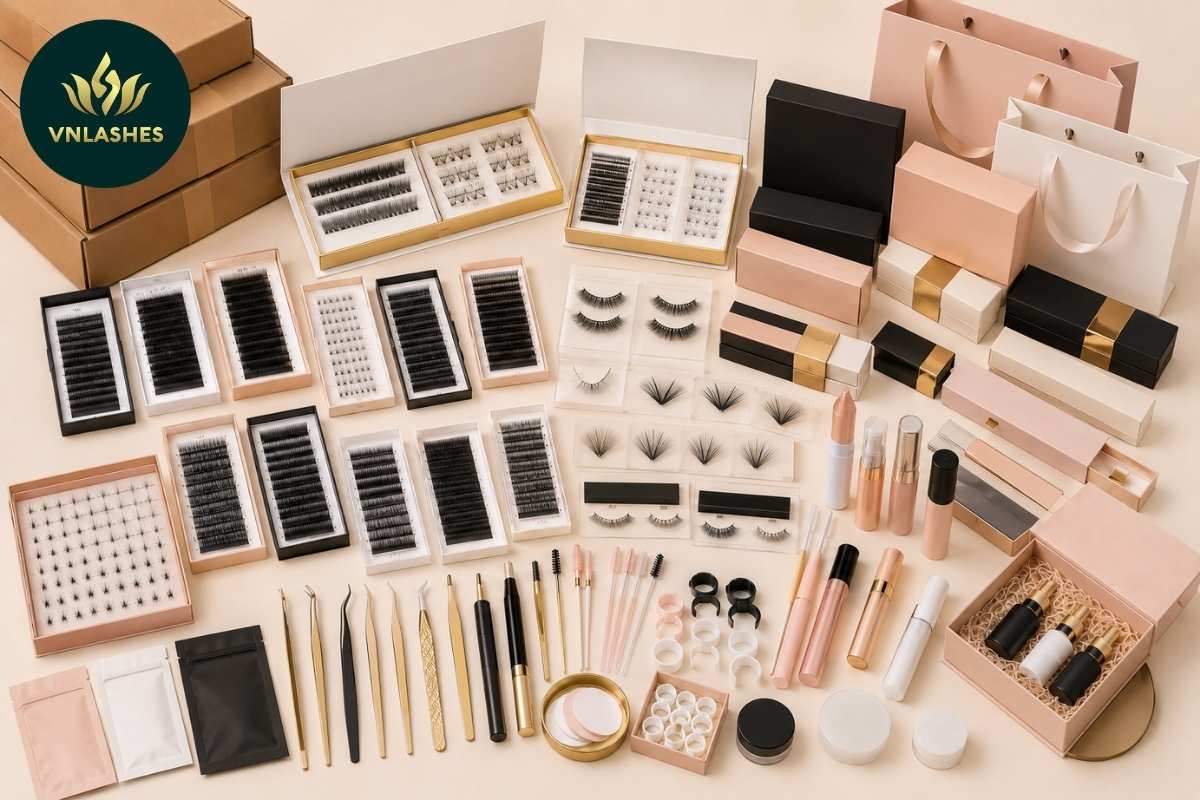
For Private Label Lash Brands
For private label lash businesses, material selection should match the brand image. A premium brand may focus on soft matte PBT fibers, clean bases, and luxury packaging. A salon supply brand may focus on practical products such as classic trays, premade fans, and mixed-size lash trays.
When working with an eyelash extension manufacturer, common customization options include:
- Fiber type
- Curl
- Thickness
- Length
- Fan dimension
- Tray style
- Label design
- Packaging
- Mixed-size options
- Logo and branding
This flexibility helps create a lash product line that fits different markets and customer needs.
What Lash Materials Are Best for Wholesale Orders?
For wholesale orders, PBT-based eyelash extensions are usually the best choice. They provide stable quality, professional performance, and flexible customization. They are also easier to produce in large quantities while keeping curl, color, and shape consistent.
Best Wholesale Lash Product Options
The most practical product categories for B2B buyers include:
- PBT faux mink lashes
- Silk lash trays
- Matte synthetic lashes
- Flat lashes
- Premade fan lashes
- Easy fan lashes
- Magic fan lashes
- Laser lashes
These lash products are suitable for lash brands, salon suppliers, distributors, and training academies.
What Are Cruelty-Free Lashes Made Of?
Cruelty-free lashes are usually made from synthetic fibers such as PBT. They do not use real animal fur and are designed to provide softness, curl, and beauty without animal involvement.
Cruelty-free eyelash extensions are increasingly popular in international markets because more customers care about ethical beauty choices. For lash brands, offering animal-free alternatives can also strengthen product positioning and brand value.
Common Questions About Lash Materials
Are Faux Mink Lashes Real Mink?
No. Faux mink lashes are not made from real mink fur. They are synthetic lash products designed to imitate the soft and fluffy look of mink. Most faux mink eyelash extensions are made from PBT fiber.
Are Silk Lashes Made of Real Silk?
Usually, no. Most silk lashes are made from synthetic fibers. The word “silk” mainly describes the smooth texture, soft feel, and satin-like finish.
Are Synthetic Lashes Good Quality?
Yes, synthetic lashes can be very high quality when made from premium PBT fiber and processed correctly. Many professional lash artists prefer synthetic eyelash extensions because they are consistent, cruelty-free, and available in many styles.
Which Lash Material Holds Curl Best?
PBT fiber is known for good curl retention. With proper heat processing, it can hold curls such as C, CC, D, L, and M well.
What Material Is Best for Premade Fans?
Lightweight PBT fiber is commonly used for premade fans. It allows the fan to stay soft, fluffy, and stable while keeping the base clean and narrow.
Final Thoughts: What Are Lashes Made Of?
So, what are lashes made of? Most professional eyelash extensions today are made from synthetic PBT fibers. Depending on finish, softness, taper, and design, they may be called faux mink lashes, silk lashes, flat lashes, matte lashes, glossy lashes, or premade fan lashes.
For lash artists and salon owners, understanding eyelash extension materials helps create better results for clients. For wholesalers, distributors, and private label lash brands, choosing the right lash material is essential for product quality, market positioning, and long-term customer satisfaction.
In professional eyelash extension manufacturing, PBT remains the most common and practical material because it is lightweight, stable, customizable, cruelty-free, and suitable for large-scale production. From classic lash trays to volume lashes, premade fans, magic fan lashes, and OEM lash products, the right material can help create a stronger and more reliable lash collection.


Bài viết liên quan
Zero Time Promade Fan Lashes – Wholesale Manufacturer & OEM Services
For lash salons and professional eyelash brands, application efficiency and consistent quality are important factors...
Oct
Magic Fan And Zero Time Promade Fan – A Faster, Time-Saving Lash Extension Solution
In the professional lash extension industry, application speed and product consistency are important factors for...
Oct
Magic Fans And Zero Time Promade Fan: Are They the Same Type of Lashes?
When looking for premade lash fans, lash brands, importers, distributors, and wholesale buyers may come...
Sep
Magic Fans Lashes Manufacturer & Exporter In Vietnam – A Stable Supply Source For Wholesale Buyers
When choosing a Magic Fans Lashes Manufacturer & Exporter, wholesale buyers are usually not only...
Sep
Custom Magic Fans Manufacturing and OEM Services: Production Process
When sourcing Magic Fans in bulk, buyers need more than just an attractive lash tray....
Aug
Vietnam National Day Eyelash Promotion – Order 10 Boxes, Get 20% Off
🇻🇳 VIETNAM NATIONAL DAY EYELASH PROMOTION 🔥 VIETNAM NATIONAL DAY EYELASH PROMOTION – 10 BOXES,...
Aug