
 Deutsch
 Русский
 Español
 Français
No products in the cart.

Eyelash Knowledge & Education, Lash Adhesive & Retention
Stringy Lash Extension Glue: Causes, Fixes & Prevention Tips
02
Jul
Jul
Stringy lash extension glue can make lash application messy, slow, and difficult to control. When the adhesive becomes thick, sticky, or forms thin threads between the glue dot, tweezers, and lash fan, it can affect placement, bonding, and lash retention.
For lash artists, salons, distributors, and private label lash brands, understanding this issue helps reduce complaints and improve product performance. As a professional eyelash manufacturer in Vietnam, VNLASHES supports global lash businesses with wholesale lash products, OEM packaging, and private label solutions.
What Is Stringy Lash Extension Glue?
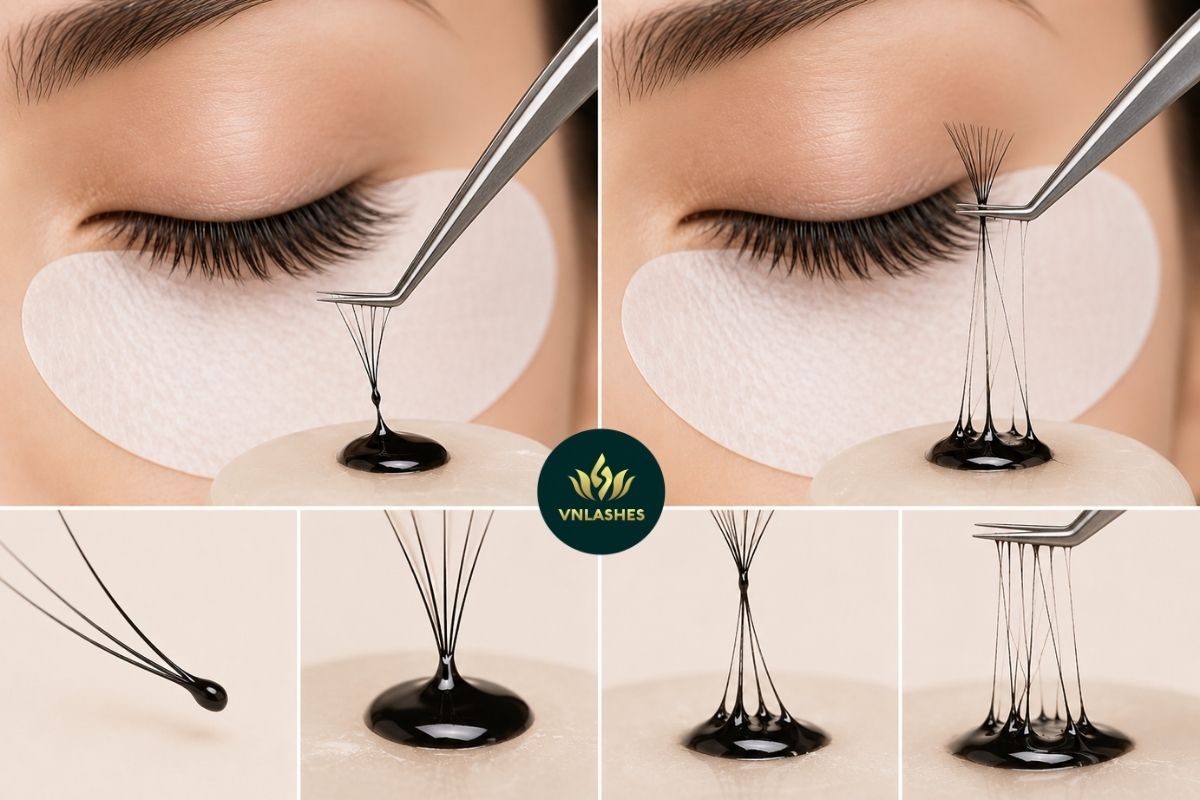
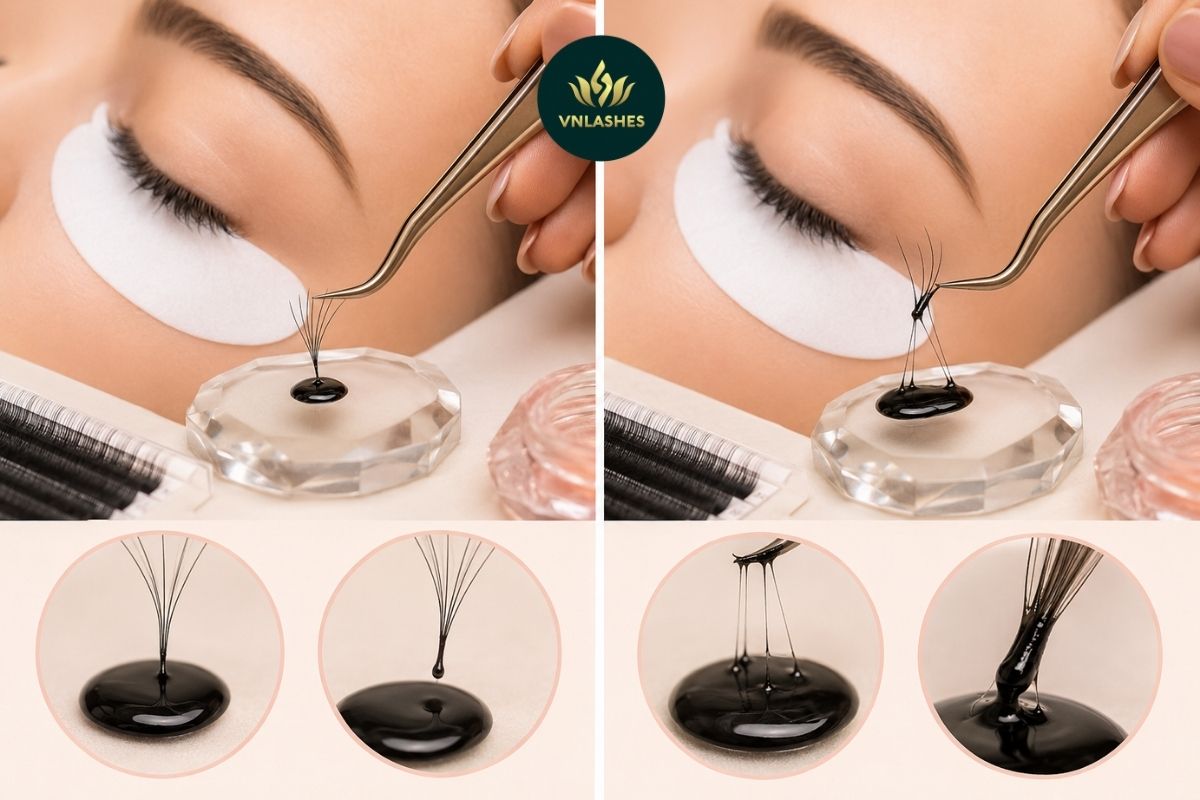
Stringy lash extension glue is adhesive that pulls into sticky threads when you dip or lift the lash fan. Instead of creating a clean glue bead at the lash base, the formula stretches and clings, making application less precise.
This can lead to messy glue control, uneven adhesive amount, slower application speed, poor lash placement, and lower retention quality. For professional lash businesses, adhesive consistency matters because it directly affects technician workflow and customer satisfaction.
Main Causes of Stringy Lash Extension Glue
1. Expired or Old Lash Adhesive
Lash adhesive has a limited shelf life. Even unopened bottles can degrade if stored too long or exposed to heat, moisture, or sunlight.
Old adhesive may become thick, sticky, rubbery, difficult to shake evenly, or stringy when pulled from the glue dot. Wholesale buyers should always check production dates, expiry dates, and supplier storage recommendations before selling or using adhesive products.
2. Poor Glue Storage
Lash extension adhesive is sensitive to air, humidity, heat, and direct sunlight. If stored incorrectly, the formula may start curing inside the bottle, causing unstable texture.
To store lash glue properly, keep it in a cool, dry place, avoid direct sunlight, store it in an airtight pouch or container, add silica gel packs, and close the cap tightly after every use.
Clear storage instructions are especially important for distributors and private label lash brands because they help reduce product complaints and improve customer satisfaction.
3. Contaminated Glue Nozzle
A dirty nozzle is a common reason for adhesive stringing. Old glue residue around the bottle opening can cure and mix with fresh drops, creating a sticky, uneven texture.
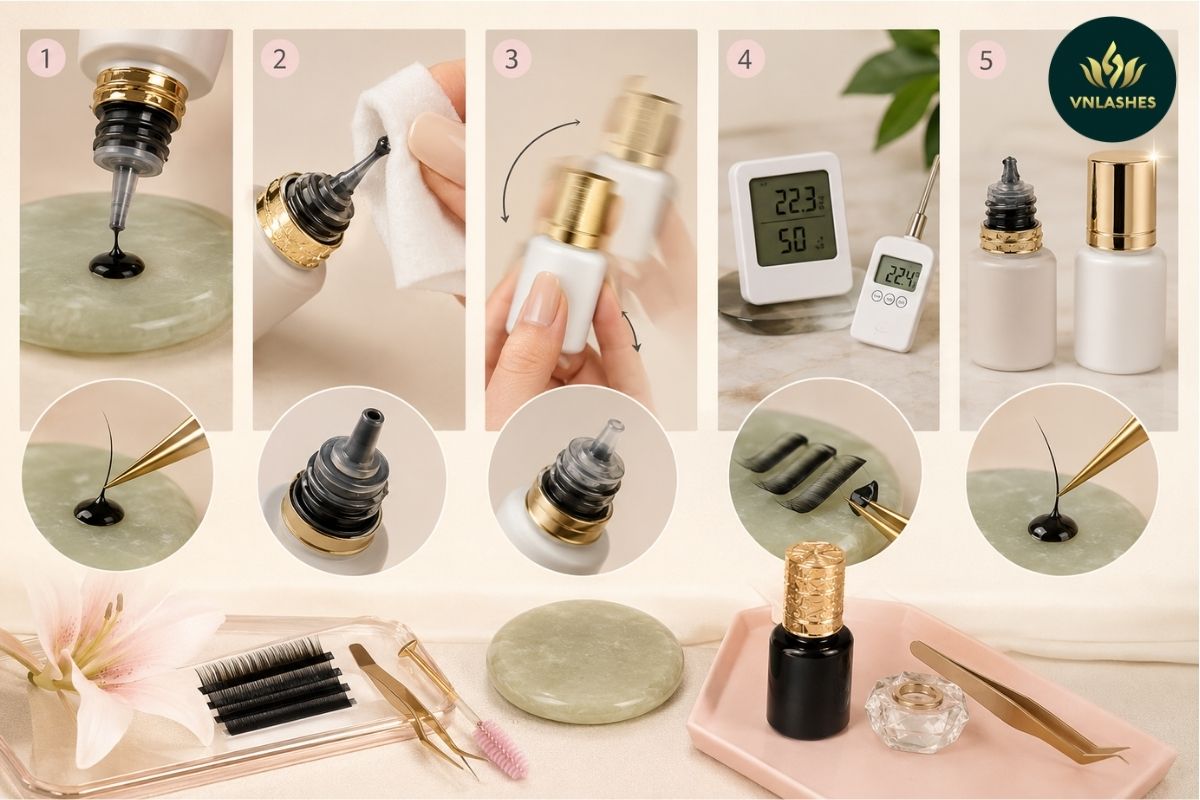
After dispensing each drop, wipe the nozzle with a lint-free wipe, avoid cotton pads because fibers may stick, and close the cap immediately. Clean handling keeps the adhesive stable from the first use to the last.
4. Wrong Temperature and Humidity
Lash adhesive reacts to moisture in the air. If the room is too hot, too cold, too dry, or too humid, the glue may cure unevenly.
Most professional lash glues work best around:
- Temperature: 20–24°C
- Humidity: 45–60%
However, each formula is different. Lash artists should always follow the supplier’s recommended working range and use a hygrometer to monitor the lash room.
For professional safety awareness, the American Academy of Ophthalmology notes that eyelash extensions can be safe when consumers take proper precautions to protect their eyes.
5. Not Shaking the Glue Well
Lash glue contains different components that must be mixed evenly before use. If the bottle is not shaken enough, the adhesive may become unstable and stringy.
Before use, shake the bottle for 30–60 seconds, use a glue shaker if available, shake again during long lash sets, and dispense a fresh drop after shaking. A well-mixed adhesive gives smoother dipping and more consistent bonding.
6. Using the Same Glue Drop Too Long
A glue drop starts curing as soon as it is exposed to air. After 15–20 minutes, the surface may become thicker and sticky.
Replace the glue drop every 15–20 minutes, or sooner if the room is warm, humidity is high, the glue dot looks thick, the adhesive starts forming threads, or the dip no longer feels smooth.
7. Incorrect Dipping Technique
Dragging the lash fan through the glue can create long adhesive strings. Instead, dip only the lash base and lift vertically.
Use a small amount of adhesive, avoid over-dipping, lift straight up, and do not drag the fan sideways. A clean dipping technique helps create a neat glue bead and better lash placement.
Quick Fixes During a Lash Set
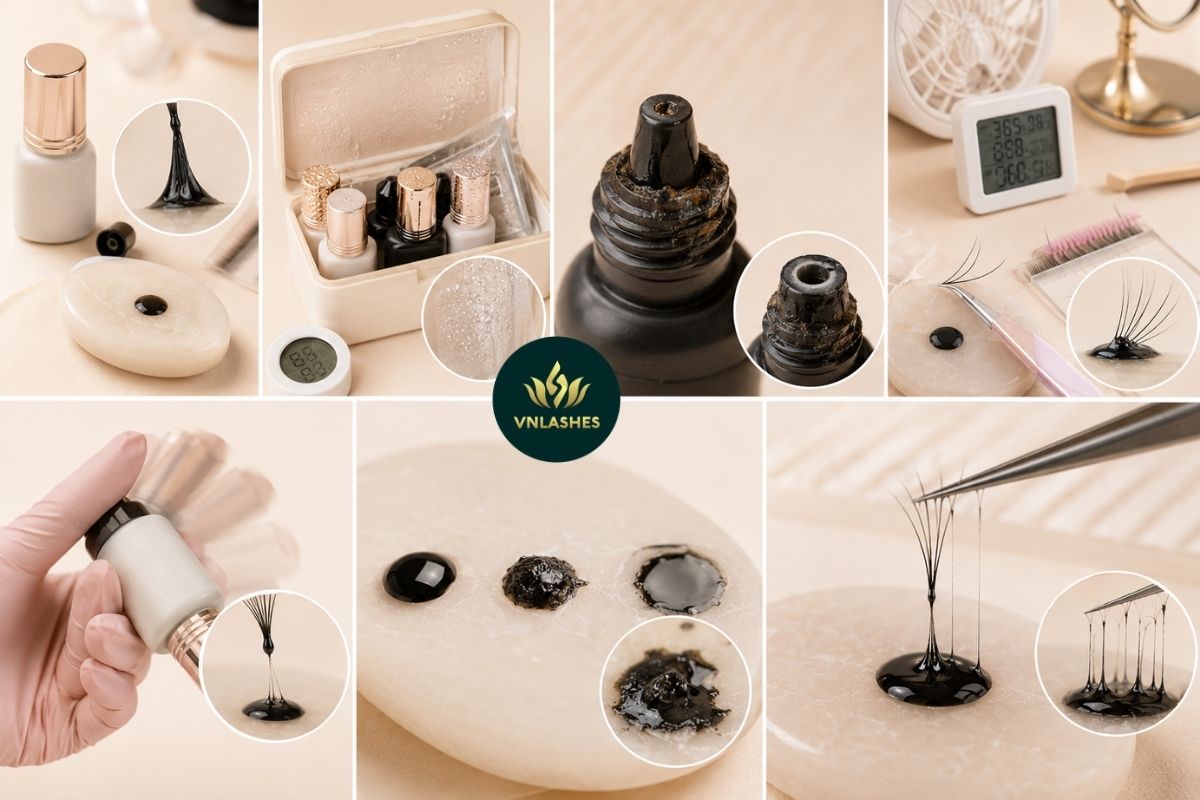
If your glue becomes stringy mid-set, try these quick fixes:
- Dispense a fresh glue drop
- Clean the nozzle before using again
- Shake the bottle for 30–60 seconds
- Check room humidity and temperature
- Replace the bottle if it is expired or opened too long
If the adhesive is still stringy after shaking and cleaning, it is better to replace it with a fresh bottle.
Stringy Lash Glue Prevention Checklist
| Problem | Possible Cause | Best Solution |
|---|---|---|
| Glue forms threads | Old glue drop | Replace every 15–20 minutes |
| Thick texture | Expired adhesive | Use a fresh bottle |
| Uneven consistency | Not shaken well | Shake 30–60 seconds |
| Fast curing | High humidity or heat | Adjust room conditions |
| Sticky texture | Poor storage | Store with silica gel |
| Glue pulls from nozzle | Dirty nozzle | Wipe after each use |
| Messy application | Wrong dipping technique | Dip and lift vertically |
For Distributors & Private Label Lash Brands
For distributors and private label brands, consistent adhesive performance helps protect brand reputation, reduce after-sales issues, and increase repeat orders. Customers do not only judge adhesive by drying speed; they also care about texture, storage stability, packaging clarity, and professional usage guidance.
Why Choose VNLASHES?
VNLASHES is a professional eyelash manufacturer in Vietnam, supplying lash brands, salons, academies, and distributors with reliable wholesale lash products.
We support wholesale lash extension supplies, OEM/private label packaging, lash trays, premade fans, lash accessories, sample orders, and B2B consultation for global buyers.
Final Thoughts
Stringy lash extension glue can affect application speed, bonding quality, and lash retention. Most causes are preventable with proper storage, clean handling, stable room conditions, and correct dipping technique.
Looking for reliable wholesale lash products or private label lash solutions? Contact VNLASHES today to request samples, discuss OEM packaging, and build a professional lash product line for your brand.


Bài viết liên quan
Custom Magic Fans Manufacturing and OEM Services: Production Process
When sourcing Magic Fans in bulk, buyers need more than just an attractive lash tray....
Aug
Lash Extension Removal: Common Mistakes and Safe Techniques
Lash extension removal is an important part of professional lash care. When extensions are removed...
Jul
Lash Foam Cleansers: A Practical Guide for Lash Professionals
Lash foam cleansers are essential products for cleaning natural lashes, eyelids and eyelash extensions. They...
Jul
Lash Adhesive Remover: A Must-Have Product for Professional Lash Businesses
In the lash industry, a beautiful lash set is not only about application. Safe, clean,...
Jul
L Family Special Curl Lashes: LJ, LB, LC and LC+ Guide
L Family Special Curl Lashes are a progressive curl collection created for lash professionals who...
Jul
C Curl vs D Curl: Which Lash Curl Is Right for Your Clients?
Choosing the right eyelash curl is essential for creating a balanced, comfortable and attractive lash...
Jul