
 Deutsch
 Русский
 Español
 Français
No products in the cart.

Eyelash Knowledge & Education, Lash Extension Guides
Lonely Fan Method: A Simple Guide for Volume Lash Artists
10
Jul
Jul
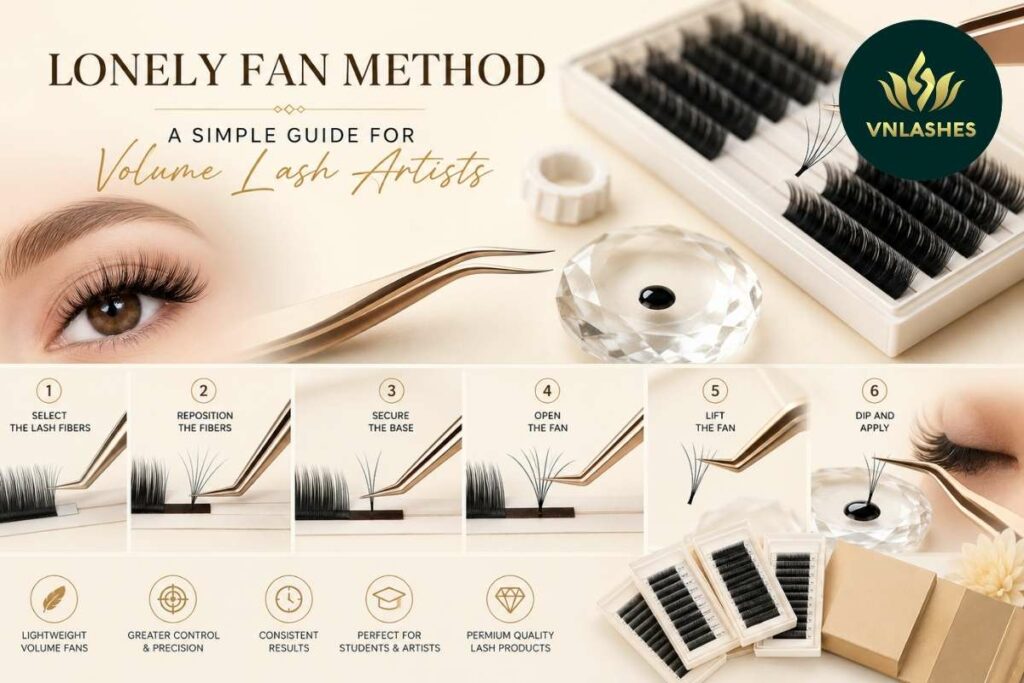
The lonely fan method is a practical handmade volume technique that helps lash artists create lightweight, balanced, and well-shaped fans. Its controlled process makes it especially suitable for beginners who are learning how to create volume lash fans by hand.
As a wholesale eyelash manufacturer, we understand that mastering the lonely fan method depends on both technique and product quality. Uniform fibers, stable curls, suitable diameters, consistent lash strips, and precise tweezers can make fan creation easier and more predictable.
What Is the Lonely Fan Method?
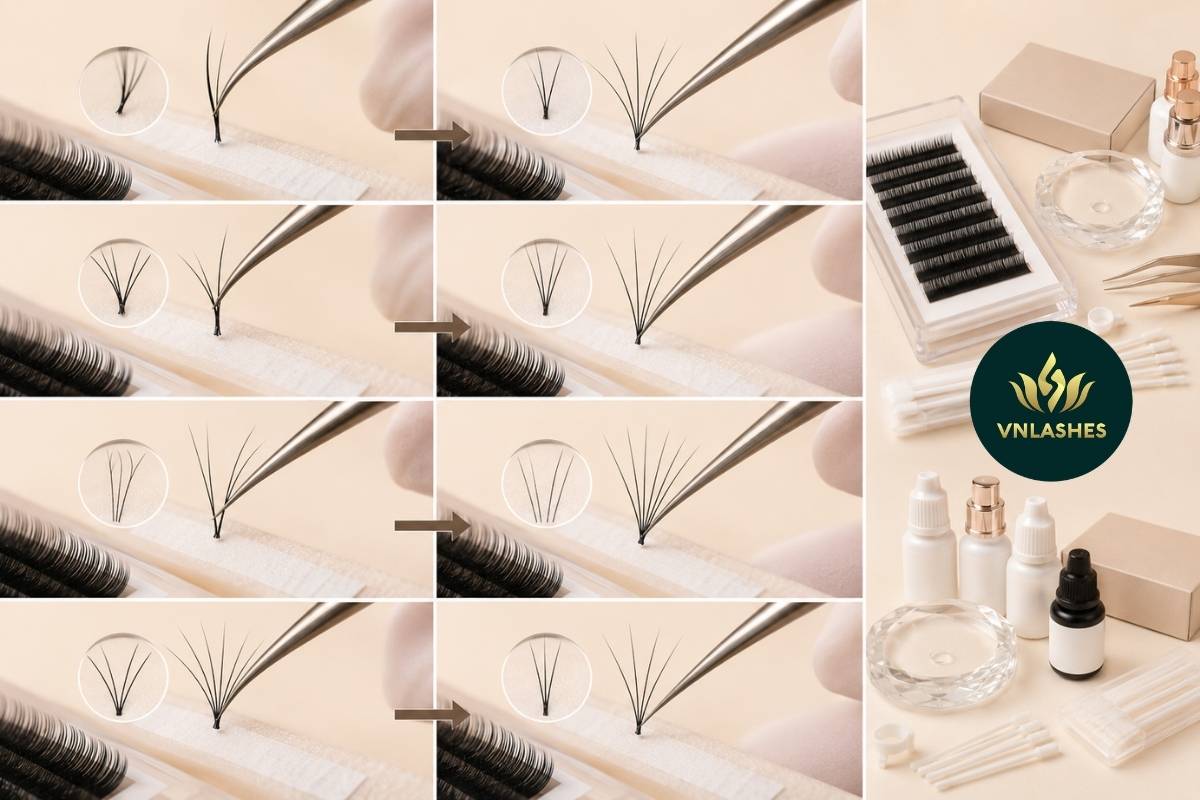
The lonely fan method involves removing a small group of lash fibers from the main row and placing them separately on another section of the lash strip.
The artist grips the fibers close to the base and gently rolls or spreads them with the tip of the tweezers. This movement opens the lashes into a fan while keeping the lower section aligned.
Once the desired shape is formed, the fan is lifted, dipped lightly into adhesive, and applied to an isolated natural lash.
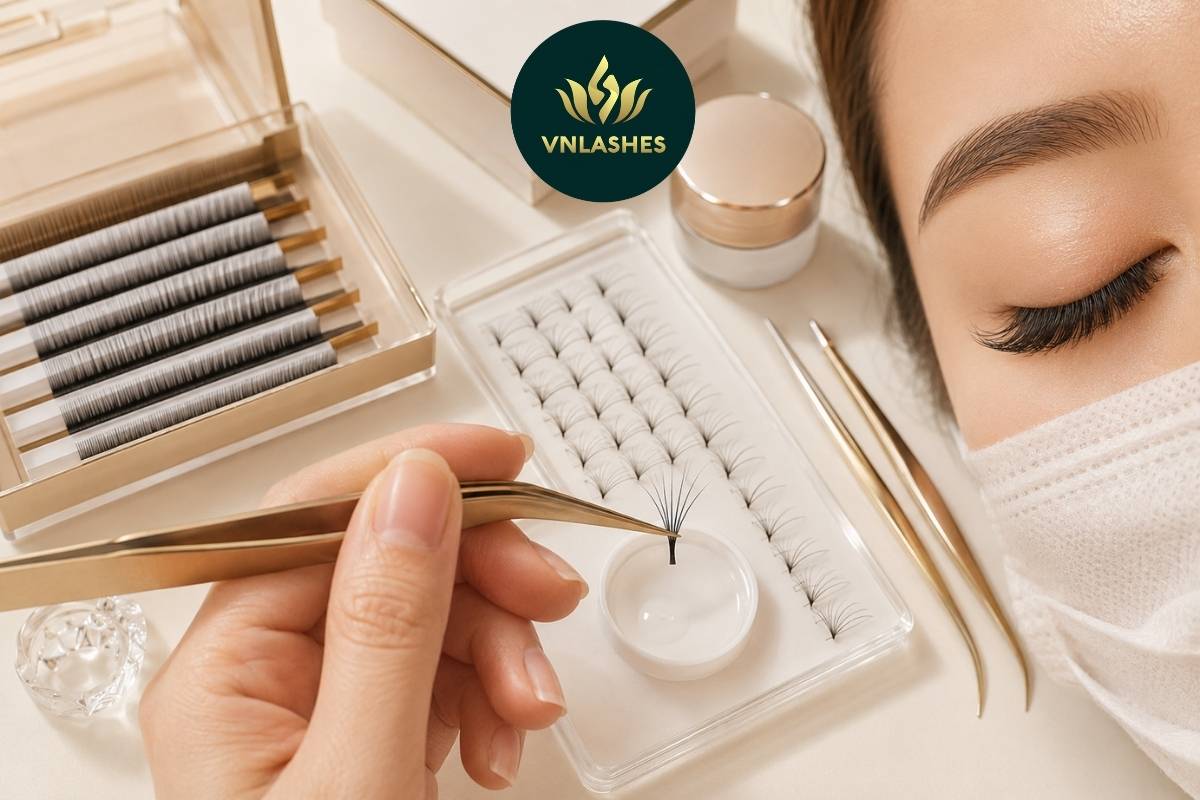
Why Is It Called the Lonely Fan Method?
The name comes from the way the selected fibers are positioned alone on the strip before being opened.
Separating the fibers from the main row creates more working space. This allows the lash artist to control the width, spacing, symmetry, and base of the handmade fan more easily.
Who Is the Lonely Fan Method Suitable For?
The lonely fan method is suitable for:
- Beginners learning handmade volume techniques
- Lash students practising tweezer control
- Trainers teaching basic fan-making skills
- Artists creating light or medium-volume sets
- Professionals who prefer a slow and controlled process
Although it is considered beginner-friendly, experienced technicians may also use this method when they need greater control over fan width and base alignment.
How to Perform the Lonely Fan Method
Step 1: Select the Lash Fibers
Use volume tweezers to remove the required number of extension fibers from the lash strip.
The number of fibers should depend on the selected diameter, the desired volume, and the strength of the client’s natural lash.
Step 2: Reposition the Fibers
Place the selected fibers onto a clear section of the strip.
Keep the bases level and make sure the individual strands are not crossed, twisted, or uneven.
Step 3: Secure the Base
Grip the group slightly above the strip line.
Holding too high may reduce control, while holding too low can make spreading more difficult. A stable grip helps keep the base connected during the lonely fan method.
Step 4: Open the Fan
Use the tip of the tweezers to gently roll or spread the fibers.
Apply light, controlled pressure until the strands open into the required shape. Avoid pushing too quickly, as this may split the base or create uneven spacing.
Step 5: Lift the Fan
Once the spacing looks balanced, grip the fibers firmly near the lower section and lift them from the strip.
The fan should remain open without twisting, collapsing, or separating.
Step 6: Dip and Apply
Dip only the lower tip of the fan into professional lash adhesive.
Too much adhesive may close the fan or create a bulky attachment area. Apply the extension to a properly isolated natural lash according to professional lash procedures.
Best Lash Thicknesses for the Lonely Fan Method
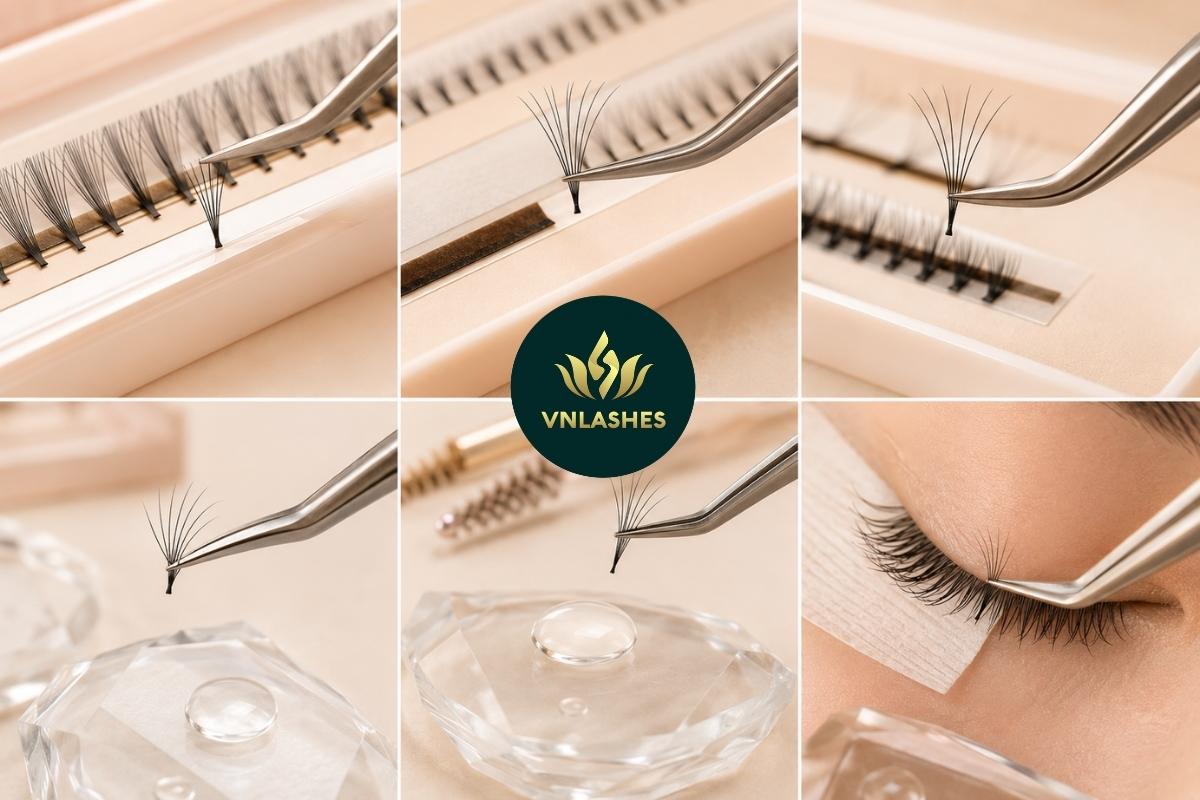
Choosing the correct fiber diameter is important when practising the lonely fan method. The selected thickness affects fan weight, flexibility, spacing, and overall control.
0.05 mm Lashes
A 0.05 mm diameter is suitable for soft and medium-volume designs.
These fine fibers are lightweight, flexible, and relatively easy to spread, making them suitable for artists who want to practise larger handmade fans.
0.07 mm Lashes
A 0.07 mm diameter is commonly used for light-volume sets.
It offers good control and can be practical for beginners developing their fan-making technique.
0.10 mm Lashes
A 0.10 mm diameter is generally more suitable for very small fans or classic-style applications.
Using too many fibers at this thickness may create unnecessary weight. The final choice should always be based on the condition and strength of the natural lash.
How the Lash Strip Affects the Lonely Fan Method
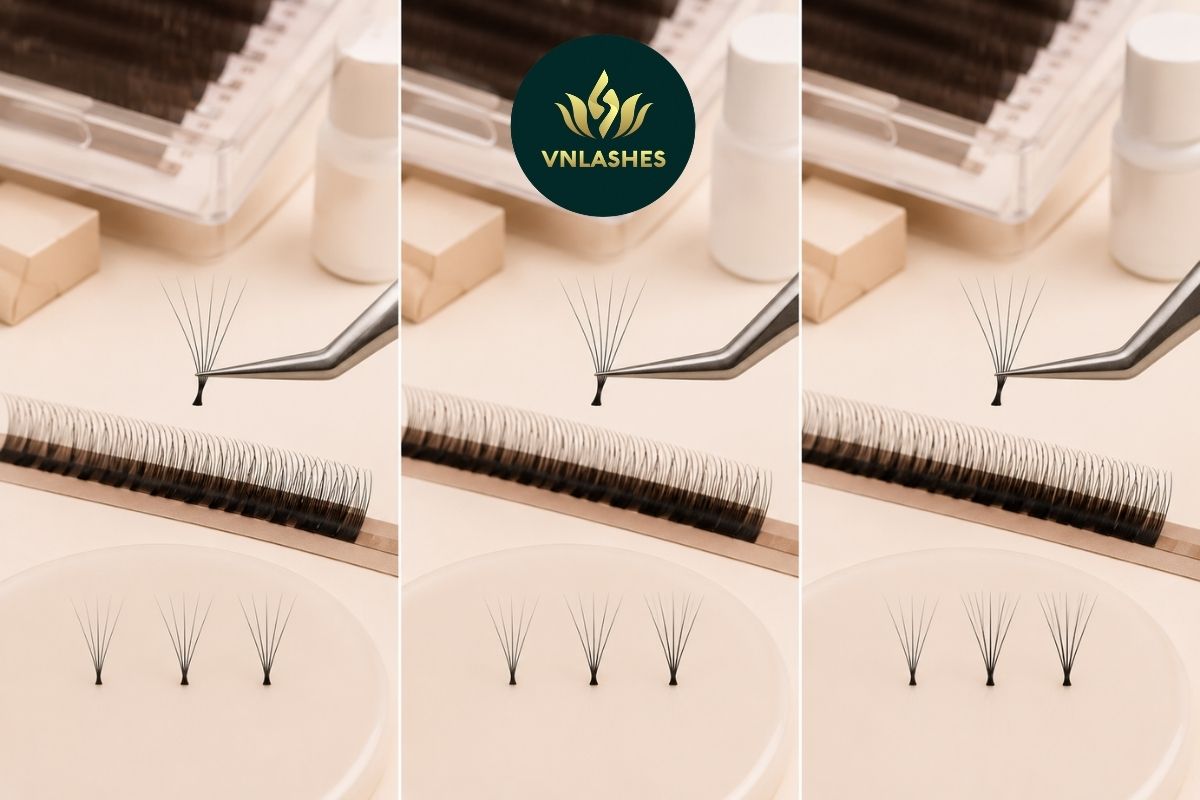
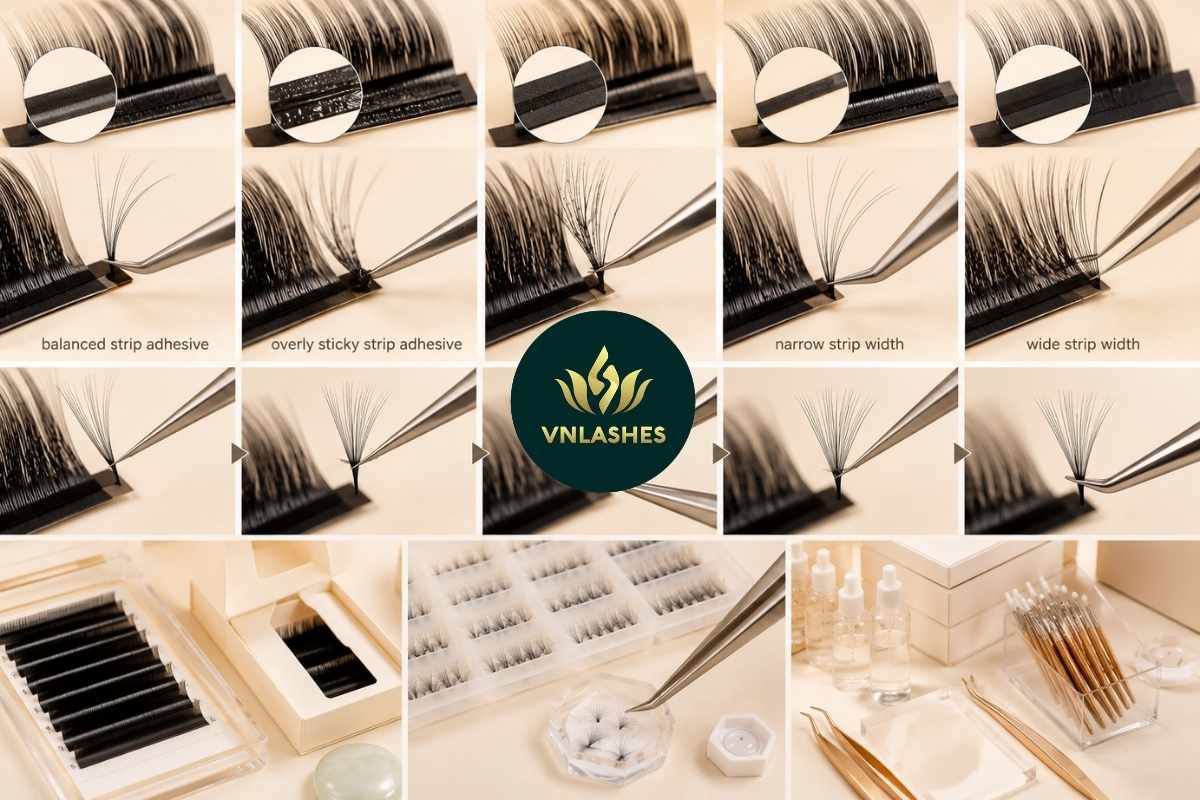
The lash strip can influence pickup, repositioning, spreading, and base control.
Adhesive Strength
A strip that is too sticky can make the fibers difficult to remove or reposition.
A weak strip may not hold them securely while they are being opened. Balanced strip adhesive supports smoother fan creation without leaving excessive residue on the base.
Strip Width
A wider strip offers more room for repositioning, while a narrower strip may provide greater precision.
The most suitable option depends on the technician’s tweezer angle, hand position, and working style.
Strip Visibility
A clear or contrasting background can make fine fibers easier to see.
Improved visibility helps the artist identify crossed strands, uneven spacing, and irregular bases before lifting the fan.
Choosing Suitable Lashes for the Lonely Fan Method
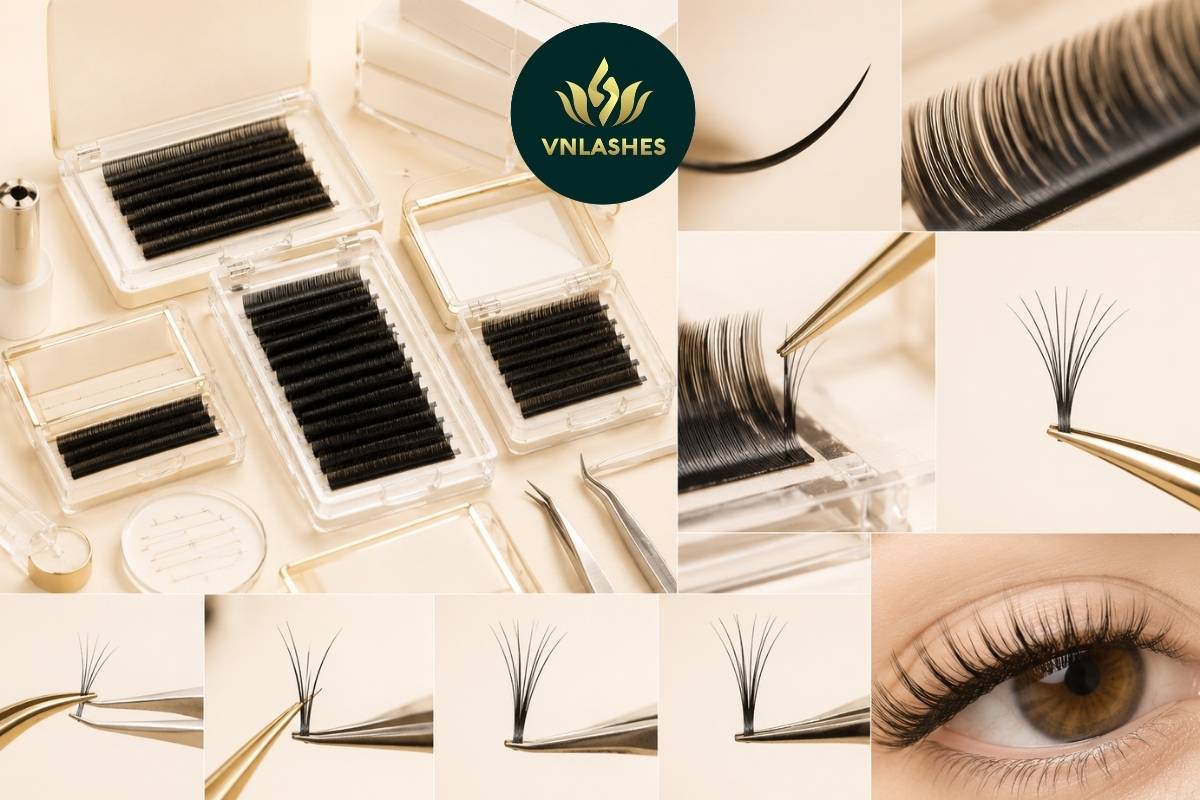
Consistent extension fibers make the lonely fan method easier to practise and repeat.
As an eyelash manufacturer and wholesale supplier, we recommend checking the following product characteristics.
Uniform Diameter
Each strand should have a consistent thickness so the weight is distributed evenly across the fan.
Stable Curl
The curl should remain consistent throughout the tray.
Irregular curls can make handmade fans look unbalanced and reduce consistency across a full lash set.
Soft and Flexible PBT Fiber
Flexible PBT fibers are easier to spread, reposition, and shape without losing their intended curl.
Clean Base Alignment
Well-arranged fibers help the lower section remain connected during spreading, pickup, and adhesive dipping.
Controlled Strip Adhesive
The lashes should release smoothly without excessive resistance or heavy adhesive residue.
Common Problems When Using the Lonely Fan Method
The Fan Keeps Closing
This may happen when the grip is too loose, the strip adhesive is too strong, or too much glue is used.
Holding the fibers closer to the base and reducing the amount of adhesive can improve fan stability.
The Base Separates
Excessive spreading pressure or an unstable grip can divide the fibers into separate sections.
Slower movements and careful alignment can help maintain a connected base.
The Fan Looks Uneven
Uneven spacing is often caused by crossed strands or inconsistent pressure.
Check the fiber alignment before opening the fan and spread both sides gradually.
The Fan Becomes Too Wide
An overly wide fan may reduce attachment stability and create an unbalanced result.
Use smaller rolling movements and adjust the width according to the desired volume style and natural lash condition.

Tips for Mastering the Lonely Fan Method
Practise With Consistent Lash Trays
Using the same curl, diameter, fiber type, and strip style helps develop repeatable hand movements.
Prioritize the Base
A neat and connected base is generally more important than creating an extremely wide fan.
Use Accurate Volume Tweezers
Tweezers with a reliable sweet spot and secure grip can reduce slipping during fan pickup.
Start With Small Fans
Small fans are easier to control and help beginners understand how the fibers react to pressure and movement.
Check Symmetry and Weight
Before application, confirm that the fan is evenly spaced, balanced, and suitable for the natural lash.
Lonely Fan Method for Lash Training and Wholesale Use
The lonely fan method is commonly used in volume lash education because it helps students understand fiber spacing, base formation, and tweezer control.
For academies, distributors, salon chains, and professional lash brands, product consistency can directly affect training results. Accurate diameters, stable curls, flexible fibers, and reliable strips help students practise the technique with fewer interruptions.
As a wholesale eyelash manufacturer, we produce lash trays in different curls, lengths, diameters, finishes, and packaging formats for professional salons, training centers, distributors, and private label brands.
Final Thoughts
The lonely fan method is a simple and controlled technique for learning handmade volume fan creation. It allows lash artists to manage fiber placement, fan width, spacing, and base formation with greater precision.
With suitable lash fibers, consistent trays, precise tweezers, and regular practice, the lonely fan method can help artists create cleaner, lighter, and more balanced volume fans.


Bài viết liên quan
Zero Time Promade Fan Lashes – Wholesale Manufacturer & OEM Services
For lash salons and professional eyelash brands, application efficiency and consistent quality are important factors...
Oct
Magic Fan And Zero Time Promade Fan – A Faster, Time-Saving Lash Extension Solution
In the professional lash extension industry, application speed and product consistency are important factors for...
Oct
Custom Magic Fans Manufacturing and OEM Services: Production Process
When sourcing Magic Fans in bulk, buyers need more than just an attractive lash tray....
Aug
Lash Extension Removal: Common Mistakes and Safe Techniques
Lash extension removal is an important part of professional lash care. When extensions are removed...
Jul
Lash Foam Cleansers: A Practical Guide for Lash Professionals
Lash foam cleansers are essential products for cleaning natural lashes, eyelids and eyelash extensions. They...
Jul
Lash Adhesive Remover: A Must-Have Product for Professional Lash Businesses
In the lash industry, a beautiful lash set is not only about application. Safe, clean,...
Jul