
 Deutsch
 Русский
 Español
 Français
No products in the cart.

Eyelash Company News
Lash Stickiness: Causes, Prevention and Solutions for Lash Artists
12
Jul
Jul
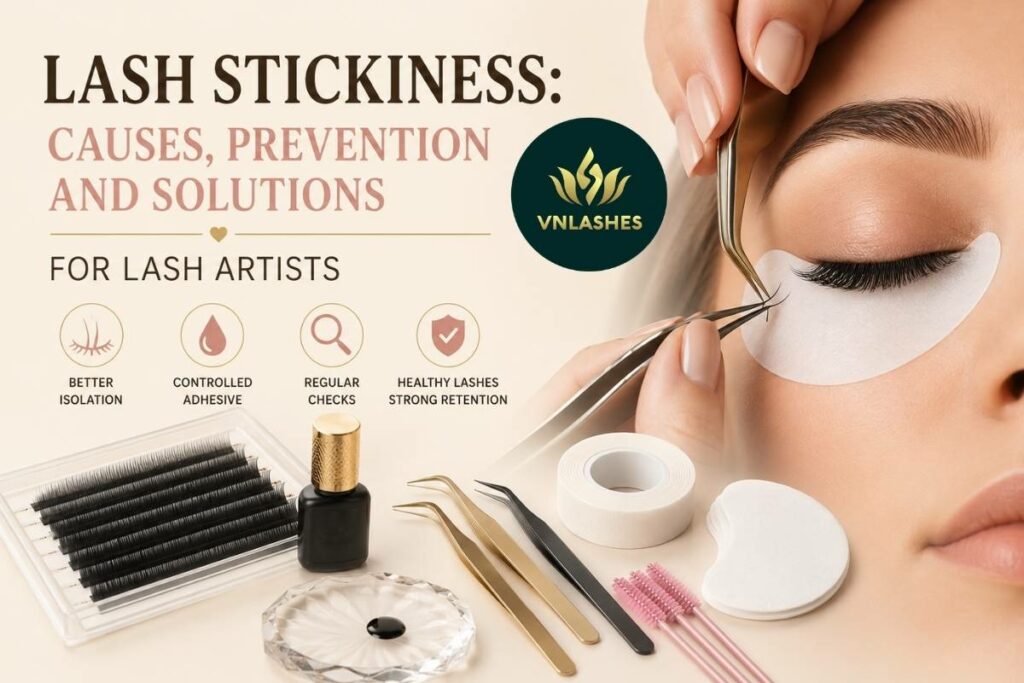
Lash stickiness is a common issue during eyelash extension application. It occurs when one natural lash, baby lash or extension becomes unintentionally bonded to a neighboring lash before the adhesive has fully cured.
Although lash stickiness can happen to both beginners and experienced lash artists, it should always be identified and corrected before the service is completed. Proper isolation, controlled adhesive use and regular lash checks can reduce discomfort, improve retention and protect the client’s natural lashes.
As an eyelash extension manufacturer and wholesale lash supplier, VNLASHES understands that consistent lash products and correct application techniques both support cleaner, more precise lash sets.
What Is Lash Stickiness?
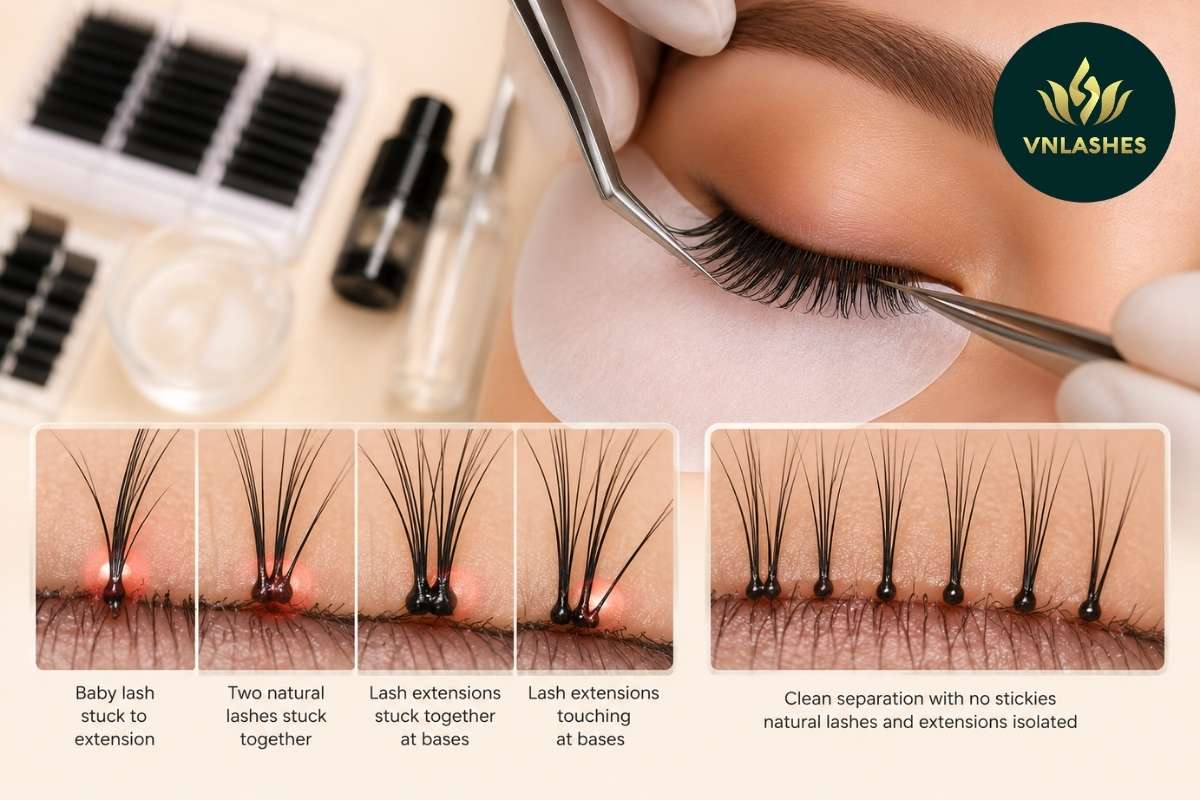
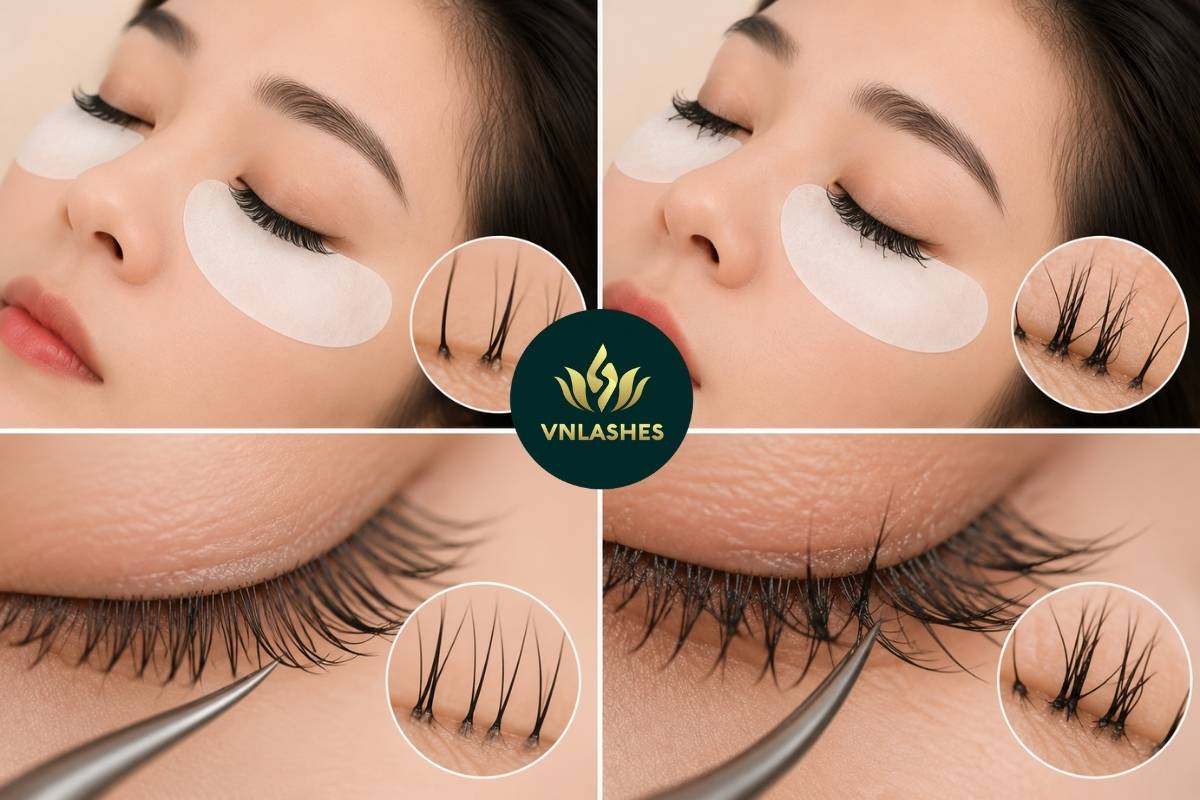
Lash stickiness describes two or more lashes becoming accidentally attached during an eyelash extension procedure. In the lash industry, these unwanted bonds are often called lash stickies.
The problem may involve two natural lashes, two extensions, a baby lash attached to an extension or the upper and lower lash lines sticking together.
If lash stickiness is left uncorrected, it can affect lash direction, client comfort, retention and the health of the natural lash line.
What Causes Lash Stickiness?
Several application and environmental factors can cause lash stickiness.
Poor Lash Isolation
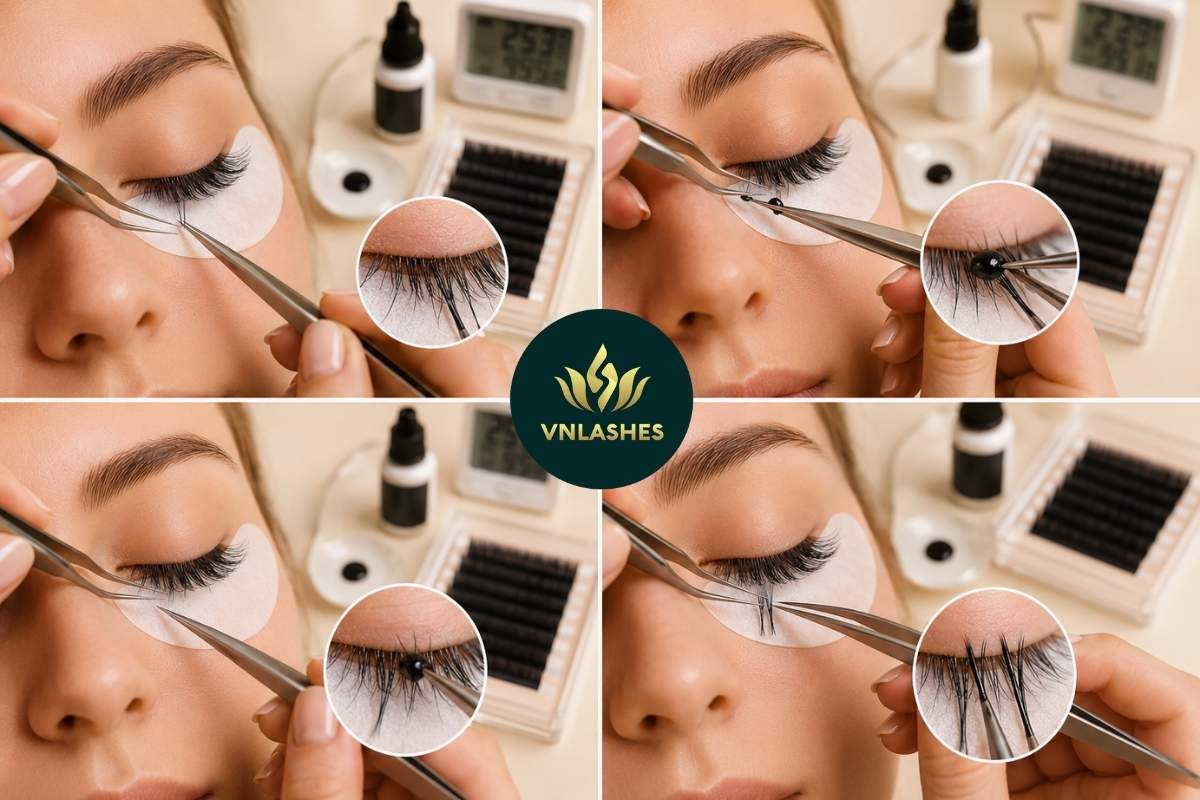
Incomplete isolation is one of the most common causes of lash stickiness.
If neighboring natural lashes are not fully separated before an extension is attached, adhesive may spread onto the surrounding hairs and bond them together.
Baby lashes are particularly difficult to identify because they are shorter, finer and less visible than mature lashes.
Excessive Lash Adhesive
Using too much adhesive increases the risk of lash stickiness. A large glue bead may spread from the extension base onto nearby lashes.
Excess adhesive also takes longer to cure, which gives neighboring lashes more time to become attached.
A small and even adhesive zone helps create cleaner, lighter and more flexible bonds.
Incorrect Adhesive Drying Speed
Lash adhesive should match both the technician’s working speed and the treatment environment.
When the glue dries too slowly, recently applied extensions may stick to surrounding lashes. When it dries too quickly, the artist may struggle to achieve a secure and properly positioned attachment.
Temperature and humidity can also affect curing speed. For this reason, environmental conditions should be monitored throughout the working day.
Working on Neighboring Lashes Too Quickly
Applying extensions to several adjacent lashes in immediate succession can cause lash stickiness.
The previous adhesive bond may still be wet when the next extension is placed. Moving between different areas of the lash line allows each attachment more time to cure.
Expired or Poorly Stored Adhesive
Old or incorrectly stored adhesive may become thick, stringy or inconsistent.
Unstable adhesive performance can lead to lash stickiness, clumping, weak retention and unpredictable drying times.
Technicians should follow the storage and replacement instructions provided by the adhesive manufacturer.
Common Types of Lash Stickiness
Lash stickiness can appear in several different forms.
A Baby Lash Stuck to an Extension
This is one of the most common types of lash stickiness because baby lashes can be difficult to see during isolation.
As the baby lash grows, it may pull against the extension and create tension, discomfort or poor lash direction.
One Extension Attached to Two Natural Lashes
This happens when two natural lashes are not completely separated before placement.
Because the two lashes may grow at different rates, the faster-growing lash can pull on the slower one. This may lead to discomfort or premature shedding.
Two Extensions Sticking Together
Two completed extensions may become bonded because of excessive adhesive, slow curing or working too closely on neighboring lashes.
This form of lash stickiness can make the set appear crossed, heavy, uneven or clumpy.
Upper and Lower Lashes Sticking Together
If the lower lashes are not fully secured with eye pads or tape, they may attach to the upper lash line during the procedure.
Before the client opens their eyes, the artist should confirm that the upper and lower lashes are completely separated.
Why Lash Stickiness Should Be Corrected
Lash stickiness is not only an appearance issue. It can also affect natural lash health, client comfort and extension retention.
Tension on Natural Lashes
Natural lashes grow and shed at different stages of the lash cycle.
When two lashes are bonded together, their different growth rates can create pulling and unnecessary tension around the lash follicles.
Client Discomfort
Lash stickiness may cause pinching, tightness or irritation when the client blinks.
This discomfort can encourage rubbing, pulling or touching, which may weaken the adhesive bonds and reduce retention.
Poor Lash Retention
Stuck lashes cannot move naturally. The tension between bonded hairs may cause extensions to twist, loosen or fall out earlier than expected.
Untidy Lash Appearance
Lash stickiness can push extensions in different directions, making the finished set look tangled, crossed or clumpy.
A professional lash set should appear clean, evenly directed and properly separated.
How to Prevent Lash Stickiness
Lash stickiness can be reduced through careful preparation, controlled application and regular inspection.
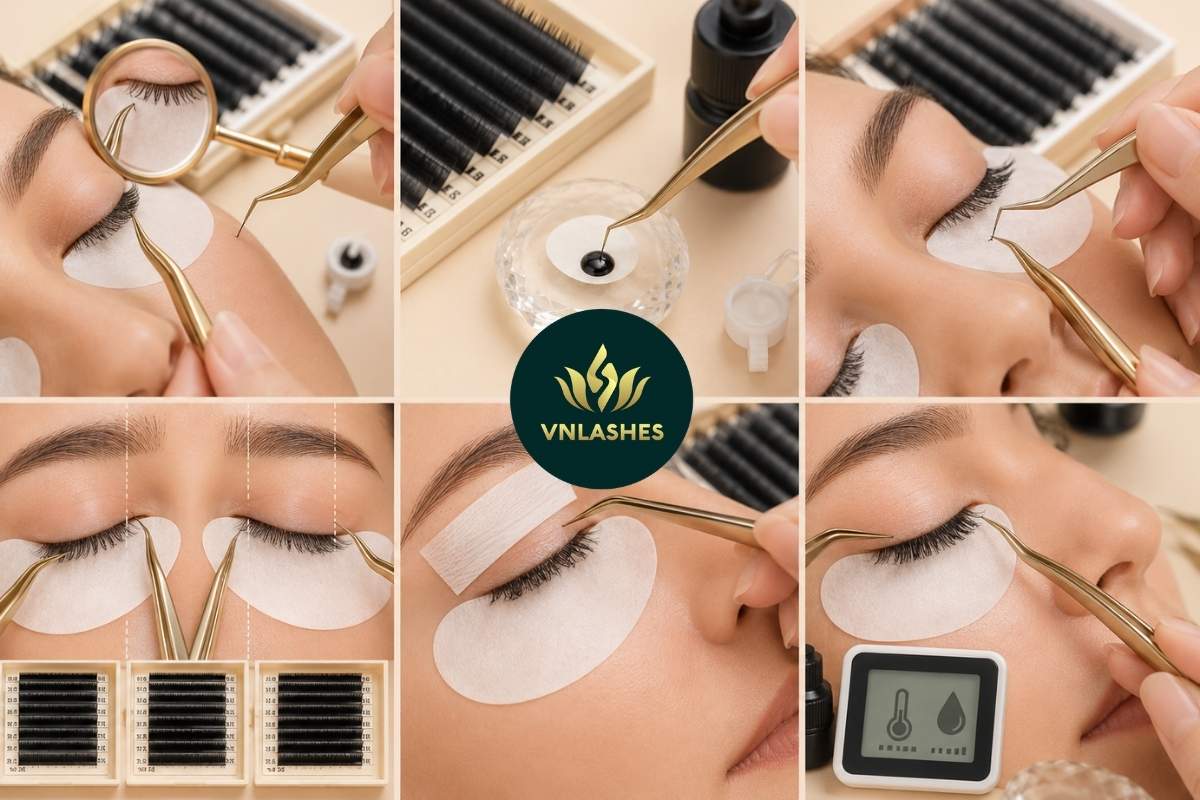
Isolate Every Natural Lash Carefully
Before attaching an extension, make sure the selected natural lash is completely separated from surrounding hairs.
Check both sides of the isolation area and look carefully for short baby lashes hidden underneath.
A clear isolation zone is one of the most important steps in preventing lash stickiness.
Use the Correct Amount of Adhesive
Dip only the required part of the extension base into the adhesive.
Avoid large glue droplets, thick attachment zones or excessive product buildup. A smooth adhesive layer is easier to control and less likely to spread onto neighboring lashes.
Choose Adhesive That Matches Your Working Speed
A beginner may benefit from an adhesive with slightly more placement time, while an advanced lash artist may prefer a faster-curing formula.
Using glue that matches the technician’s speed helps reduce lash stickiness and improves attachment consistency.
Monitor Temperature and Humidity
Use a hygrometer to check the lash room environment.
Adhesive performs best within its recommended temperature and humidity range. Stable conditions support predictable drying and reduce the risk of unwanted bonding.
Alternate Between Lash Sections
Avoid placing extensions on several adjacent lashes one after another.
Instead, move between the inner, middle and outer sections of the lash line or alternate between the client’s left and right eyes.
This gives each adhesive bond additional time to cure.
Work in Lash Layers
Layering can make dense natural lashes easier to isolate.
The upper lash layers may be gently lifted with tape while the lower section is completed first. Each layer can then be worked on separately for better visibility and control.
Perform Regular Lash Stickiness Checks
Do not wait until the end of the service to inspect the entire set.
Check completed areas throughout the procedure, then perform a final lash stickiness inspection from several angles before the client opens their eyes.
How to Fix Lash Stickiness
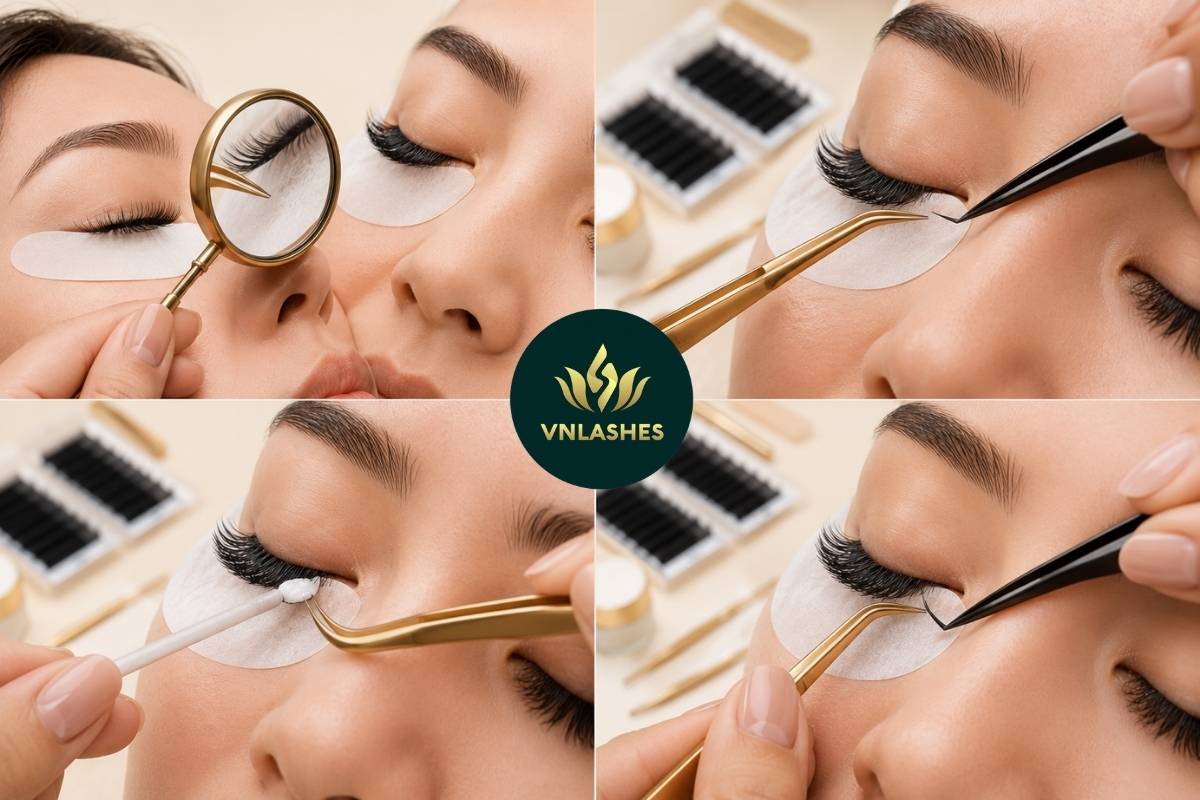
When lash stickiness is discovered, the affected lashes should be separated carefully to avoid pulling or damaging the natural hairs.
Separate Fresh Adhesive Bonds
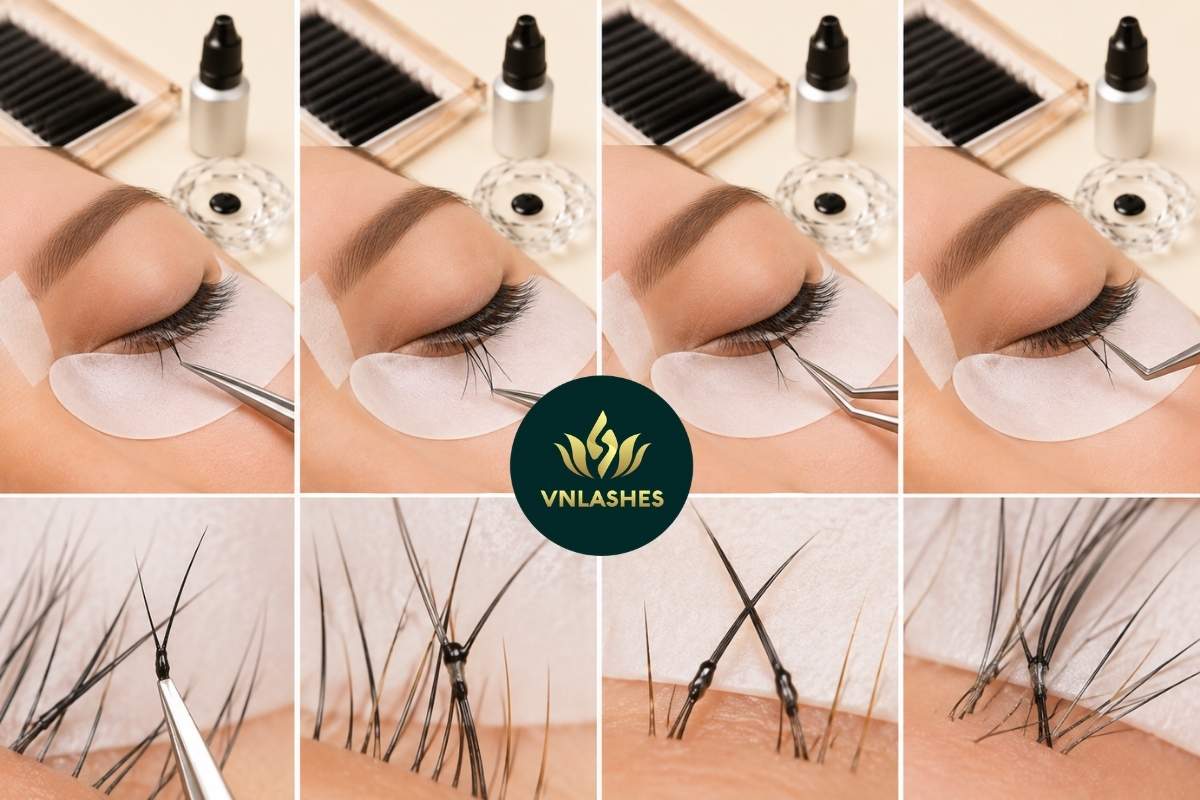
If the adhesive is still flexible, two clean tweezers may be used to separate the stuck lashes.
One tweezer should stabilize the natural lash while the other gently releases the unwanted bond.
Remove Incorrectly Applied Extensions
If the adhesive has fully cured and the lashes cannot be separated safely, the affected extension should be removed with a professional lash remover.
The natural lash can then be cleaned and the extension reapplied correctly.
Never Pull Cured Lashes Apart
Fully cured adhesive bonds should not be forcefully pulled apart.
This may break the natural lash, cause discomfort or lead to premature shedding.
Inspect the Surrounding Lash Area
After correcting one stickie, inspect the surrounding lashes carefully.
Several unwanted bonds may develop in the same section when isolation, adhesive control or drying time has been inconsistent.
How Lash Product Quality Supports Cleaner Application
Application technique remains the main factor in preventing lash stickiness, but consistent extension products can make placement easier.
Uniform lash bases are easier to grip, dip and attach with controlled adhesive coverage. Stable curl, consistent thickness and clean fiber alignment also help technicians maintain direction throughout the set.
As a wholesale eyelash manufacturer, VNLASHES produces classic lash trays, volume lashes, premade fans, narrow fans and private label lash products for brands, distributors, salons and training academies.
Consistent manufacturing standards support more predictable application and cleaner finished results.
Frequently Asked Questions About Lash Stickiness
Is Lash Stickiness Common?
Lash stickiness can occur during training or professional application, but all unwanted bonds should be identified and corrected before the service is completed.
Can Lash Stickiness Damage Natural Lashes?
Yes. When natural lashes with different growth cycles are attached together, they can pull against each other and cause discomfort, breakage or premature shedding.
Why Do Lash Extensions Keep Sticking Together?
Common causes include poor isolation, excessive adhesive, unsuitable drying speed, unstable room conditions and working on neighboring lashes too quickly.
How Can Beginners Prevent Lash Stickiness?
Beginners should work slowly, isolate carefully, use an adhesive that matches their skill level and check completed sections regularly.
Should Stuck Lash Extensions Be Pulled Apart?
No. Fully cured lashes should never be forcefully separated. A professional remover should be used when gentle separation is not possible.
Conclusion
Lash stickiness can affect client comfort, natural lash health, extension retention and the overall appearance of a lash set.
The most effective ways to prevent lash stickiness are careful isolation, controlled adhesive use, stable environmental conditions, suitable drying speed and regular inspection throughout the procedure.
Consistent lash products can also support cleaner attachment, better direction and more predictable application results.


Bài viết liên quan
Colored Eyelashes Manufacturer – Wholesale, OEM/ODM & Private Label
Colored eyelashes are a versatile product line that helps salons, lash artists, distributors, and eyelash...
Sep
Magic Fans And Zero Time Promade Fan: Are They the Same Type of Lashes?
When looking for premade lash fans, lash brands, importers, distributors, and wholesale buyers may come...
Sep
Wholesale Lash Extension Supply Direct from the Factory – VNLASHES
If you are looking for a reliable Wholesale Lash Extension Supply for your salon, lash...
Sep
Vietnam National Day Eyelash Promotion – Order 10 Boxes, Get 20% Off
🇻🇳 VIETNAM NATIONAL DAY EYELASH PROMOTION 🔥 VIETNAM NATIONAL DAY EYELASH PROMOTION – 10 BOXES,...
Aug
Magic Fans Wholesale Supplier Direct From Factory | VNLASHES
Magic Fans are pre-made lash fans created from multiple fine lash fibers, usually ranging from...
Aug
Trusted Custom False Eyelash Manufacturing & OEM Services | VNLASHES
The false eyelash market is becoming increasingly competitive. Customers no longer focus only on price;...
Jul