
 Deutsch
 Русский
 Español
 Français
No products in the cart.

Eyelash Manufacturing & Factory, Lash Materials & Fibers
Lash Porosity Explained: Why Fiber Surface Matters for Better Retention
30
Jun
Jun
Retention is one of the biggest concerns for lash artists, salons, and lash brands. Many professionals focus on adhesive, humidity, temperature, and application technique. These factors are important, but they are not the only part of the retention story.
Another key factor is the lash extension fiber itself, especially its surface structure. This is where lash porosity becomes important.
For lash brands, wholesalers, and private label businesses, understanding fiber surface quality can also help when choosing the right eyelash manufacturer or OEM lash supplier. A reliable manufacturer should not only provide soft lashes and stable curls, but also understand how lash material, surface texture, and adhesive interaction affect real application performance.
Lash porosity helps explain how the surface of a lash extension interacts with adhesive. When the fiber surface is designed with better grip, adhesive can bond more securely, placement can feel more stable, and retention may become more consistent.
What Is Lash Porosity?
Lash porosity refers to how well the surface of a lash extension fiber can interact with adhesive.
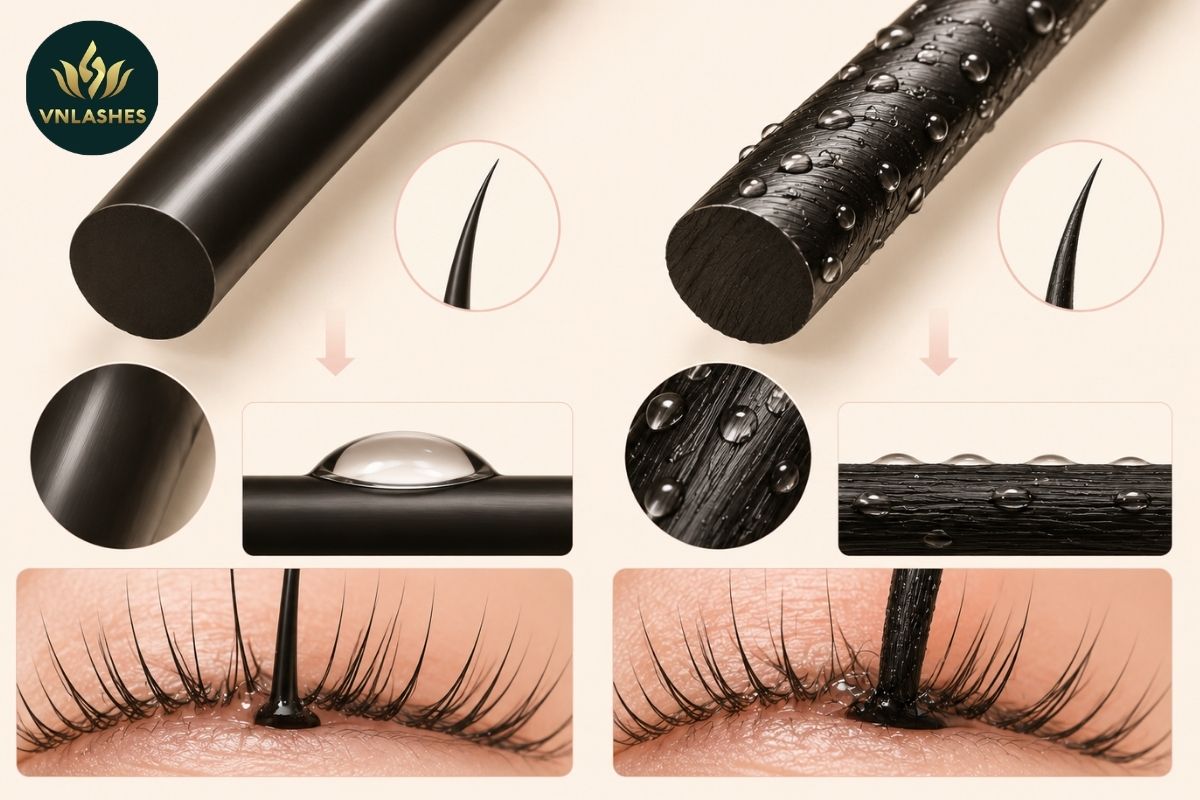
A very smooth lash fiber has fewer contact points for glue to hold onto. In this case, the adhesive mostly stays on the outer surface of the extension.
A textured or porosity-inspired lash surface has tiny ridges, grooves, or micro-textures. These surface details create more bonding areas, helping the adhesive grip the lash extension more effectively.
Simple Explanation
Think of the difference between a smooth surface and a lightly textured surface.
On a smooth surface, glue may slide more easily.
On a textured surface, glue has more areas to hold onto.
This is why fiber surface design is becoming an important topic in lash retention, especially for professional lash artists and wholesale lash brands looking for better product performance.
Lash Porosity vs. Hair Porosity
The idea of lash porosity is similar to hair porosity.
Hair porosity describes how easily hair absorbs moisture, oils, or treatments. Low-porosity hair has a tighter surface, while high-porosity hair has a more open structure.
Lash extensions are not natural hair, but the same basic idea can help explain bonding. When the surface of a lash extension is too smooth, adhesive has limited grip. When the surface has controlled texture, adhesive can connect with more surface points.
Why This Matters for Lash Extensions
Better surface interaction may support:
- easier adhesive grip
- more stable placement
- less sliding during application
- more consistent bonding
- improved retention performance
Why Fiber Surface Affects Lash Retention
Retention does not depend on glue alone. It depends on how well the adhesive and lash extension surface work together.
Even a high-quality adhesive can perform poorly if the lash fiber surface is too slippery or difficult to bond with. A better bonding surface can give adhesive more support during the application and curing process.
In adhesive science, surface condition can influence bonding performance. For example, surface roughness can affect adhesion, but excessive roughness is not always better. This supports the idea that controlled texture matters more than simply making a surface as rough as possible.
This does not mean adhesive is unimportant. Instead, it means lash artists and lash brands should look at retention as a full system: adhesive, environment, technique, aftercare, and fiber material.

3 Ways Textured Lash Fiber Supports Better Bonding
1. More Adhesive Contact Points
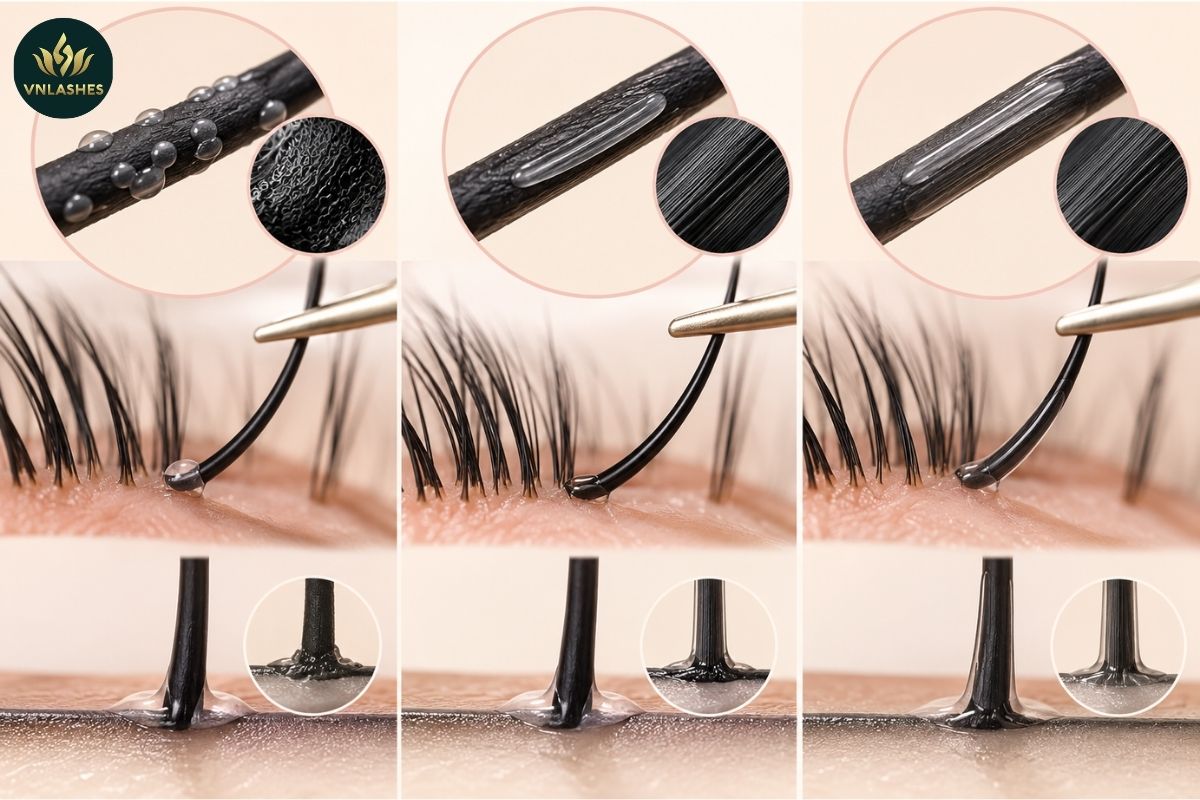
A smooth lash fiber gives adhesive limited surface area to grip. A micro-textured lash surface creates more contact points.
This can help the adhesive form a more stable bond between the natural lash and the extension.
2. Less Sliding During Application
Before adhesive fully sets, a smooth extension may move or slide on the natural lash.
A lightly textured surface can create gentle micro-friction. This helps the lash extension stay in place more easily during placement, supporting faster and more confident application.
3. More Even Adhesive Distribution
On a very smooth fiber, adhesive may gather unevenly in certain areas.
With a controlled textured surface, adhesive can spread more evenly across the bonding area. This may support a cleaner bond and reduce stiff glue spots.
Smooth Fiber vs. Textured Surface vs. Overly Porous Fiber
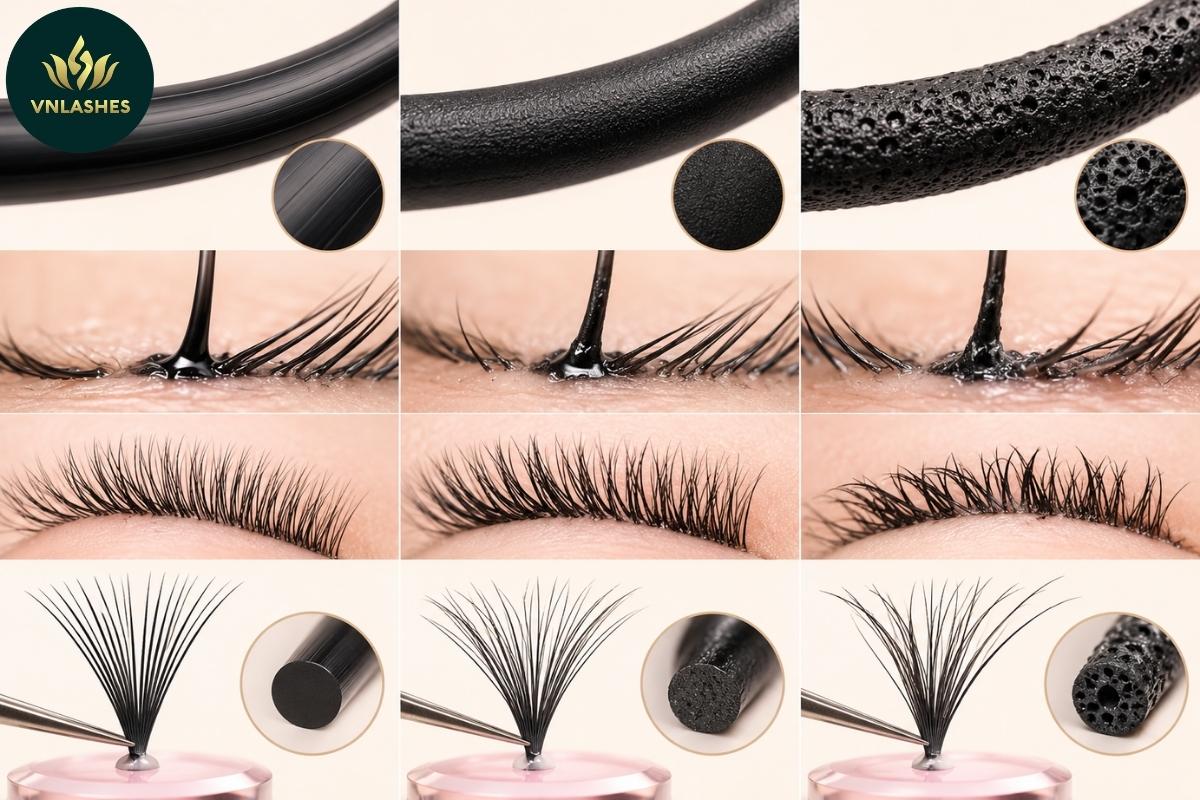
| Feature | Smooth Lash Fiber | Controlled Textured Surface | Overly Porous Fiber |
|---|---|---|---|
| Surface structure | Very smooth and sealed | Light micro-texture | Too open or unstable |
| Adhesive contact | Limited contact points | More bonding contact points | High absorption but less control |
| Placement | May slide more easily | More stable during placement | May be less predictable |
| Fiber stability | Stable | Stable when well controlled | May risk twisting or shape change |
| Best use | Standard lash sets | Retention-focused professional sets | Requires careful material control |
Is More Surface Texture Always Better?
Not always.
Too much porosity or excessive surface roughness may affect the stability of the lash fiber. The extension may become more sensitive to heat, shape change, or twisting.
That is why controlled surface texture is important. The goal is not to make the fiber overly porous. The goal is to create a professional lash surface that improves adhesive grip while keeping the fiber soft, stable, lightweight, and easy to use.
For readers who want a deeper technical reference, this study on surface topography and adhesion explains how surface structure can influence adhesive interaction in bonding applications.
Textured Surface Technology in Cashmere Silk Lashes
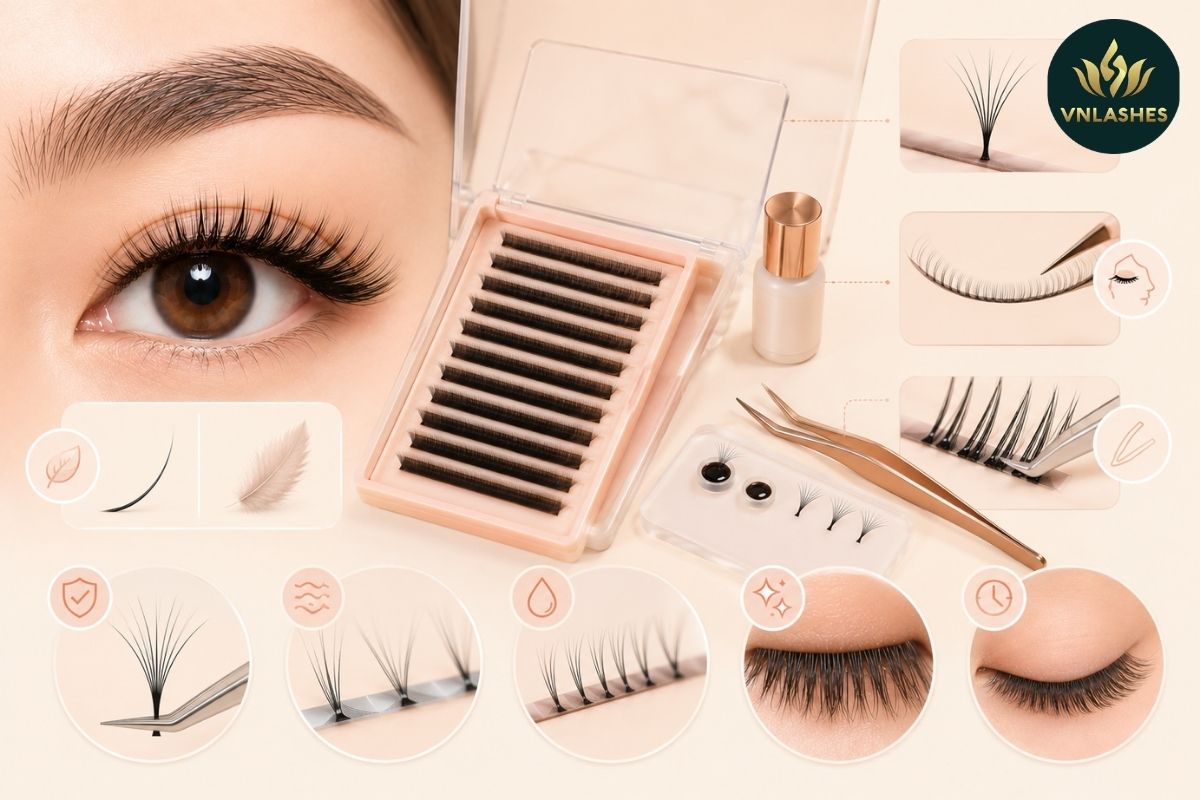
Cashmere Silk lashes are designed with a soft textured surface that supports better adhesive contact. Instead of being overly smooth and slippery, the fiber surface gives adhesive more areas to grip.
Compared with standard smooth lash fiber, Cashmere Silk is designed to offer a softer touch, a more refined surface feel, and improved surface-level grip. Standard smooth fibers mainly rely on outer surface bonding, while Cashmere Silk uses a controlled micro-textured surface to support better adhesive interaction during placement.
This makes Cashmere Silk a strong option for lash artists and lash brands that want a premium lash material focused on softness, comfort, smoother placement, and retention support.
Explore VNLASHES Cashmere Silk lash options for soft, lightweight extensions with a premium textured surface.
Key Benefits of Cashmere Silk Lash Fiber
Cashmere Silk lash fiber may help support:
- softer lash feel
- better adhesive contact
- smoother placement
- less sliding during application
- more stable fan positioning
- lightweight wearing comfort
- clean, professional lash sets
Who Should Use Lash Extensions with Better Surface Grip?
Lash Artists
Lash artists can benefit from easier placement, less repositioning, and more confidence during application. A more stable bonding surface can help the extension sit more securely during the working time.
Salon Owners
Better retention consistency can improve client satisfaction, reduce complaints, and support repeat bookings. For salons, material quality can become an important part of the client experience.
Lash Trainers
Lash porosity is a useful topic for advanced lash education. It helps students understand that retention depends on adhesive, technique, environment, aftercare, and lash material.
Lash Brands and Wholesalers
For lash brands, fiber surface structure can become a strong product selling point. A textured lash fiber helps create a clearer difference between standard lash products and premium retention-focused products.
For wholesale buyers, this material can be used across different product lines, including classic lash trays, volume lash trays, premade fans, and custom lash collections.
Product Specification Example
| Specification | Available Options |
|---|---|
| Material | Cashmere Silk / Premium PBT Fiber |
| Surface | Soft textured surface |
| Curl | C, CC, D, M, L, LD |
| Thickness | 0.03, 0.05, 0.07 |
| Length | 8–15mm / mixed lengths available |
| Style | Classic lashes, volume lashes, premade fans, custom lash trays |
| Packaging | Standard tray, OEM packaging, private label packaging |
| Business type | Wholesale, OEM, private label lash brands |
Why Choose VNLASHES for Cashmere Silk Lashes?
VNLASHES is a Vietnam-based eyelash manufacturer supporting global lash brands, wholesalers, salons, and private label businesses.
We provide wholesale lash extensions, OEM packaging, sample testing, and custom lash specifications for different product lines. Whether you need classic lash trays, volume lashes, premade fans, or Cashmere Silk lash products, our team can support flexible production and professional quality control.
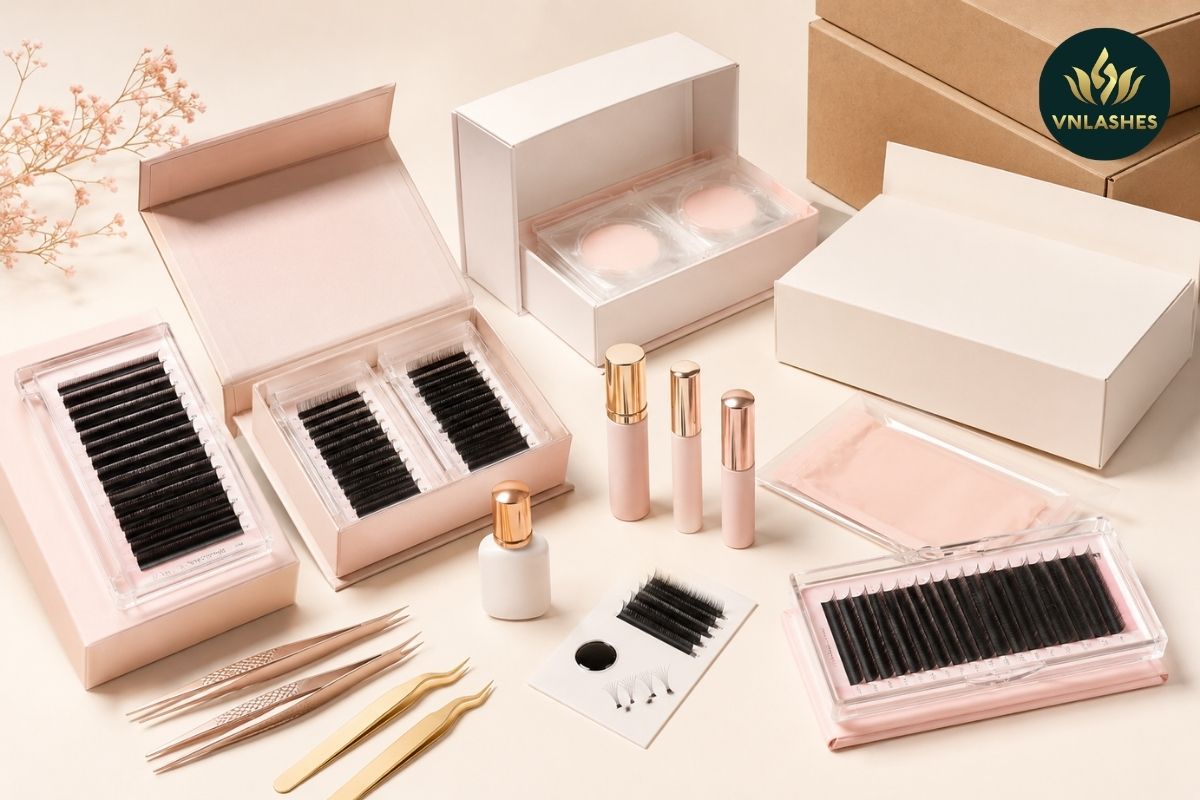
For lash brands, VNLASHES also supports OEM and private label eyelash packaging, helping businesses build professional lash collections with custom branding.
VNLASHES Supports
- wholesale lash orders
- OEM and private label packaging
- custom curls, lengths, and thicknesses
- sample testing before bulk orders
- stable handmade lash production
- export support for global lash businesses
FAQ About Lash Porosity
What does lash porosity mean?
Lash porosity means how well the surface of a lash extension fiber can interact with adhesive. A better bonding surface may help glue grip more effectively.
Does lash porosity affect retention?
Yes, it can. Lash retention depends on many factors, including adhesive, humidity, temperature, technique, aftercare, and the surface structure of the lash extension fiber.
Is textured lash fiber better than smooth lash fiber?
Textured lash fiber can provide more surface contact points for adhesive. This may help reduce sliding during application and support more stable bonding.
Is more porosity always better?
No. Too much porosity or excessive roughness may affect fiber stability. A controlled textured surface is usually more suitable for professional lash extensions.
Who should use Cashmere Silk lashes?
Cashmere Silk lashes are suitable for lash artists, salons, trainers, lash brands, and wholesalers looking for soft, lightweight lash products with better surface grip.
Final Thoughts
Lash porosity is an important concept for understanding lash retention. Adhesive quality still matters, but the lash fiber surface also plays a key role in how well the bond performs.
A smooth fiber gives adhesive fewer contact points. A controlled textured surface gives adhesive more grip, supports more stable placement, and may help improve retention consistency.
Retention results may also depend on adhesive type, humidity, temperature, lash artist technique, natural lash condition, and client aftercare.
For lash artists, salons, trainers, and lash brands, choosing the right lash material is not only about softness or curl. It is also about how the fiber surface works with adhesive.
Looking for Cashmere Silk lashes with a soft textured surface and professional OEM support?
Contact VNLASHES today to request Cashmere Silk lash samples, compare fiber options, or request wholesale pricing for your next lash collection.


Bài viết liên quan
Magic Fans And Zero Time Promade Fan: Are They the Same Type of Lashes?
When looking for premade lash fans, lash brands, importers, distributors, and wholesale buyers may come...
Sep
Magic Fans Lashes Manufacturer & Exporter In Vietnam – A Stable Supply Source For Wholesale Buyers
When choosing a Magic Fans Lashes Manufacturer & Exporter, wholesale buyers are usually not only...
Sep
Custom Magic Fans Manufacturing and OEM Services: Production Process
When sourcing Magic Fans in bulk, buyers need more than just an attractive lash tray....
Aug
Vietnam National Day Eyelash Promotion – Order 10 Boxes, Get 20% Off
🇻🇳 VIETNAM NATIONAL DAY EYELASH PROMOTION 🔥 VIETNAM NATIONAL DAY EYELASH PROMOTION – 10 BOXES,...
Aug
Magic Fans Wholesale Supplier Direct From Factory | VNLASHES
Magic Fans are pre-made lash fans created from multiple fine lash fibers, usually ranging from...
Aug
Custom Magic Fans Manufacturing and OEM Services | VNLASHES
When sourcing Magic Fans for wholesale or developing a private label lash brand, price is...
Aug