
 Deutsch
 Русский
 Español
 Français
No products in the cart.

Lash Adhesive & Retention, Eyelash Knowledge & Education
Lash Extension Glue: How to Choose the Right Adhesive
12
Jul
Jul
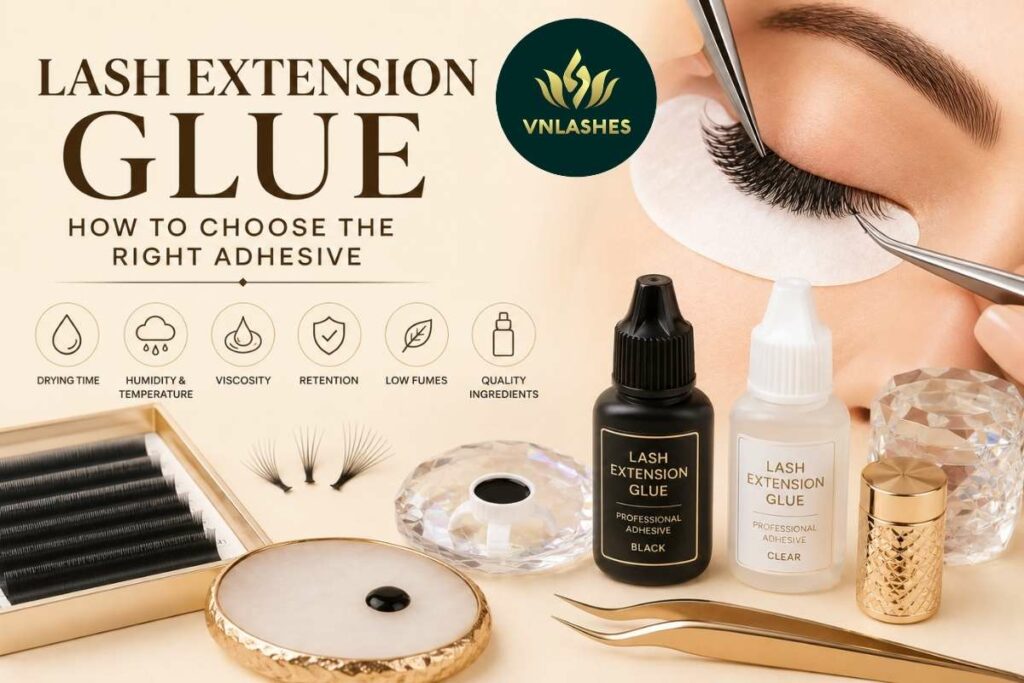
Choosing the right lash extension glue is essential for clean attachment, stable retention, and consistent application results. A suitable adhesive should match the lash artist’s working speed, salon environment, technique, and client needs.
As a lash product manufacturer and wholesale supplier, we recommend evaluating drying time, humidity range, viscosity, ingredients, color, retention, and storage requirements before selecting a professional adhesive.
What Is Lash Extension Glue?
Lash extension glue is a professional bonding product used to attach individual lash extensions or lash fans to natural eyelashes.
Most formulas contain cyanoacrylate, which begins curing when exposed to moisture in the air. A high-quality adhesive should provide predictable drying speed, smooth application, and reliable bonding under its recommended working conditions.
Professional lash glue should only be used by trained technicians and should not come into direct contact with the skin or eyes.
How to Choose the Right Lash Extension Glue
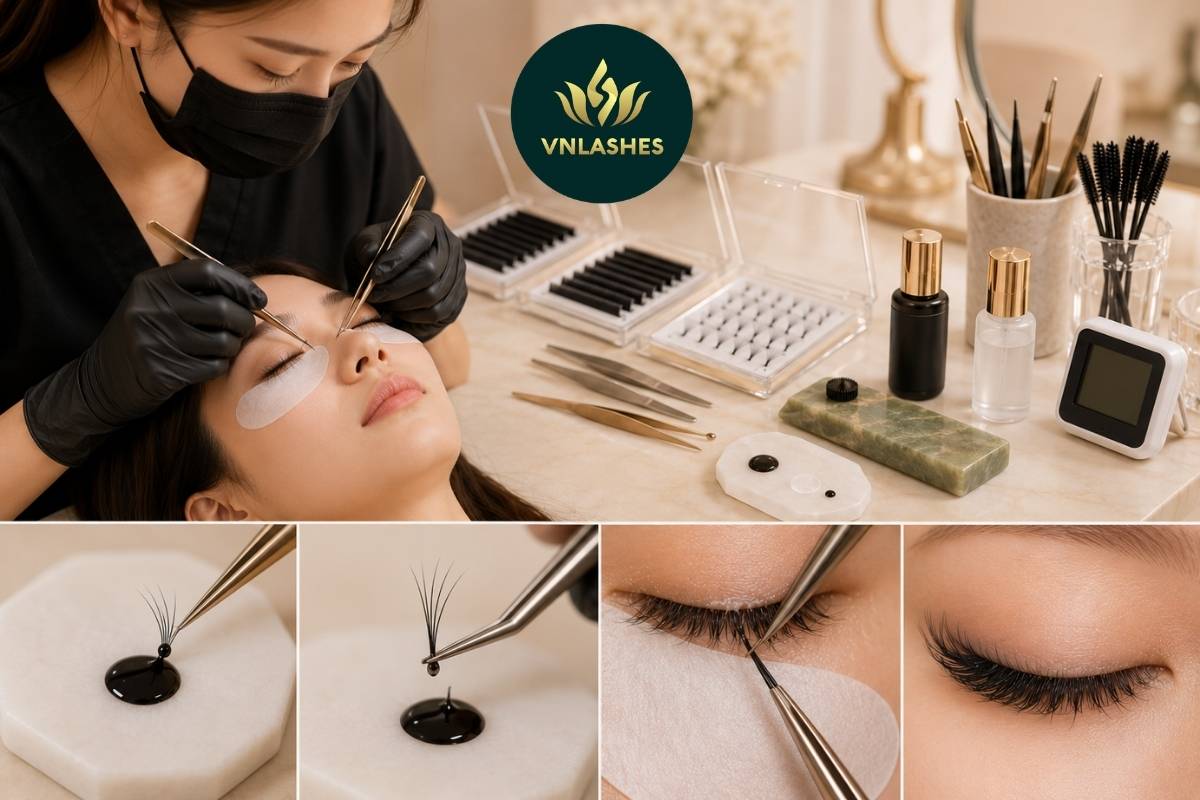
Check the Humidity in Your Lash Room
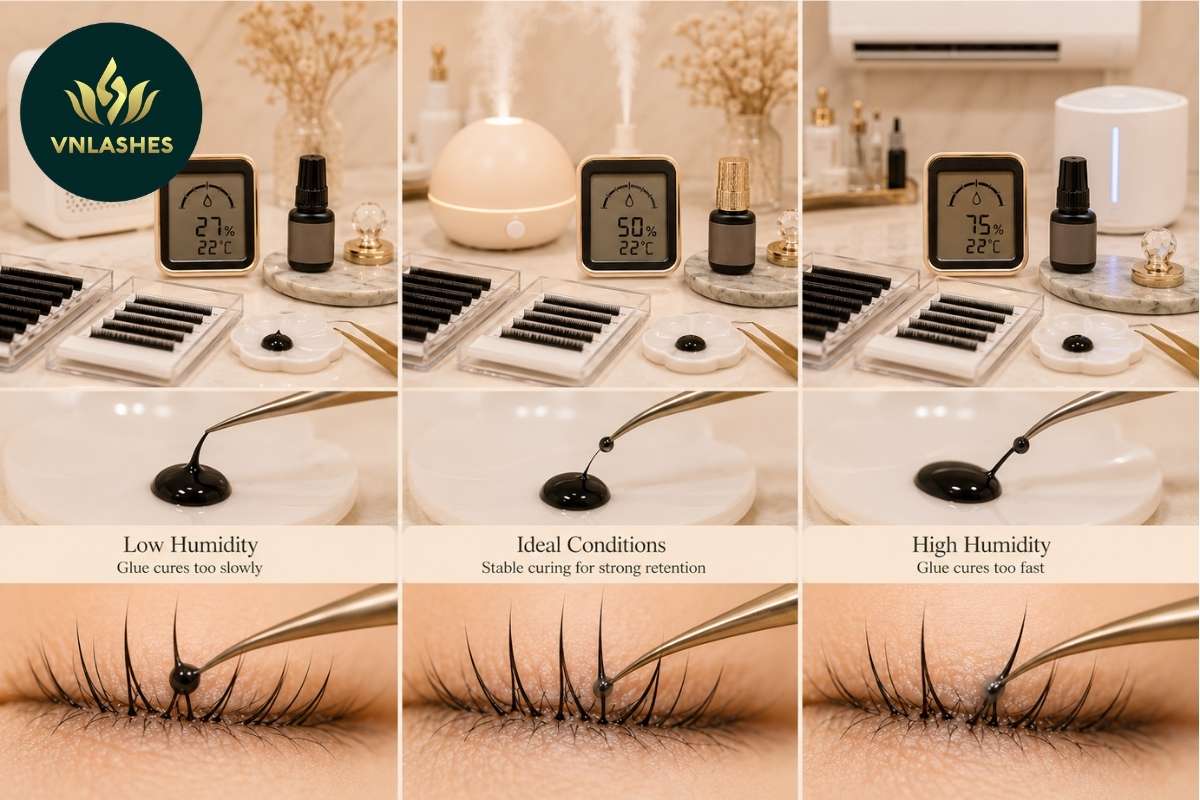
Humidity directly affects how quickly lash extension glue cures.
In high humidity, the adhesive may dry faster than expected. When the glue cures before the extension is properly attached, the bonding area may become too small and retention can be reduced.
A slower-curing formula may provide better control in humid conditions.
In low humidity, the curing process usually becomes slower. A faster-drying adhesive or better environmental control may help create a stronger attachment.
Because every product has a different working range, lash artists should always follow the manufacturer’s humidity recommendations.
Monitor the Room Temperature
Temperature can affect the viscosity, drying speed, and working behavior of lash adhesive.
Cold conditions may make the formula thicker and slower to cure. High temperatures may make the adhesive thinner and more difficult to control.
A thermometer and hygrometer help lash professionals monitor room conditions and select the most suitable lash extension glue.
Match Drying Speed to Artist Experience
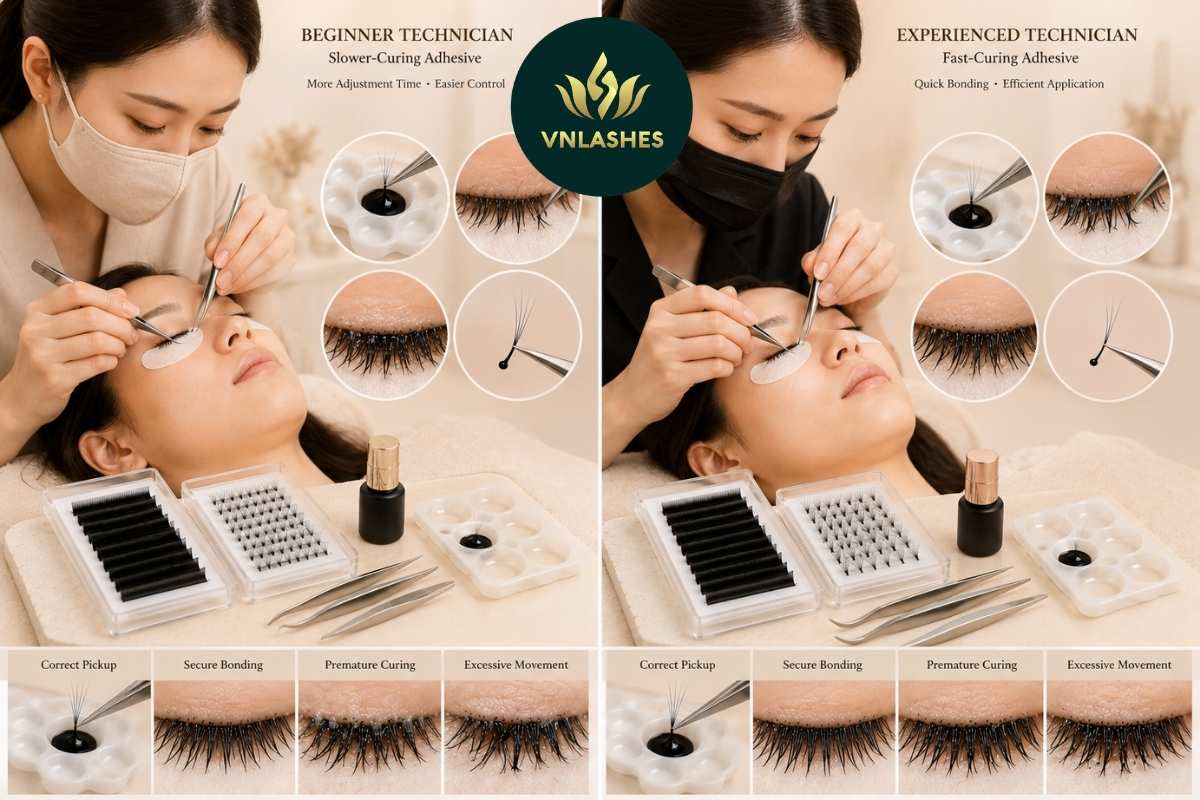
The best lash glue is not always the fastest product. Drying time should match the technician’s application pace.
Lash Extension Glue for Beginners
Beginner lash artists often need more time to place and adjust each extension. A formula with a drying time of approximately two to four seconds may provide better control.
Lash Extension Glue for Experienced Artists
Advanced technicians usually work faster and may prefer an adhesive that cures within approximately 0.5 to two seconds.
A product that dries too quickly may cure before correct attachment. A formula that dries too slowly can cause movement, stickies, or longer service times.
Choose the Right Adhesive Viscosity
Viscosity refers to how thick or thin lash extension glue feels during application.
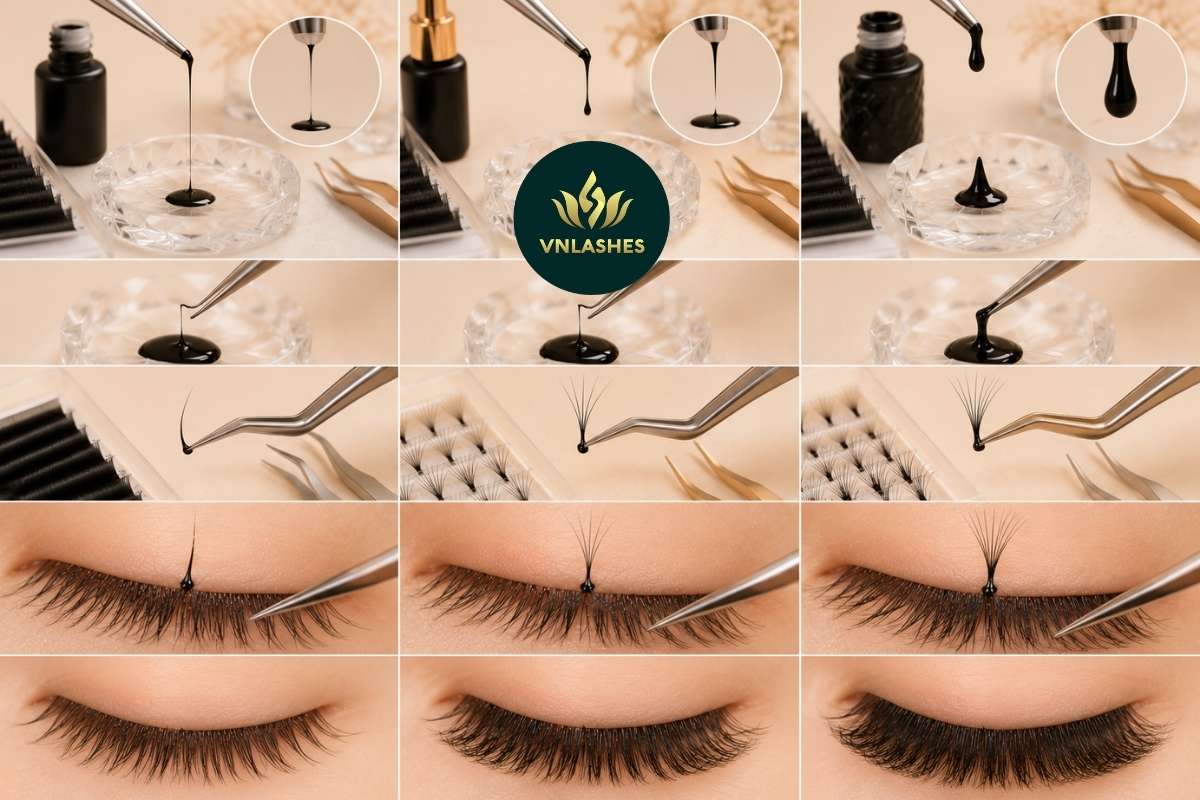
Thin adhesive spreads quickly and is often preferred by experienced lash professionals. Medium-viscosity glue can be easier to control and may suit different lash techniques.
The right viscosity depends on:
- Lash artist speed
- Classic or volume application
- Extension base shape
- Adhesive pickup preference
- Room temperature and humidity
For wholesale buyers, offering different viscosity options can help meet the needs of a broader customer base.
Black Lash Extension Glue vs Clear Lash Glue
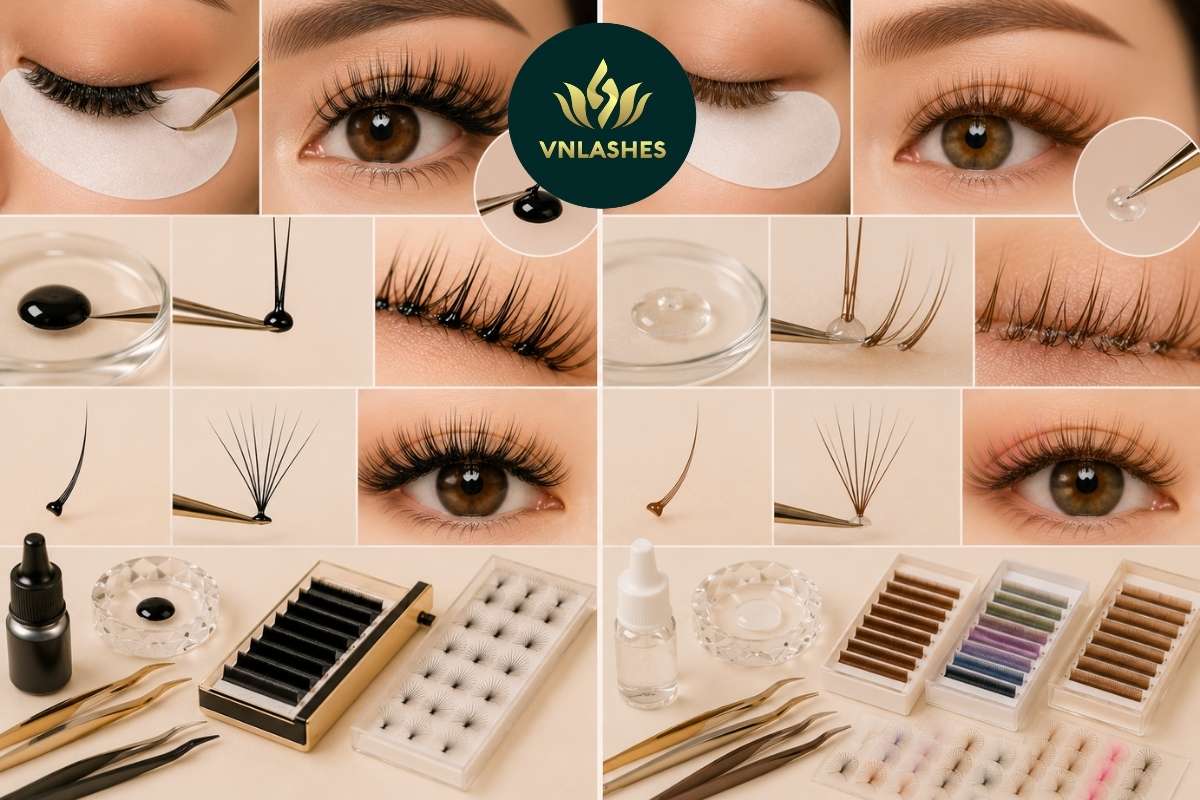
Black Lash Extension Glue
Black adhesive is commonly used for classic, volume, and premade fan applications. It blends naturally with dark lash fibers and can create a more defined lash line.
Most black formulas contain carbon black pigment.
Clear Lash Extension Glue
Clear adhesive does not contain black pigment. It is commonly selected for colored lashes, brown lashes, creative lash sets, and applications where a dark bonding point may be visible.
Clear glue may also be considered for clients who prefer a pigment-free formula. However, it still contains active bonding ingredients and should not be described as allergy-free.
Consider Client Comfort and Sensitivity
Professional lash extension glue may release fumes while curing. Some formulas are designed with lower odor or reduced fumes, but no adhesive can guarantee that irritation or allergic reactions will never occur.
Lash artists should:
- Review the ingredient list
- Maintain proper room ventilation
- Follow professional application procedures
- Avoid direct contact with the skin and eyes
- Ask clients about previous adhesive reactions
Clients who have experienced significant reactions should seek advice from an appropriate healthcare professional before receiving another lash service.
Review Lash Extension Glue Ingredients
Cyanoacrylate is the main bonding ingredient in most professional lash adhesives. Different formulas may use different cyanoacrylate types to balance curing speed, flexibility, odor, and retention.
Additional ingredients may include:
- Stabilizers
- Pigments
- Thickening agents
- Performance modifiers
Wholesale buyers should request product specifications, safety information, batch details, storage instructions, production dates, and recommended working conditions from the supplier.
Test Retention and Product Consistency
Reliable lash extension glue should perform consistently from one bottle and production batch to another.
During sample testing, buyers should evaluate:
- Initial attachment
- Drying behavior
- Texture and viscosity
- Retention performance
- Flexibility after curing
- Fume level
- Stability under different humidity conditions
Testing samples before bulk production can reduce product risks and help buyers select a formula suitable for their target market.
How to Store Lash Extension Glue
Correct storage helps preserve adhesive stability and working performance.
Before Opening
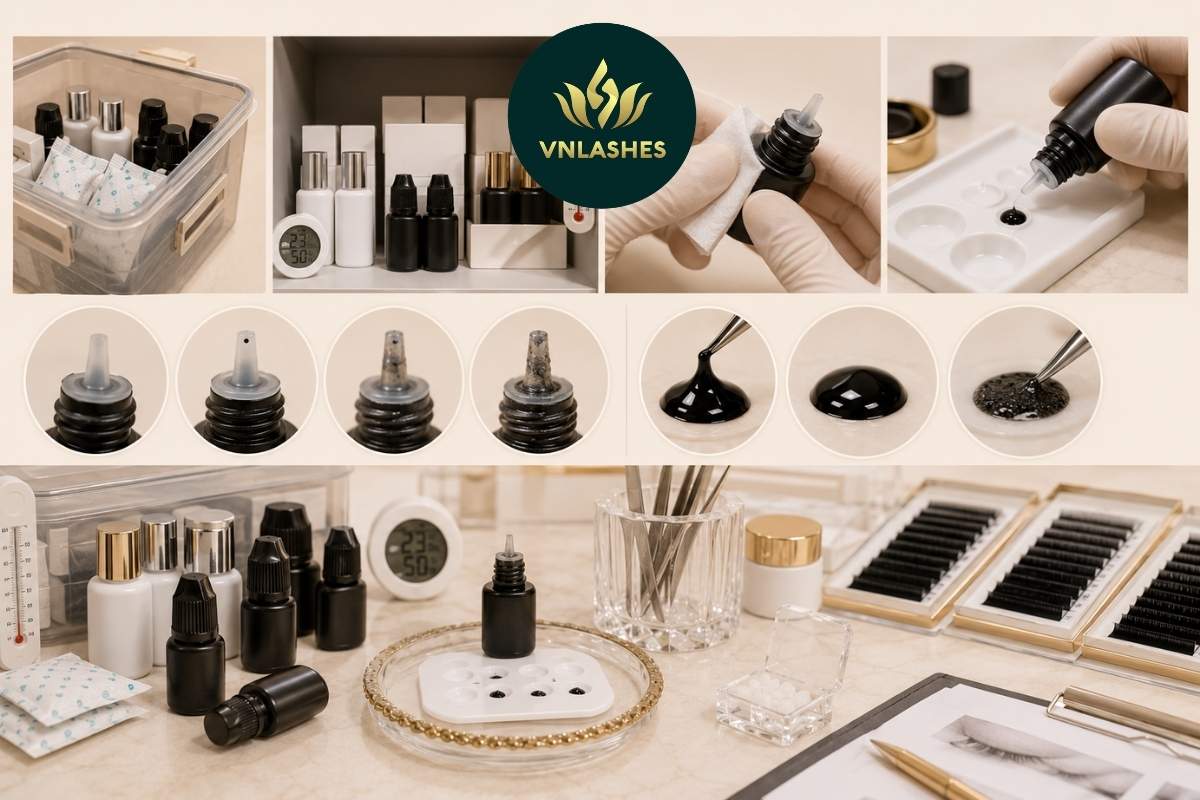
Unopened bottles should be stored in a cool, dry, and dark place according to the manufacturer’s instructions.
After Opening
Once opened, the bottle should be:
- Stored upright
- Kept away from heat and direct sunlight
- Closed tightly after each use
- Cleaned around the nozzle
- Protected from excessive moisture
The adhesive should also be shaken according to the supplier’s guidance. The bottle should be replaced when its texture, drying time, or bonding performance changes significantly.
What Wholesale Buyers Should Evaluate
Lash brands, academies, distributors, salon chains, and online sellers should assess both the product and the manufacturer.
A dependable lash extension glue supplier should provide:
- Stable adhesive formulations
- Consistent batch quality
- Clear product documentation
- Suitable packaging options
- Sample testing
- Reliable production schedules
- Export support
- Private label services
- Transparent order requirements
A complete wholesale range may include fast-curing, standard-curing, black, clear, low-fume, and multiple-viscosity formulas.
Private Label Lash Extension Glue
Private label lash extension glue allows buyers to sell professional adhesive under their own brand.
Customization may include:
- Bottle size
- Bottle design
- Product labels
- Outer packaging
- Adhesive color
- Drying speed
- Viscosity
- Packaging language
- Brand artwork
Before mass production, buyers should confirm the adhesive formula, packaging compatibility, shelf-life information, sample approval, storage guidance, and regulatory requirements in the target market.
Frequently Asked Questions
What Is the Best Lash Extension Glue for Beginners?
A slower-curing formula is usually easier for beginners to control. A drying time of approximately two to four seconds may allow more time for correct placement.
What Lash Extension Glue Works in Low Humidity?
Low-humidity conditions often require a faster-curing formula. The final choice should follow the manufacturer’s recommended humidity range.
Is Clear Lash Extension Glue Suitable for Sensitive Clients?
Clear glue does not contain carbon black pigment, but it still contains cyanoacrylate and other active ingredients. It should not be described as completely safe, hypoallergenic, or allergy-free.
How Long Can Lash Extension Glue Be Used After Opening?
The usable period depends on the formula, storage conditions, frequency of use, and supplier instructions. The bottle should be replaced when its performance changes.
Can Lash Extension Glue Be Private Labeled?
Yes. Private label production is available for lash brands, wholesalers, distributors, salons, academies, and online sellers. Minimum order requirements depend on the formula and packaging specifications.
Conclusion
Choosing the right lash extension glue requires more than comparing drying speed. Humidity, temperature, artist experience, viscosity, color, ingredients, retention, and product consistency all affect adhesive performance.
For wholesale and private label buyers, working with a reliable manufacturer helps support stable quality, professional packaging, clear documentation, and dependable product supply.


Bài viết liên quan
Private Label Lashes: Build Your Own Lash Brand With A Trusted Manufacturer
Building a successful business in today’s beauty industry involves more than simply selling high-quality products....
Oct
Zero Time Promade Fan Lashes – Wholesale Manufacturer & OEM Services
For lash salons and professional eyelash brands, application efficiency and consistent quality are important factors...
Oct
Magic Fan And Zero Time Promade Fan – A Faster, Time-Saving Lash Extension Solution
In the professional lash extension industry, application speed and product consistency are important factors for...
Oct
Custom Magic Fans Manufacturing and OEM Services: Production Process
When sourcing Magic Fans in bulk, buyers need more than just an attractive lash tray....
Aug
Lash Extension Removal: Common Mistakes and Safe Techniques
Lash extension removal is an important part of professional lash care. When extensions are removed...
Jul
Lash Foam Cleansers: A Practical Guide for Lash Professionals
Lash foam cleansers are essential products for cleaning natural lashes, eyelids and eyelash extensions. They...
Jul