
 Deutsch
 Русский
 Español
 Français
No products in the cart.

Eyelash Knowledge & Education, Lash Adhesive & Retention
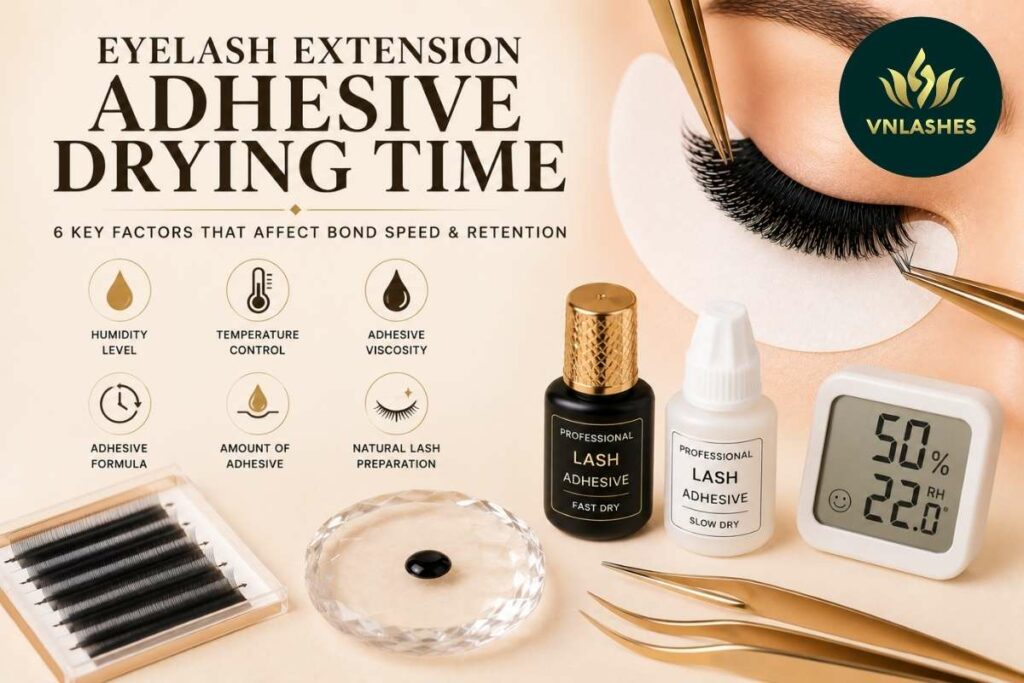
Eyelash Extension Adhesive Drying Time: 6 Key Factors
12
Jul
Jul
Eyelash extension adhesive drying time directly affects application speed, bond quality, lash retention, and the final appearance of a lash set. If the glue cures too quickly, the extension may not form a secure connection with the natural lash. If it remains wet for too long, extensions may move, lean, or stick to nearby lashes.
As an eyelash product manufacturer and wholesale supplier, we understand that eyelash extension adhesive drying time depends on more than the adhesive formula. Humidity, temperature, viscosity, product type, application technique, and natural lash preparation all influence the final bonding result.
What Is Eyelash Extension Adhesive Drying Time?
Eyelash extension adhesive drying time is the period required for the glue to create an initial bond between an eyelash extension and a natural lash.
Professional lash adhesives commonly have a working time of approximately 0.5 to 3 seconds. However, the actual drying speed can vary according to room conditions, product formulation, and the technician’s placement speed.
Initial bonding should not be confused with complete curing. The extension may remain in position within seconds, while the chemical curing process continues after the application.
1. Humidity Affects Eyelash Extension Adhesive Drying Time
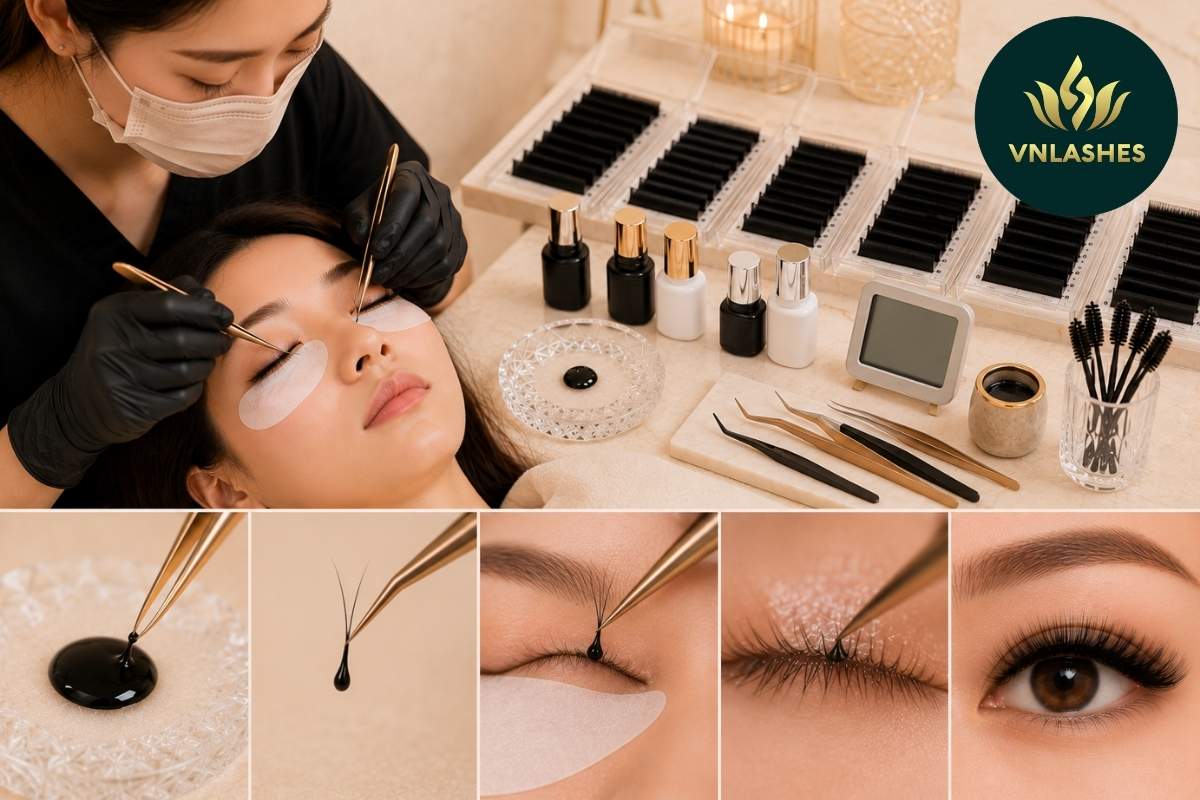
Humidity is one of the most important factors influencing eyelash extension adhesive drying time.
Most professional lash adhesives contain cyanoacrylate, which reacts with moisture in the air. Higher humidity usually speeds up the curing reaction, while lower humidity slows it down.
What Happens When Humidity Is Too High?
When the room contains too much moisture, the adhesive may begin curing before the extension is correctly positioned.
This can result in:
- Weak attachment
- Reduced lash retention
- Brittle or uneven bonding
- Difficulty wrapping the extension around the natural lash
What Happens When Humidity Is Too Low?
In a dry environment, lash glue may remain wet longer than expected. Extensions can move out of position or attach to neighboring lashes.
A hygrometer helps technicians monitor room conditions, while humidifiers and dehumidifiers support a more stable working environment.
2. Temperature Influences Lash Adhesive Drying Speed
Temperature also affects eyelash extension adhesive drying time.
Warm conditions generally accelerate adhesive curing, while cooler rooms extend the working time. Each formula has a recommended temperature range that should be followed for consistent results.
Why Stable Temperature Matters
Frequent temperature changes can make the same adhesive behave differently throughout the day. This may affect isolation, placement, bonding, and lash retention.
Maintaining a stable salon temperature helps technicians achieve a more predictable adhesive drying speed.
3. Adhesive Viscosity Changes Application Control
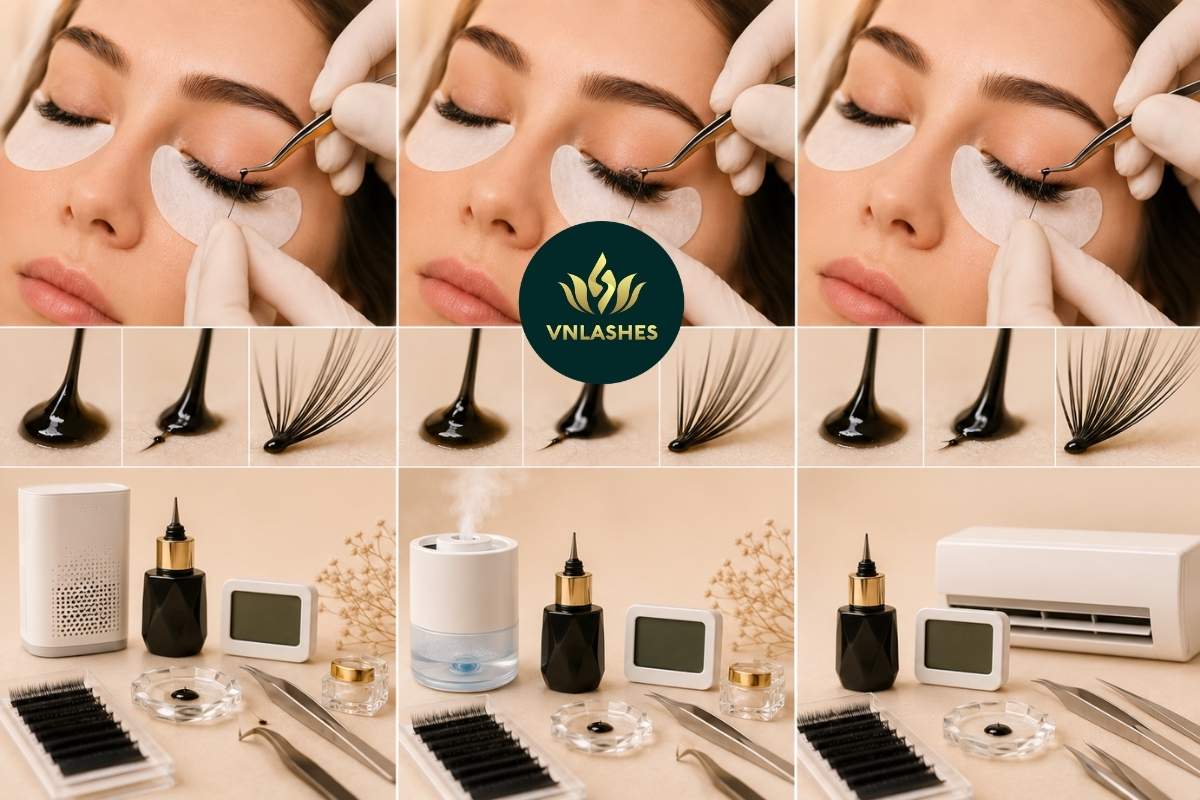
Viscosity describes the thickness and flow of lash glue.
A thin formula spreads more easily and may dry faster. A thicker adhesive usually provides greater control and can allow more time for positioning.
Thin-Viscosity Lash Adhesive
A thin formula may be suitable for:
- Experienced lash technicians
- Fast placement techniques
- Classic lash extensions
- Premade fan applications
Medium- or Thick-Viscosity Adhesive
A thicker formula may be more suitable for:
- Beginner lash technicians
- Slower application methods
- Artists who need extra adjustment time
- Certain warm or humid environments
The ideal viscosity should match the technician’s working speed and the expected eyelash extension adhesive drying time.
4. Adhesive Formula Determines Drying Time
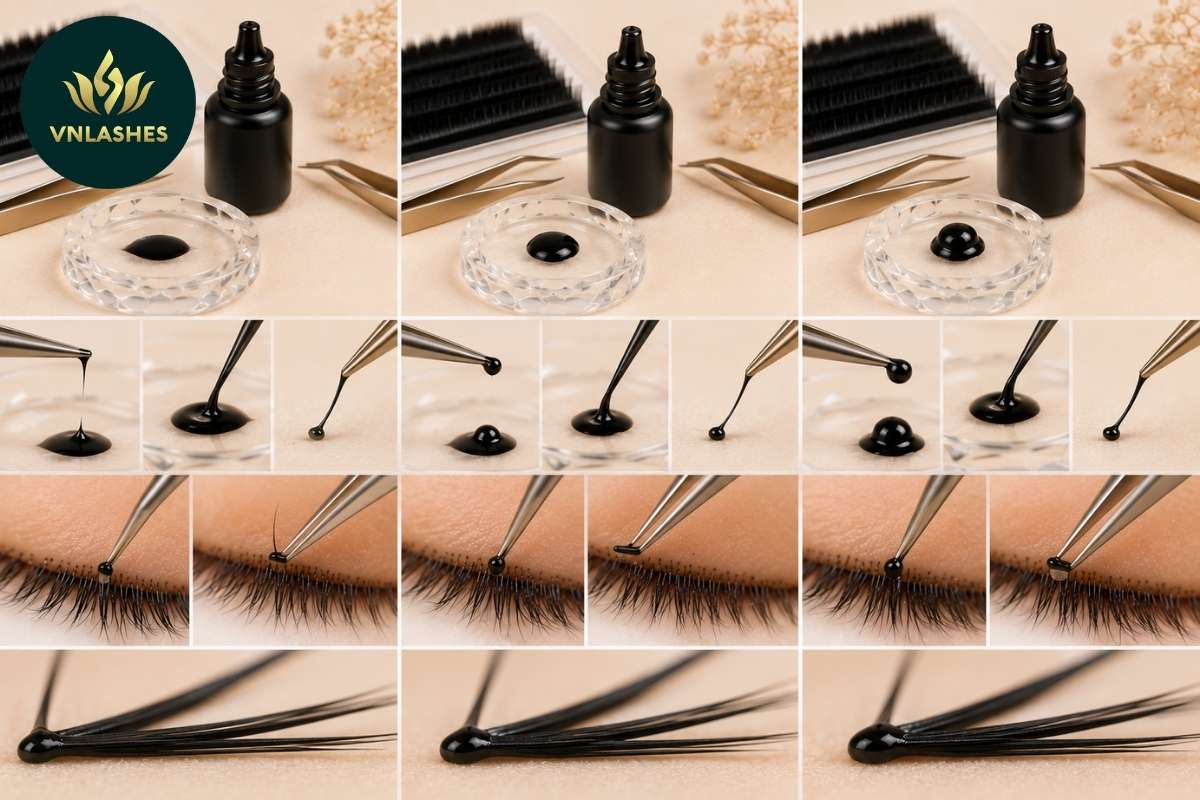
Different lash adhesive formulas are designed for different skill levels and salon conditions.
Fast-drying adhesives may offer a working time of approximately 0.5 to 1 second. Slower formulas may provide around 2 to 3 seconds for placement.
Fast-Drying Lash Adhesive
Fast-setting glue is generally designed for experienced technicians who can isolate and position extensions quickly.
When the formula dries before placement is completed, the extension may attach only to the surface of the natural lash. This can weaken the bond and reduce retention.
Slow-Drying Lash Adhesive
A slower formula provides more time to adjust the extension direction and contact area.
It can be suitable for:
- Beginner technicians
- Lash training academies
- Slower application techniques
- Low-humidity environments
For wholesale buyers, offering several drying speeds helps serve customers with different working styles and experience levels.
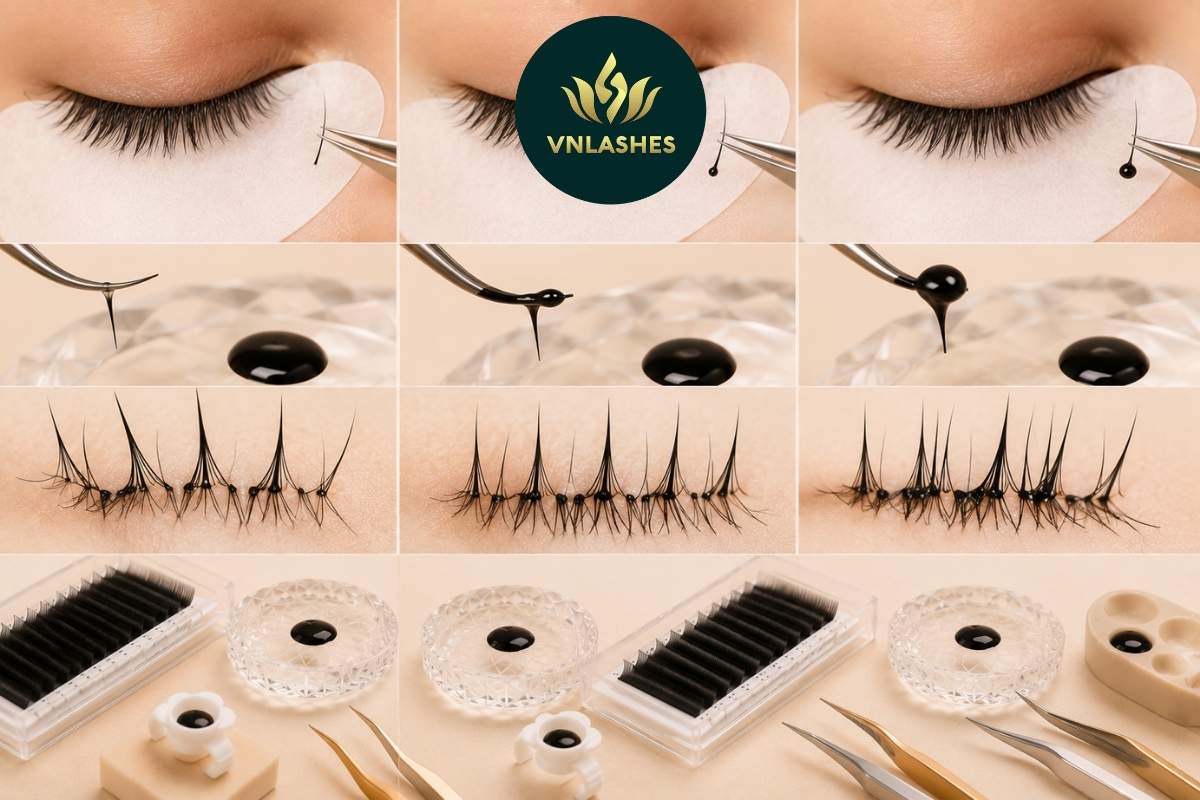
5. The Amount of Adhesive Used Matters
The amount of glue placed on the extension base can change the actual eyelash extension adhesive drying time.
Using too much adhesive creates a larger bead that may take longer to stabilize. Excess glue can also cause visible residue, heavy lash bases, or neighboring lashes to stick together.
Using too little adhesive may create an insufficient contact area and lead to premature shedding.
How to Control the Adhesive Bead
The extension base should be dipped smoothly without creating a large droplet.
The correct amount depends on:
- Extension type
- Base shape
- Adhesive viscosity
- Application technique
- Humidity and temperature
The glue drop should also be replaced when it becomes thick, stringy, or difficult to use.
6. Natural Lash Preparation Affects Bonding
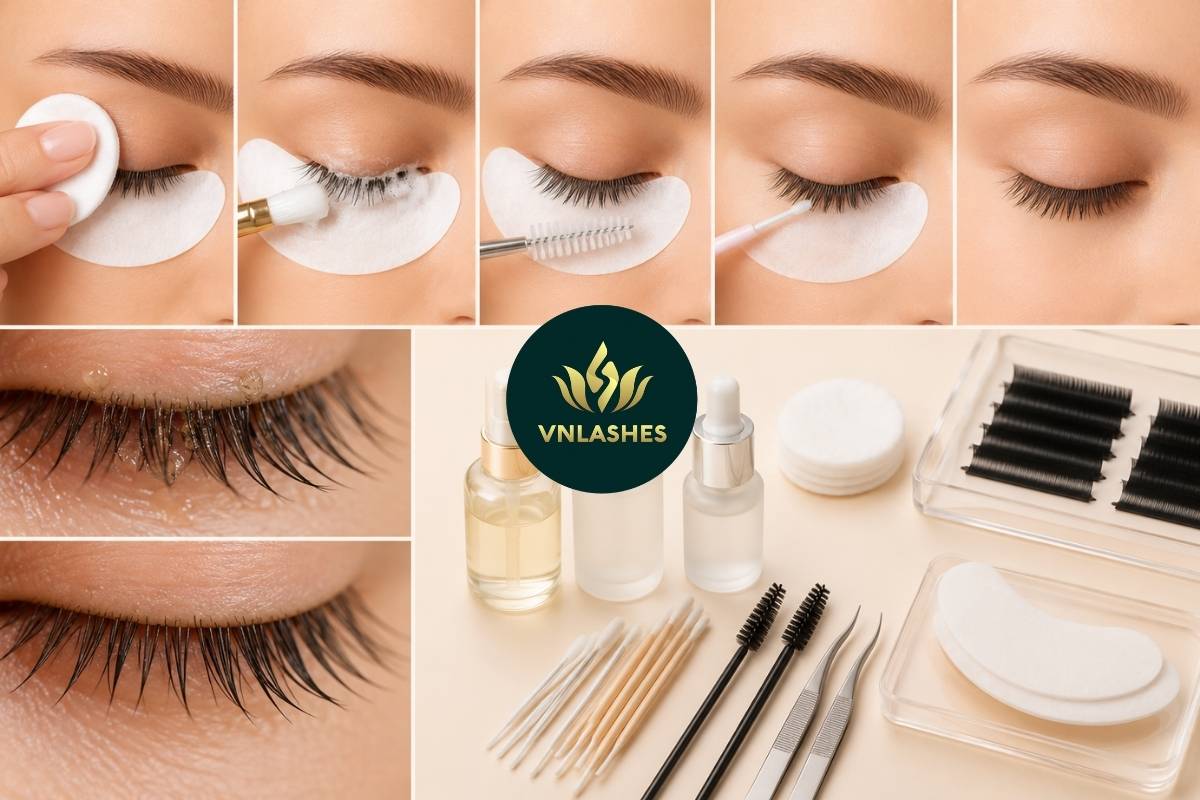
Oil, makeup, moisture, dust, and cleanser residue can interfere with adhesive performance.
When natural lashes are not cleaned properly, the formula may not spread or bond evenly. Excess primer can also affect eyelash extension adhesive drying time and retention.
Proper Natural Lash Preparation
Before applying extensions, technicians should:
- Remove makeup and oil
- Clean the lashes with a suitable lash cleanser
- Allow the lashes to dry completely
- Use primer only when necessary
- Avoid leaving product residue
A clean lash surface supports a more stable bond, balanced drying speed, and better retention.
How to Choose the Right Adhesive Drying Time
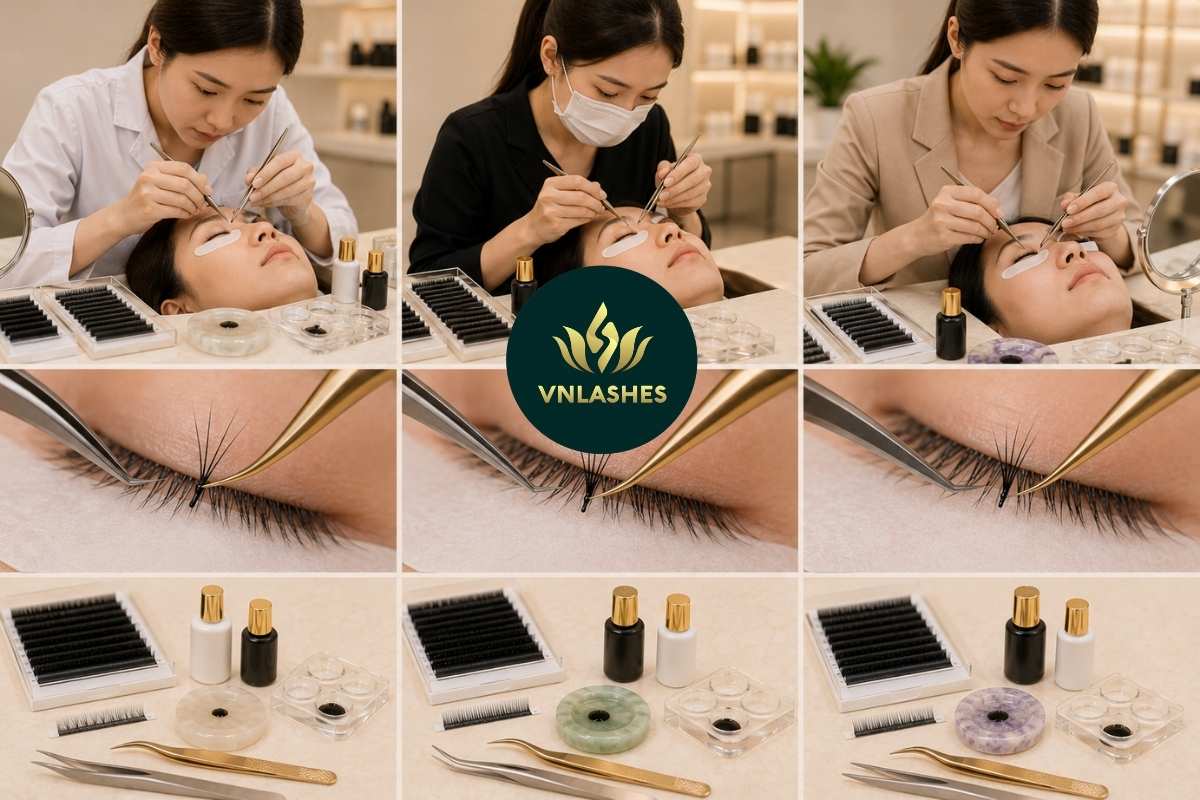
The best lash adhesive is not always the fastest one. The correct eyelash extension adhesive drying time should match the technician’s placement speed and salon environment.
For Beginner Lash Technicians
A formula with approximately 2 to 3 seconds of working time provides more control and allows additional time to adjust the extension.
For Intermediate Lash Technicians
A 1- to 2-second adhesive offers a practical balance between control and application efficiency.
For Experienced Lash Technicians
A 0.5- to 1-second formula may support faster services when temperature, humidity, and placement technique are properly controlled.
Wholesale Considerations for Lash Adhesive Buyers
Brands, distributors, academies, and salon suppliers should evaluate more than eyelash extension adhesive drying time when sourcing professional lash glue.
Important factors include:
- Recommended humidity range
- Recommended temperature range
- Adhesive viscosity
- Retention performance
- Ingredient documentation
- Production and expiration dates
- Bottle and nozzle quality
- Storage requirements
- Packaging customization
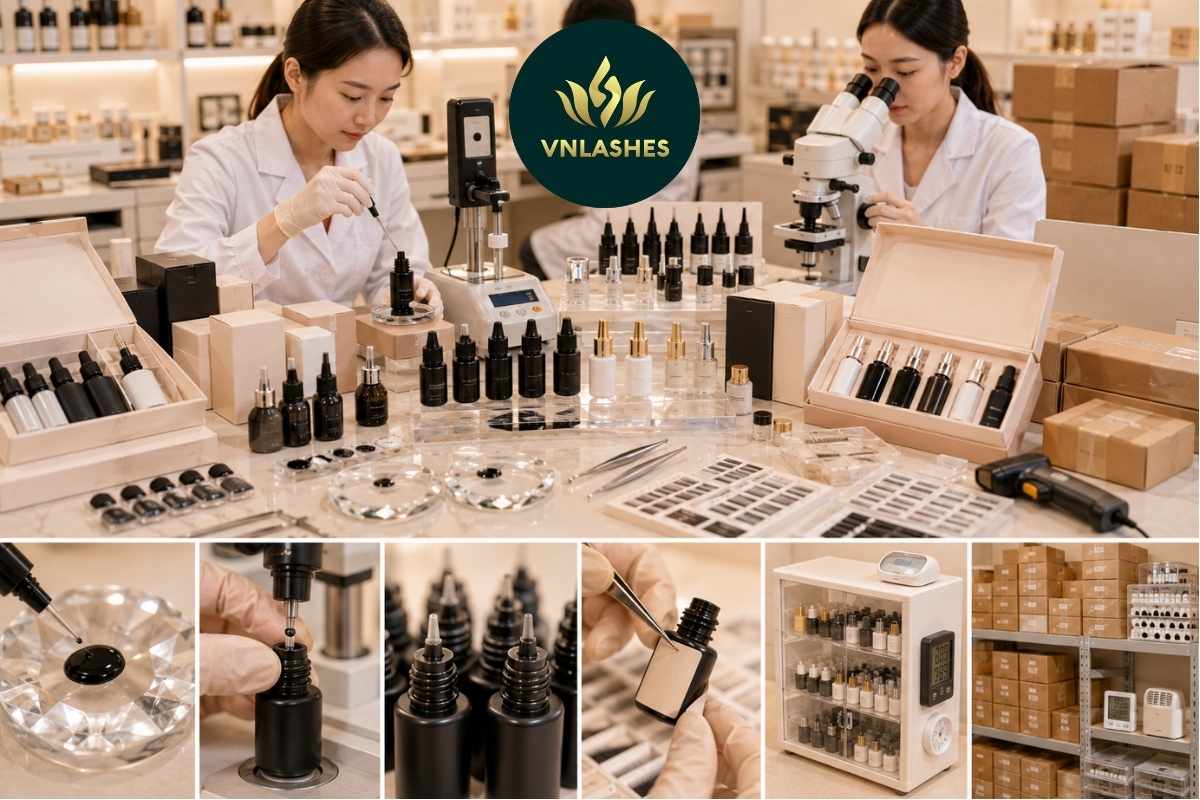
As a manufacturer and wholesale supplier, we test adhesive performance according to different environmental conditions, working speeds, and application requirements.
Proper Storage of Eyelash Extension Adhesive
Correct storage helps protect the original viscosity, curing behavior, and eyelash extension adhesive drying time.
Unopened bottles should be kept according to the manufacturer’s instructions, usually in a cool, dry, and dark place. Opened bottles should remain upright in an airtight container and away from heat, moisture, and direct sunlight.
The bottle nozzle should be cleaned after each use to prevent blockage and contamination.
Frequently Asked Questions
Does High Humidity Make Lash Glue Dry Faster?
Yes. Higher humidity generally accelerates the curing reaction of cyanoacrylate-based adhesive. However, excessive moisture may cause the surface to harden before a secure bond is formed.
Why Is My Lash Adhesive Drying Too Slowly?
Common causes include low humidity, cool room temperature, excessive glue, thick viscosity, an old glue drop, or improper storage.
Is Fast-Drying Lash Adhesive Better?
Not always. The ideal eyelash extension adhesive drying time should match the technician’s working speed. A formula that dries too quickly may reduce bond quality when placement is not completed in time.
How Often Should a Glue Drop Be Replaced?
The glue drop should be replaced when it becomes thick, stringy, sticky around the edge, or difficult to dip into. The exact frequency depends on room conditions and product formulation.
Can Water Be Added to Lash Adhesive?
No. Water, thinner, or other substances should not be mixed into professional lash glue. Altering the formula may affect stability, consistency, safety, and bonding performance.
Conclusion
Eyelash extension adhesive drying time is influenced by humidity, temperature, viscosity, adhesive formulation, application amount, and natural lash preparation. Controlling these factors helps technicians create cleaner bonds, improve retention, and maintain consistent application quality.
For manufacturers and wholesale suppliers, providing formulas with different drying speeds and recommended environmental ranges helps meet the needs of beginners, experienced technicians, salons, academies, distributors, and private-label lash brands.


Bài viết liên quan
Private Label Lashes: Build Your Own Lash Brand With A Trusted Manufacturer
Building a successful business in today’s beauty industry involves more than simply selling high-quality products....
Oct
Zero Time Promade Fan Lashes – Wholesale Manufacturer & OEM Services
For lash salons and professional eyelash brands, application efficiency and consistent quality are important factors...
Oct
Magic Fan And Zero Time Promade Fan – A Faster, Time-Saving Lash Extension Solution
In the professional lash extension industry, application speed and product consistency are important factors for...
Oct
Custom Magic Fans Manufacturing and OEM Services: Production Process
When sourcing Magic Fans in bulk, buyers need more than just an attractive lash tray....
Aug
Lash Extension Removal: Common Mistakes and Safe Techniques
Lash extension removal is an important part of professional lash care. When extensions are removed...
Jul
Lash Foam Cleansers: A Practical Guide for Lash Professionals
Lash foam cleansers are essential products for cleaning natural lashes, eyelids and eyelash extensions. They...
Jul