
 Deutsch
 Русский
 Español
 Français
No products in the cart.

Eyelash Knowledge & Education, Lash Aftercare & Safety
Do Eyelash Extensions Damage Your Eyelashes?
10
Jul
Jul
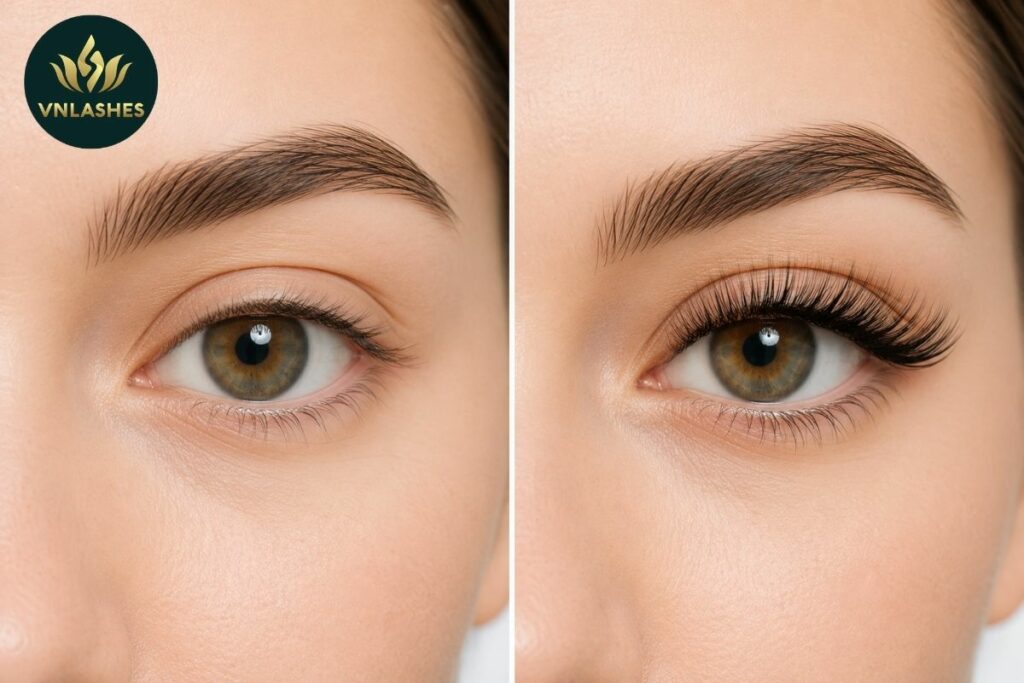
Do eyelash extensions damage your eyelashes? In most cases, professionally applied lash extensions should not damage healthy natural lashes. Problems usually happen when the extensions are too heavy, several lashes are glued together, excessive adhesive is used or the application technique is incorrect.
For lash artists, salon owners, academies and lash brands, understanding eyelash extension damage is important. Safe application depends on suitable products, proper isolation and careful selection of lash length, thickness and weight.
Do Eyelash Extensions Damage Natural Lashes?
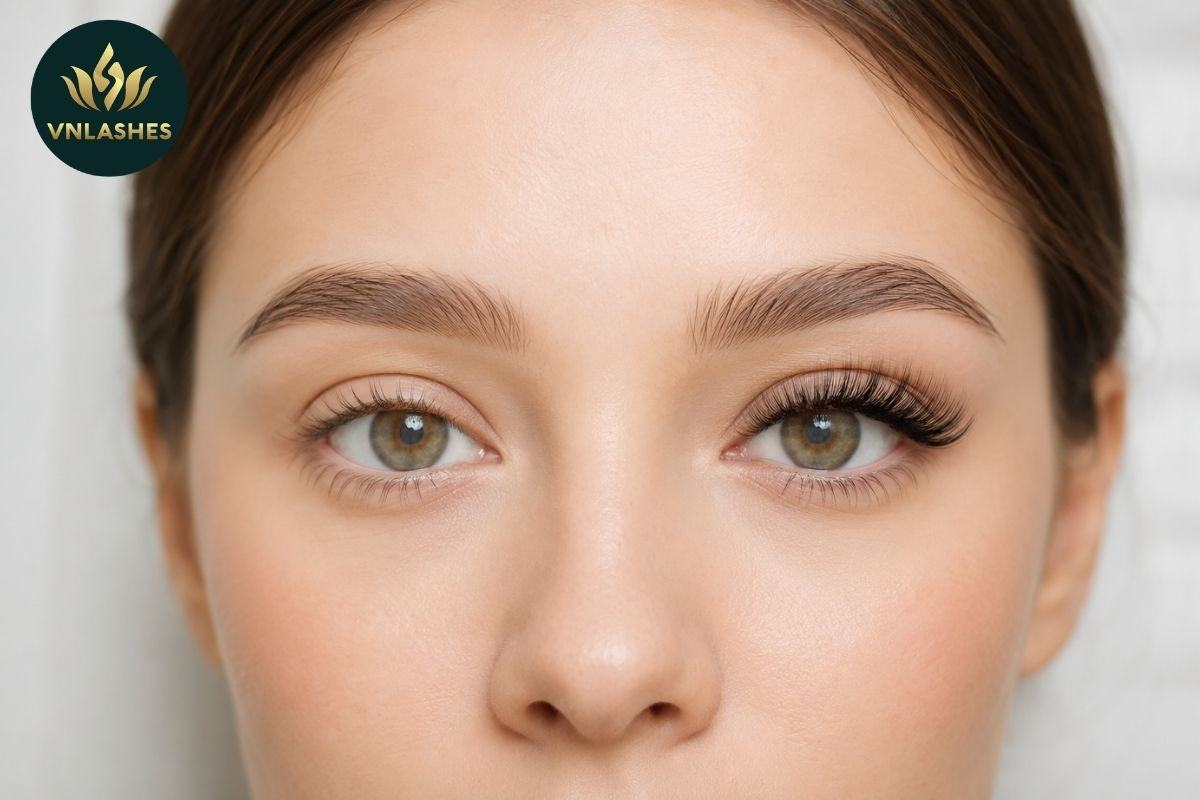
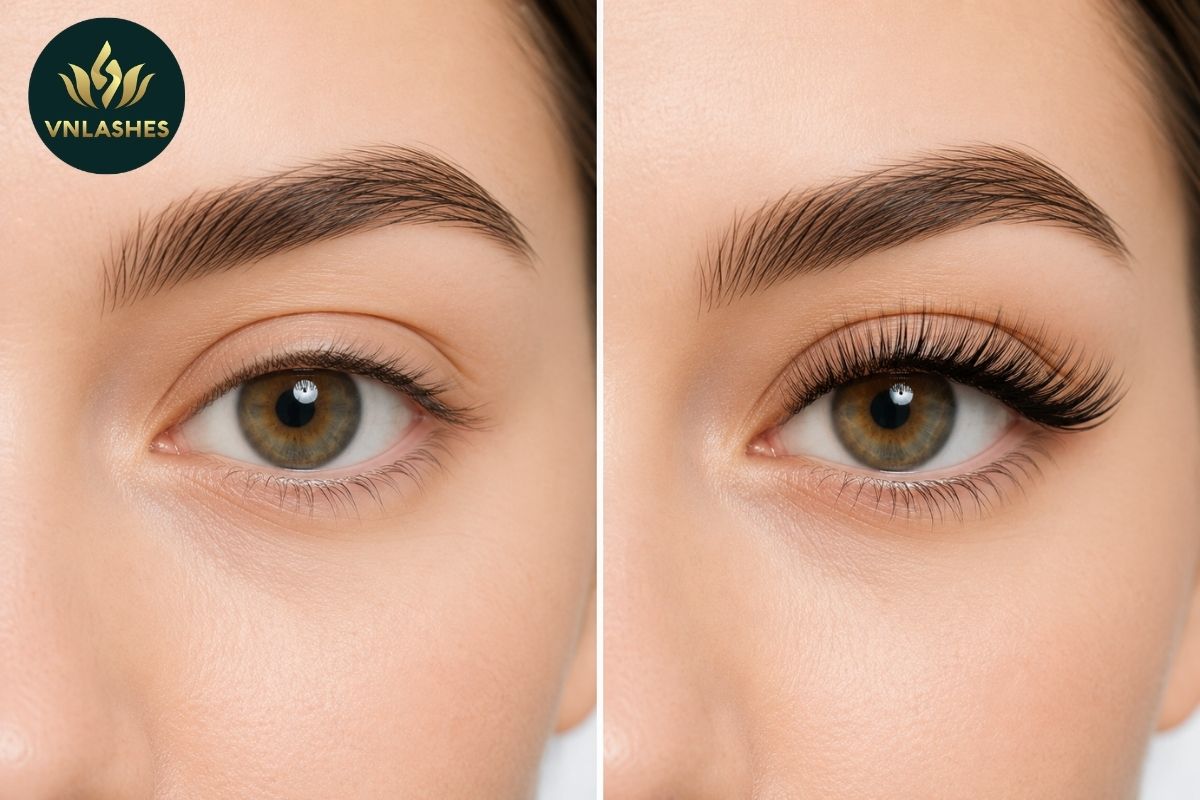
Eyelash extensions are applied to individual natural lashes to create more length, curl and volume. When the correct technique is used, the extensions should follow the natural lash growth cycle and shed with the original lashes.
So, do eyelash extensions damage your eyelashes? Not necessarily. The risk depends on several factors:
- The technician’s application skills
- The weight of the extensions
- The selected length and diameter
- The amount of adhesive
- The quality of lash isolation
- The condition of the natural lashes
- The client’s aftercare routine
Correct product selection helps reduce unnecessary tension and lowers the risk of natural lash damage.
What Causes Eyelash Extension Damage?
Extensions That Are Too Heavy
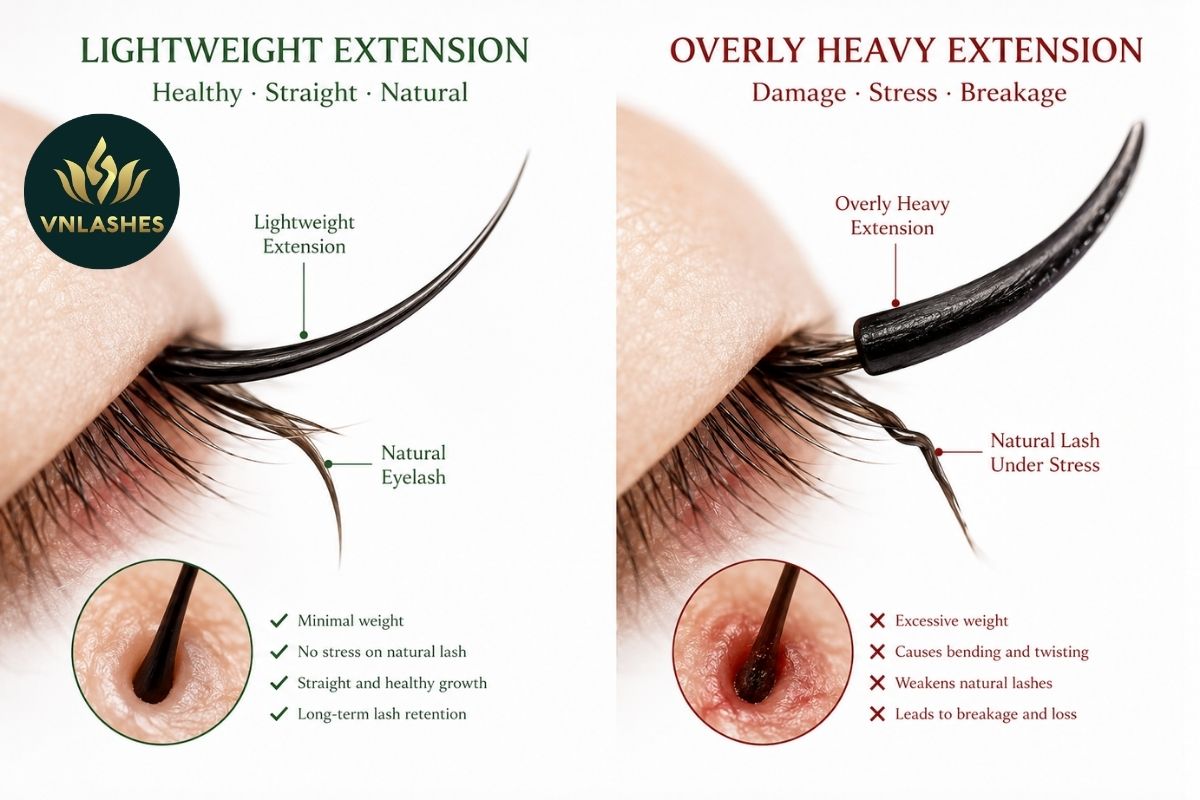
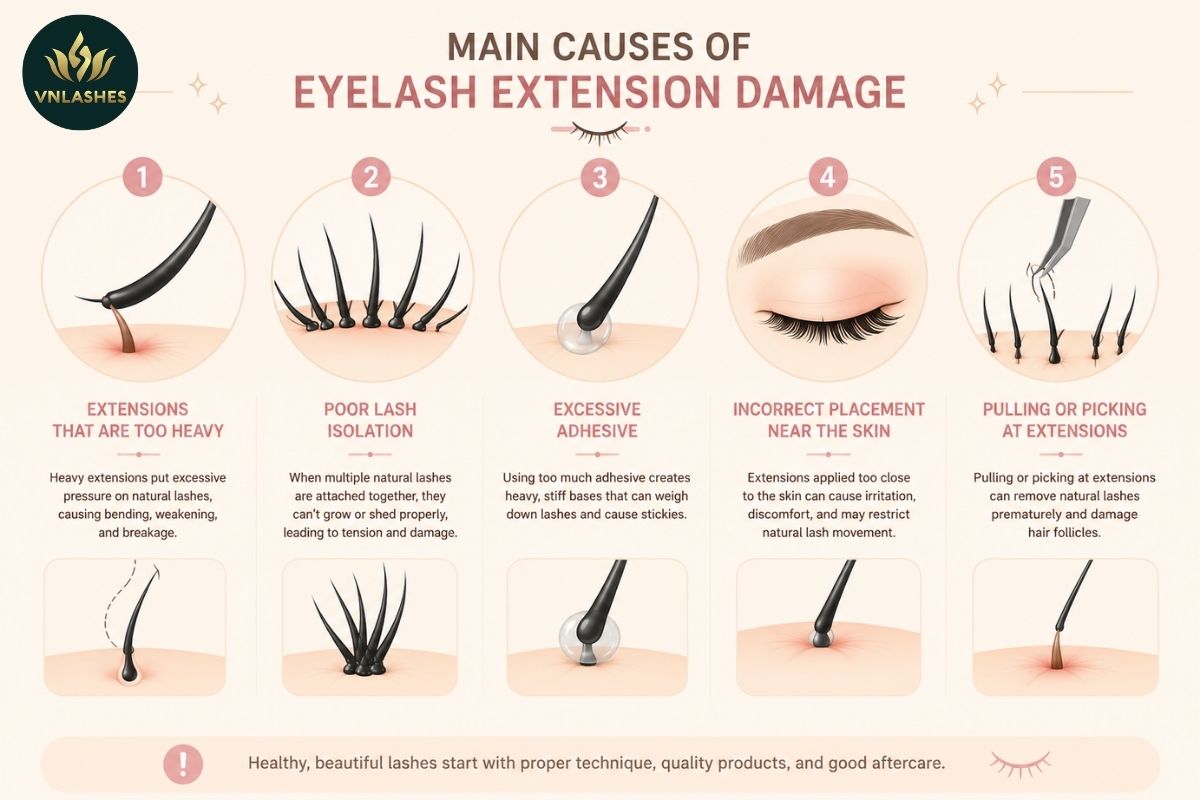
Heavy extensions are one of the main causes of eyelash damage from extensions.
Fine or weak natural lashes may not be able to support long fibers, thick diameters or large volume fans. Excessive weight can lead to twisting, breakage and premature shedding.
A professional technician should choose the lash style according to the strength of the client’s natural eyelashes.
Poor Lash Isolation
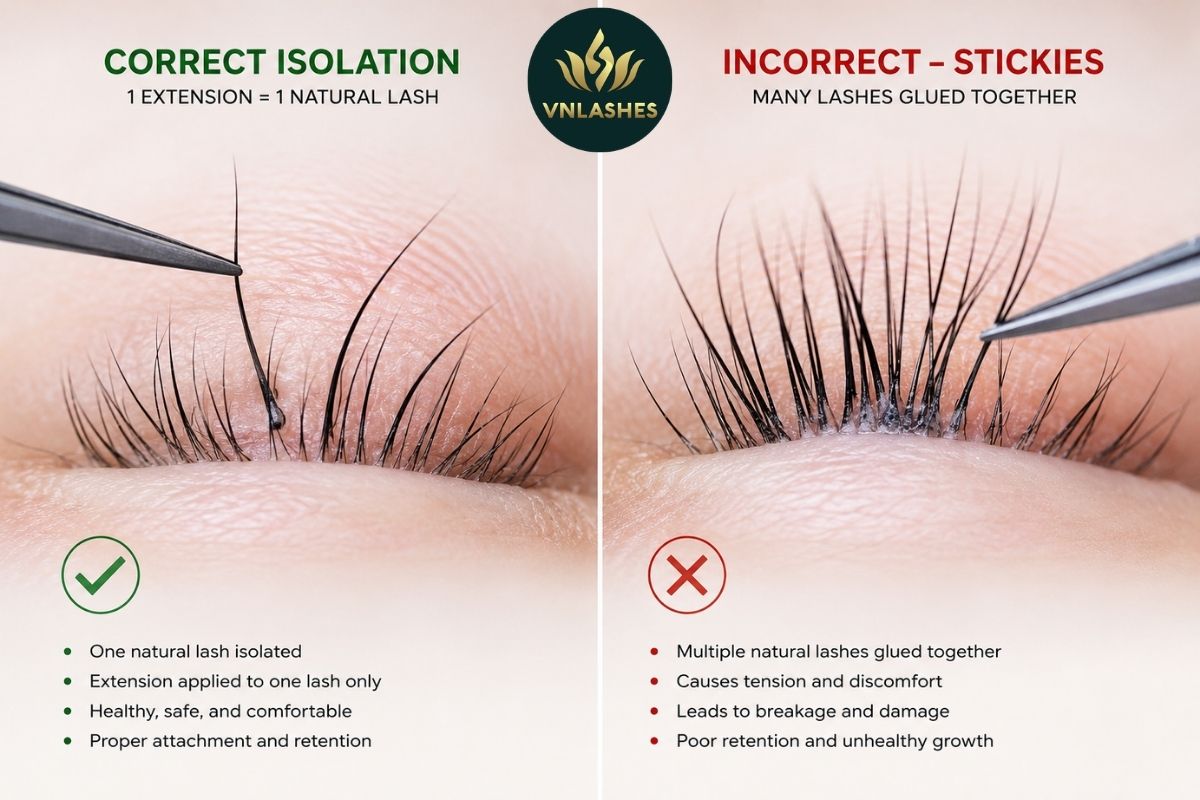
Poor isolation may cause several natural lashes to become glued together.
Each extension should normally be attached to one natural lash. When multiple lashes are bonded together, they cannot grow and shed independently. This creates tension and may pull on neighboring lashes.
These glued groups are often known as stickies and are a common cause of lash extension damage.
Incorrect Placement Near the Skin
Lash extensions should be applied slightly away from the eyelid.
When adhesive touches the skin, it may cause itching, discomfort or irritation. Incorrect placement may also restrict natural lash movement and make the set feel tight.
Excessive Adhesive
Using too much adhesive can create thick and rigid bases.
Heavy glue buildup increases the weight of the set and may cause nearby lashes to stick together. A controlled amount of adhesive is usually enough to create a secure bond without adding unnecessary pressure.
Pulling or Picking at the Extensions
Clients may damage their natural lashes by pulling, twisting or picking at the extensions.
Forceful removal can pull out natural hairs before they are ready to shed. Professional removal with a suitable lash remover is generally safer than removing extensions by hand.
How the Natural Lash Growth Cycle Affects Extensions
To understand the question “Do eyelash extensions damage your eyelashes?”, it is useful to understand how natural lashes grow and shed.
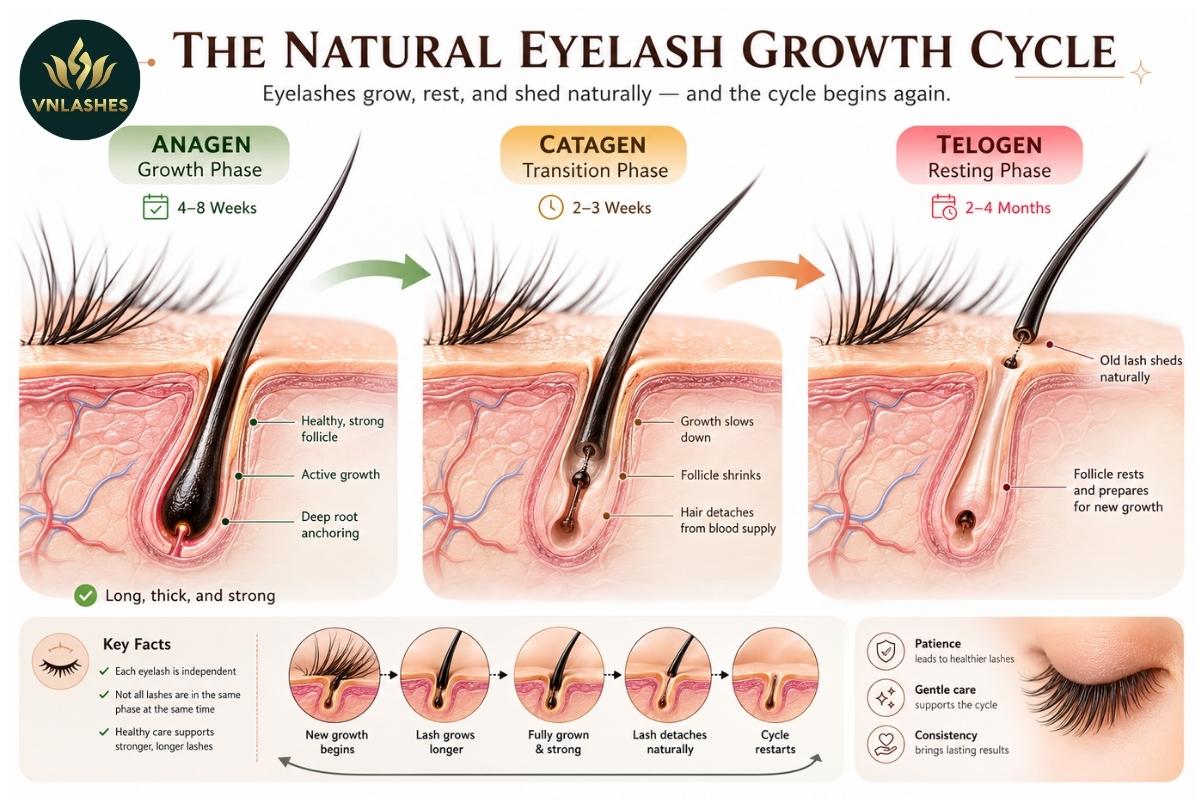
Each eyelash follows its own growth cycle. A small number of lashes naturally fall out every day, whether or not the client wears extensions.
Anagen Phase
The anagen phase is the active growth stage.
Lashes in this stage are usually short and delicate. Applying heavy extensions to young lashes may place too much pressure on them and increase the risk of breakage.
Catagen Phase
The catagen phase is the transitional stage.
The natural lash has stopped growing but has not yet entered the final resting stage. These lashes may support extensions, provided the correct weight is selected.
Telogen Phase
The telogen phase is the resting stage before natural shedding.
When an extension falls out with one natural lash attached, this does not always mean the extension caused damage. The natural lash may simply have completed its growth cycle.
Signs of Eyelash Extension Damage
Some natural shedding is normal, but certain signs may indicate poor application or excessive stress.
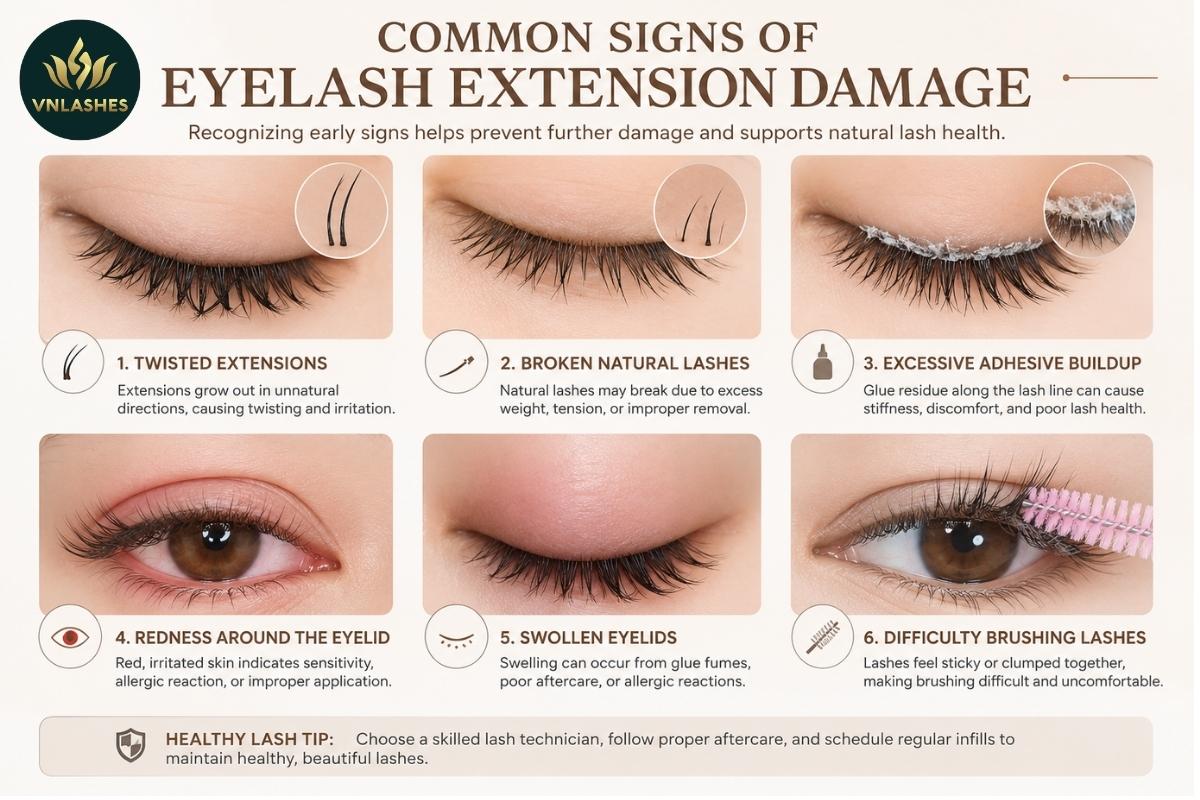
Common warning signs include:
- Pain or pulling while blinking
- Lashes glued together
- Extensions that feel too heavy
- Large amounts of visible adhesive
- Twisted or crossed fibers
- Difficulty brushing the lashes
- Noticeable breakage
- Persistent redness or swelling
These signs should not be ignored, especially when discomfort continues after the appointment.
How to Prevent Eyelash Extension Damage
Choose the Correct Lash Weight
The selected diameter, length, curl and fan size should match the condition of the natural lashes.
Lightweight lash fibers can create fullness without placing excessive stress on the lash line. Fine lashes usually require shorter lengths, thinner diameters or lower-volume fans.
As an eyelash manufacturer and wholesale supplier, we recommend offering several lash specifications so technicians can select suitable products for different clients.
Use Consistent Lash Products
Product quality affects application control, comfort and overall lash health.
Poorly manufactured extensions may have:
- Bulky bases
- Uneven diameters
- Unstable curls
- Irregular fan shapes
- Excessive weight
- Stiff fibers
Consistent thickness, clean bases and balanced fans make it easier to create safer lash sets.
Maintain Proper Isolation
Accurate isolation allows each natural lash to move, grow and shed independently.
Technicians should check the completed set carefully and separate any lashes that have become attached during application.
Follow Proper Aftercare
Aftercare plays an important role in reducing eyelash extension damage.
Clients should avoid rubbing, twisting or pulling the extensions. The lash line should also be cleaned regularly with a suitable cleanser to remove makeup, oil and debris.
Attend Regular Refill Appointments
As natural lashes grow, the extensions move farther away from the eyelid.
Grown-out extensions may twist or place uneven pressure on the original lash. During a refill appointment, the technician can remove these fibers and check the condition of the lash line.
Can Damaged Eyelashes Grow Back?
In many cases, eyelashes affected by temporary breakage or premature shedding may grow back as part of the natural lash cycle.
Recovery time depends on the level of damage, the individual growth cycle and the condition of the lash follicle.
During recovery, clients should:
- Avoid heavy lash styles
- Keep the eyelid area clean
- Use gentle makeup removers
- Avoid rubbing or pulling
- Allow time for natural regrowth
Persistent lash loss, pain, swelling or irritation should be assessed by a qualified healthcare professional.
Is a Break From Eyelash Extensions Necessary?
A break is not always required when lash extensions are applied correctly and the natural lashes remain healthy.
However, a technician may recommend shorter, thinner or lighter fibers if the lash line appears weak. Temporary removal may also be suitable when there is noticeable eyelash extension damage.
The decision should be based on the current condition of the natural lashes rather than a fixed schedule.
Why Product Quality Matters
The answer to “Do eyelash extensions damage your eyelashes?” is influenced not only by technique but also by product quality.
Wholesale buyers, salons, academies and lash brands should evaluate:
- Fiber softness
- Diameter consistency
- Base thickness
- Curl stability
- Fan symmetry
- Weight distribution
- Packaging cleanliness
- Batch consistency
As a professional eyelash manufacturer, we focus on lightweight fibers, stable curls and clean bases. These features help technicians control lash weight and reduce unnecessary pressure on natural eyelashes.
Conclusion
Do eyelash extensions damage your eyelashes? They should not normally damage healthy natural lashes when the correct weight, application technique and aftercare are used.
Most eyelash extension damage is linked to heavy fibers, poor isolation, excessive adhesive, incorrect placement or forceful removal. Choosing suitable products and following proper application standards can help protect natural lash health while maintaining the desired extension style.


Bài viết liên quan
Private Label Lashes: Build Your Own Lash Brand With A Trusted Manufacturer
Building a successful business in today’s beauty industry involves more than simply selling high-quality products....
Oct
Zero Time Promade Fan Lashes – Wholesale Manufacturer & OEM Services
For lash salons and professional eyelash brands, application efficiency and consistent quality are important factors...
Oct
Magic Fan And Zero Time Promade Fan – A Faster, Time-Saving Lash Extension Solution
In the professional lash extension industry, application speed and product consistency are important factors for...
Oct
Custom Magic Fans Manufacturing and OEM Services: Production Process
When sourcing Magic Fans in bulk, buyers need more than just an attractive lash tray....
Aug
Lash Extension Removal: Common Mistakes and Safe Techniques
Lash extension removal is an important part of professional lash care. When extensions are removed...
Jul
Lash Foam Cleansers: A Practical Guide for Lash Professionals
Lash foam cleansers are essential products for cleaning natural lashes, eyelids and eyelash extensions. They...
Jul