
 Deutsch
 Русский
 Español
 Français
No products in the cart.

Eyelash Knowledge & Education, Lash Extension Guides, Lash Aftercare & Safety
Removing Lash Extensions at Home: What You Should Know Before Trying It
03
Jul
Jul
Removing lash extensions at home is one of the most common questions clients search for when their lashes start growing out, twisting, or feeling uncomfortable. While it may seem simple to remove eyelash extensions by yourself, the truth is that at-home lash removal can easily damage natural lashes if it is done incorrectly.
As a professional lash manufacturer and wholesale supplier, VNLASHES understands both sides of this topic. Lash clients want comfort and convenience, while lash salons, beauty distributors, and private label brands need safe aftercare education for their customers. This guide explains the real risks of removing lash extensions at home, safer alternatives, and why professional removal is always the best choice.
Who This Guide Is For
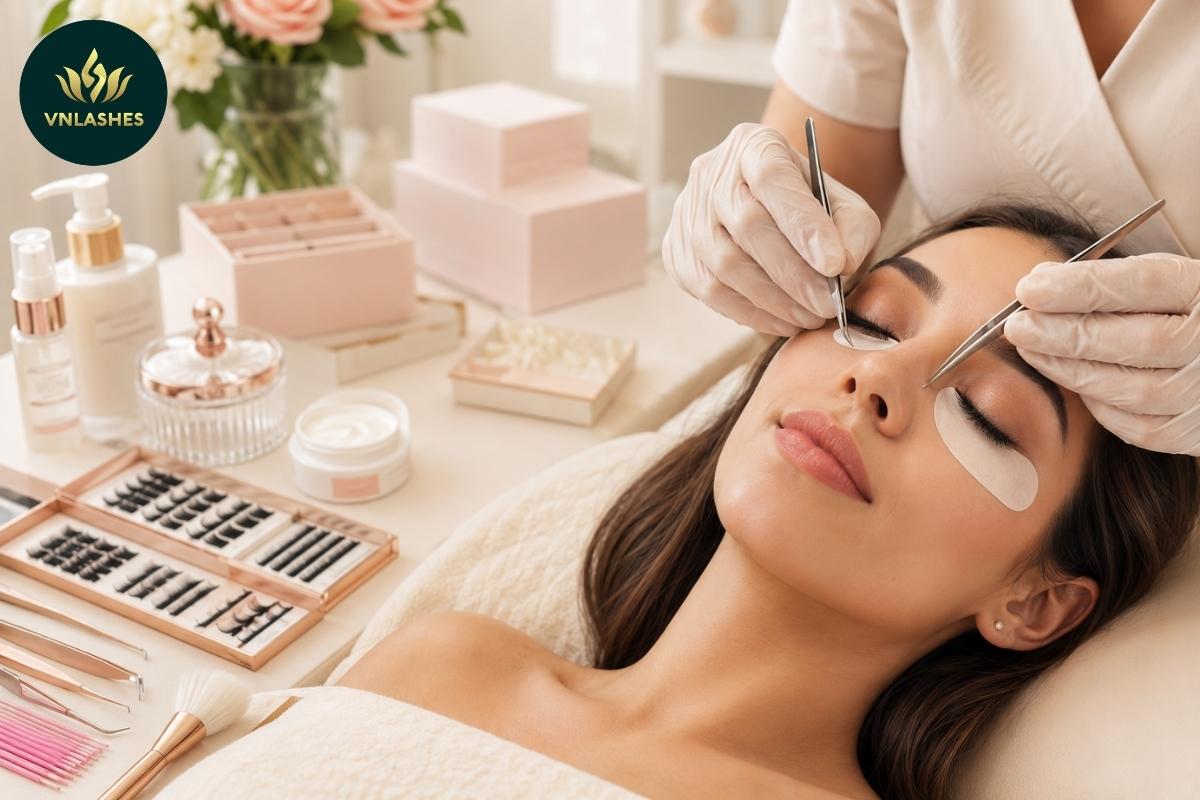
This guide is written for lash clients, lash salons, beauty distributors, lash academies, and private label lash brands that want to understand the real risks of removing lash extensions at home.
It is also useful for B2B buyers who want to build a complete lash aftercare product line, including lash shampoo, cleanser, professional remover, aftercare tools, and custom packaging.
For salons and lash brands, customer education is important. When clients know what not to do, they are less likely to damage their natural lashes or blame the lash products after unsafe DIY removal.
Why People Search for Removing Lash Extensions at Home
Many people consider removing lash extensions at home because their extensions no longer look fresh. After two to four weeks, lash extensions may grow out, turn in different directions, or feel heavier than before.
Common reasons include:
- No time to book a salon appointment
- Lash extensions growing out unevenly
- Discomfort from twisted or loose extensions
- Cost concerns
- A closed salon or unavailable lash technician
- Curiosity after watching DIY lash removal videos
These reasons are understandable. However, removing lash extensions at home without professional tools or training can create more problems than it solves.
At-Home Removal vs Professional Lash Removal
| Factor | Removing Lash Extensions at Home | Professional Lash Removal |
|---|---|---|
| Safety | Higher risk if done incorrectly | Safer with trained technique |
| Natural lash protection | Easy to damage natural lashes by pulling or rubbing | Designed to protect the natural lash line |
| Products used | Oils, steam, or random removers | Professional gel or cream remover |
| Eye irritation risk | Higher if product enters the eye | Lower with controlled application |
| Removal result | Often incomplete, with leftover adhesive | Cleaner and more complete |
| Best for | Allowing loose extensions to shed naturally | Full or partial lash extension removal |
| Recommended for clients | Not recommended for forced removal | Strongly recommended |
Natural Lash Damage
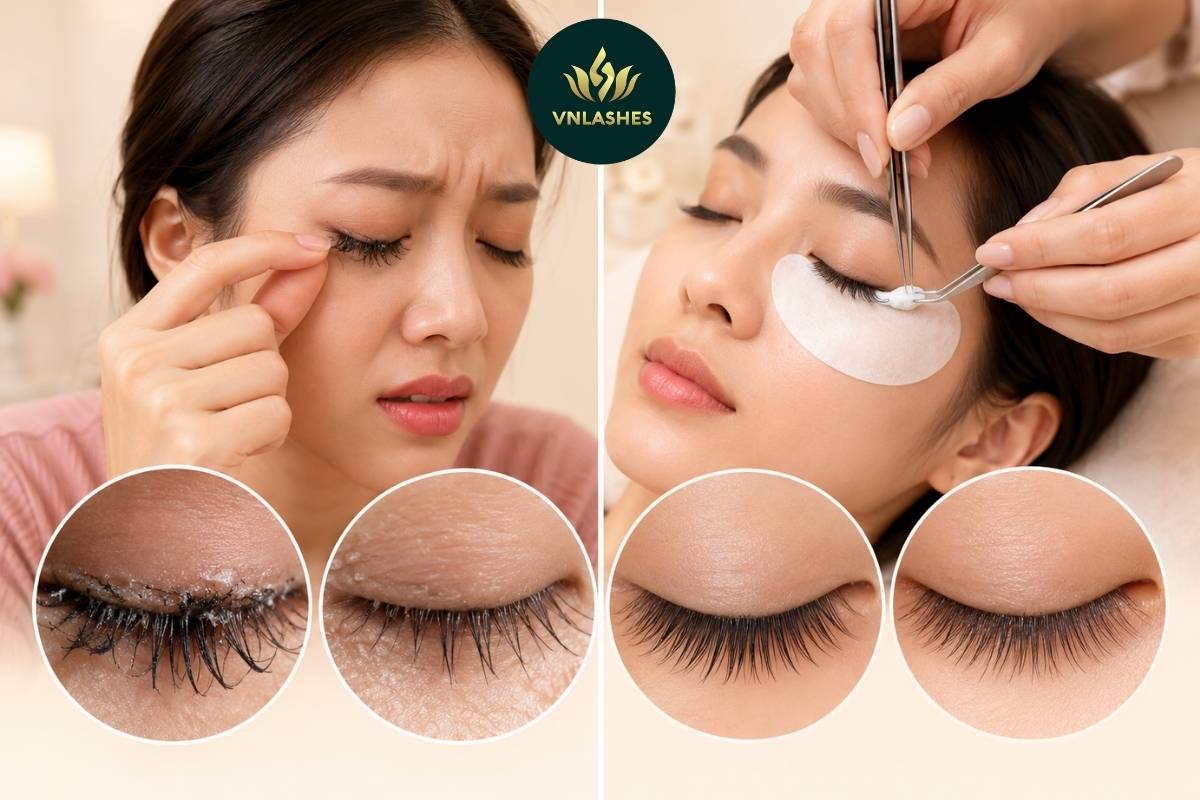
Lash extensions are attached to natural lashes using professional lash adhesive. If you pull or peel the extensions off, your natural lashes may come out with them.
This can lead to:
- Gaps in the lash line
- Weak natural lashes
- Shorter-looking lashes
- Slower recovery
- Uneven regrowth
Natural lashes need time to grow back. Forceful DIY lash removal can affect the appearance of your eyes for weeks.
Eye Irritation
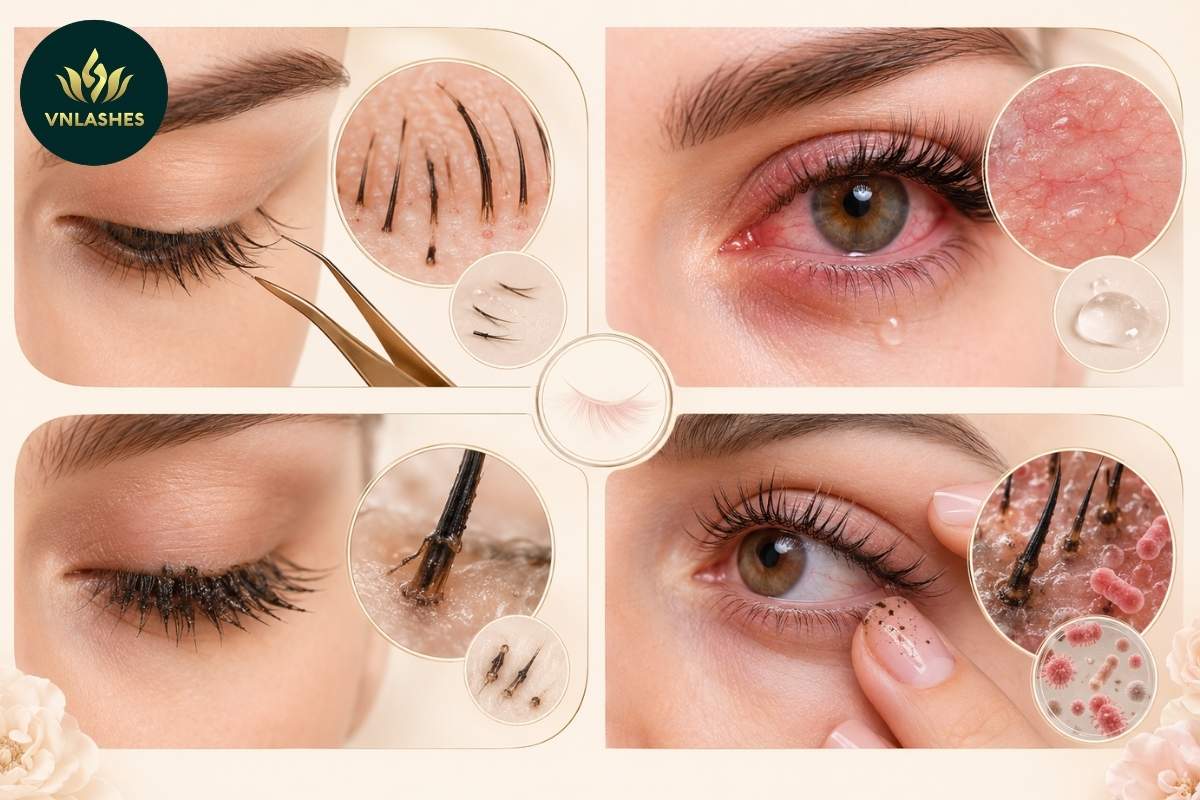
The eye area is delicate. Oils, expired removers, cotton fibers, tweezers, or unclean tools can easily irritate the skin and eyes.
When removing lash extensions at home, many people accidentally get product too close to the eye. This may cause redness, burning, watering, or discomfort.
If you experience eye pain, swelling, strong redness, discharge, or blurred vision, stop trying to remove the extensions and contact an eye care professional or licensed lash technician immediately.
Leftover Adhesive Buildup
Many home methods do not fully dissolve lash glue. They may only loosen the extension slightly, leaving sticky adhesive on the natural lash.
This can create clumpy lashes, residue buildup, and an uncomfortable lash line.
Higher Risk of Infection
Touching the lash line with unclean hands or tools may introduce bacteria. If your eyes are already red, itchy, swollen, or sensitive, DIY lash removal can make the condition worse.
Common DIY Methods and Why They Are Not Ideal
Steam and Oil
Many people believe steam and oil can safely remove lash extensions at home. While oil may weaken some adhesive bonds over time, it usually does not fully dissolve professional lash glue.
Lash extension adhesive is designed to resist moisture, oil, and daily cleansing. Steam and oil may soften the bond slightly, but they often leave extensions half-attached and messy.
Coconut Oil, Baby Oil, or Olive Oil
These oils are popular in DIY videos, but they are not professional lash removers. They can blur vision, irritate the eye area, and fail to remove the adhesive completely.
For clients with sensitive eyes, oil-based DIY removal can feel uncomfortable and unsafe.
Pulling or Picking
This is the most damaging method. Pulling, picking, or rubbing lash extensions can remove natural lashes at the same time.
Even if the extension looks loose, it may still be bonded to a natural lash. Never force it off.
Using Random Lash Removers Online
Not all lash removers are safe for personal use. Some products are made strictly for trained professionals and should not be used with open eyes or without proper technique.
Using the wrong remover at home can cause irritation, especially if the product touches the eye.
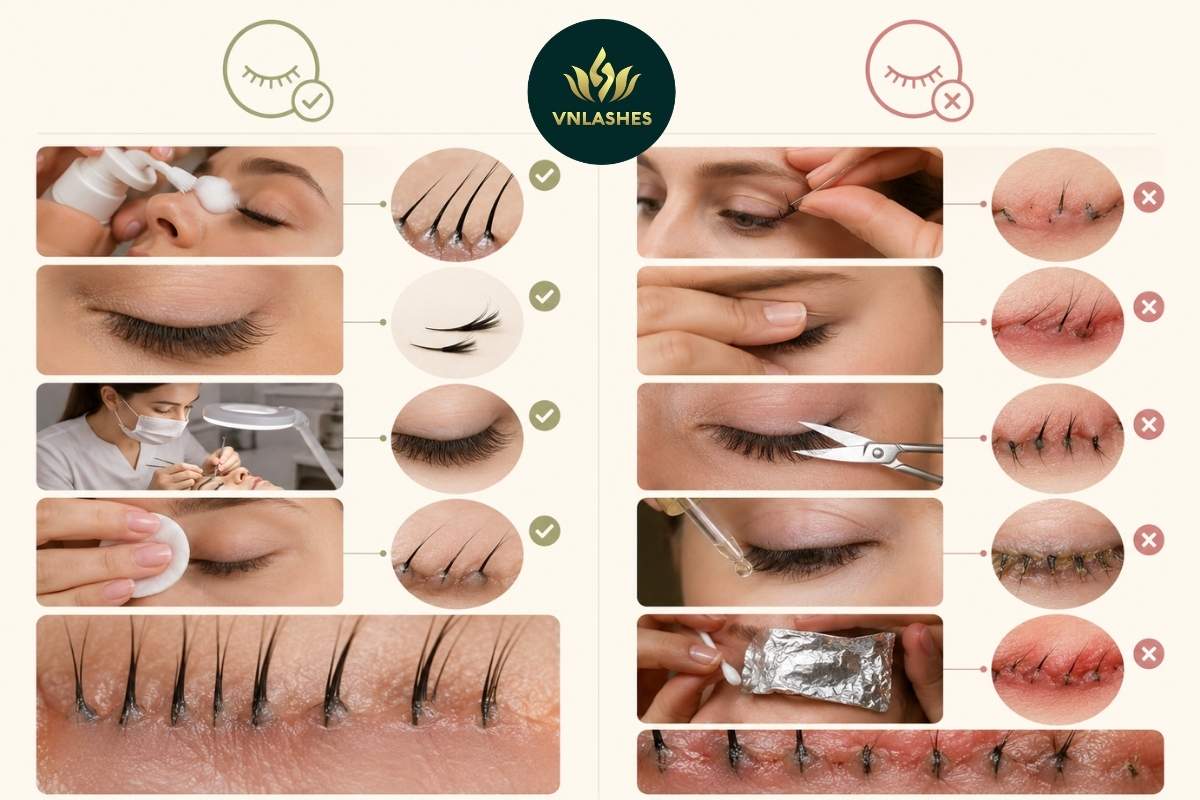
Do and Don’t Checklist for Lash Extension Removal
Do
- Clean your lash line gently with a lash-safe cleanser.
- Let loose extensions shed naturally.
- Contact a professional lash technician if you feel discomfort.
- Use aftercare products recommended by your salon.
- Keep your hands and eye area clean.
- Ask your lash artist before using any remover near your eyes.
Don’t
- Do not pull, pick, twist, or cut lash extensions.
- Do not use harsh chemicals near your eyes.
- Do not use expired or unknown lash removers.
- Do not rub your eyes aggressively.
- Do not attempt DIY removal if your eyes are red, swollen, or irritated.
- Do not follow unsafe online hacks without professional guidance.
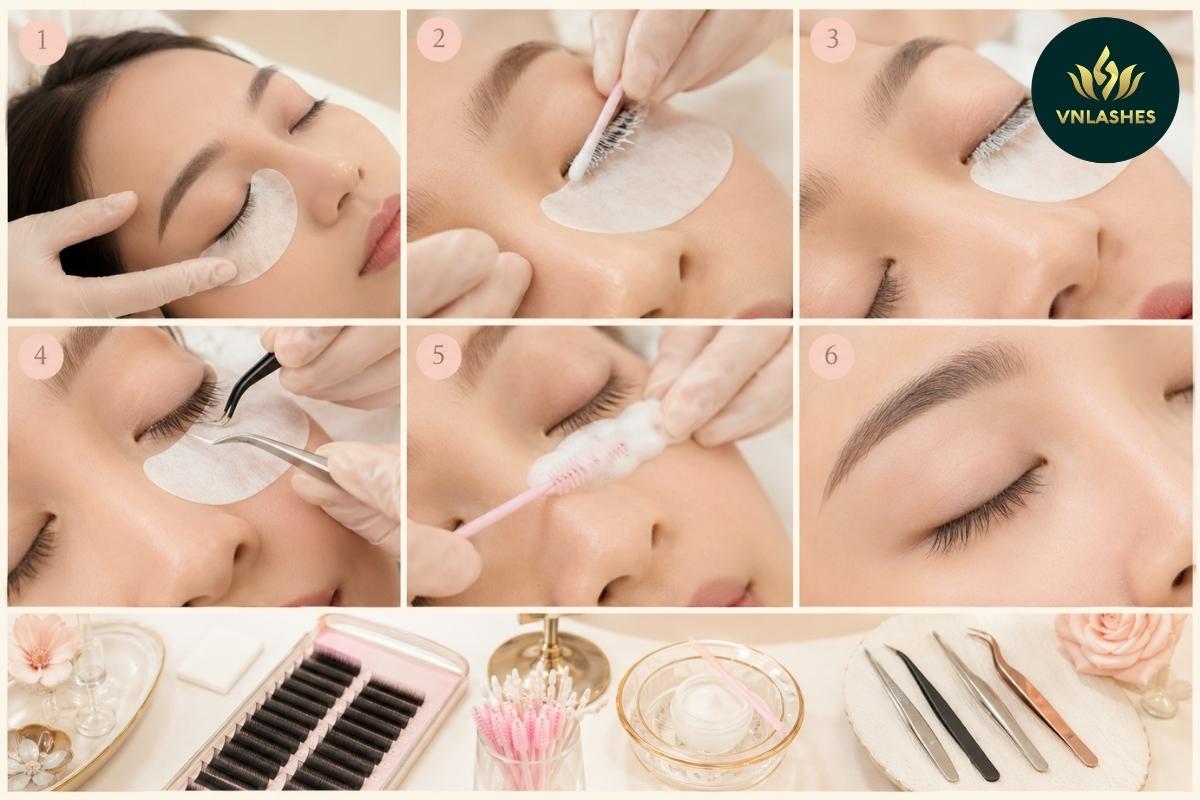
How Professionals Remove Lash Extensions Safely
Professional Lash Removers
Trained lash artists use gel or cream removers to break down lash adhesive safely.
There are two common types:
Gel Lash Remover
Gel remover has a lighter texture and is often used for small areas or partial removal. It works well when only a few extensions need to be removed.
Cream Lash Remover
Cream remover is thicker and more controlled. It is commonly used for full lash extension removal because it is less likely to move or drip.
For professional salons and private label lash brands, cream remover is often a preferred aftercare product because it supports safer and cleaner removal procedures.
Professional Removal Process
A trained lash technician usually follows these steps:
- Protects the under-eye area
- Keeps the client’s eyes closed
- Applies professional remover carefully to the adhesive area
- Waits for the adhesive bond to break down
- Gently slides the extensions off
- Cleanses the lash line
- Checks the natural lashes
This process requires skill, product knowledge, and hygiene control. That is why professional removal is much safer than removing lash extensions at home.
What to Do If You Cannot Visit a Salon
If you truly cannot go to a salon, do not force the extensions off. Instead, focus on gentle care and natural shedding.
Clean Your Lashes Gently
Use a lash-safe cleanser or lash shampoo to keep the lash line clean. Clean lashes help reduce buildup and support healthy natural lash shedding.
For salons and lash brands, adding professional aftercare products such as lash shampoo, cleansing brushes, and remover guidance can help customers avoid unsafe DIY removal.
Avoid Pulling or Rubbing
Do not twist, pick, or rub the extensions. Even loose extensions should be left alone unless they naturally fall out.
Avoid Heavy Eye Makeup
Mascara, eyeliner, and oily makeup removers can make the lash line dirtier and harder to clean. Keep your eye area simple until most extensions shed naturally.
Contact a Lash Technician for Advice
Some lash artists offer mobile appointments or emergency removal. If your lashes feel painful, itchy, or swollen, contact a professional as soon as possible.
When You Should Never Remove Lash Extensions at Home
You should avoid removing lash extensions at home if:
- Your eyes are red, swollen, or painful
- You recently had an allergic reaction
- Your extensions are volume or mega volume sets
- You used strong professional adhesive
- You do not know what products are safe near the eyes
- You are tempted to pull or cut the extensions
In these situations, professional help is strongly recommended.
Best Choice by Business Type
| Business Type | Best Product Focus | Why It Matters |
|---|---|---|
| Lash salons | Professional cream remover and lash shampoo | Helps technicians remove extensions safely and keep clients’ lashes clean |
| Lash academies | Training kits with remover, cleanser, and aftercare tools | Teaches students proper lash removal and hygiene standards |
| Beauty distributors | Wholesale lash aftercare products | Adds high-demand products to existing lash supply collections |
| Private label brands | OEM lash shampoo, remover, and packaging | Builds a complete branded aftercare line for end customers |
| Online lash sellers | Client education content and aftercare bundles | Reduces customer mistakes and improves brand trust |
B2B Opportunity: Why Lash Aftercare Products Matter
For lash businesses, educating customers about removing lash extensions at home is not only helpful, but also important for brand trust.
When clients do not understand proper removal, they may damage their natural lashes and blame the extensions, adhesive, or salon. This is why lash salons, distributors, and private label brands should offer clear aftercare guidance.
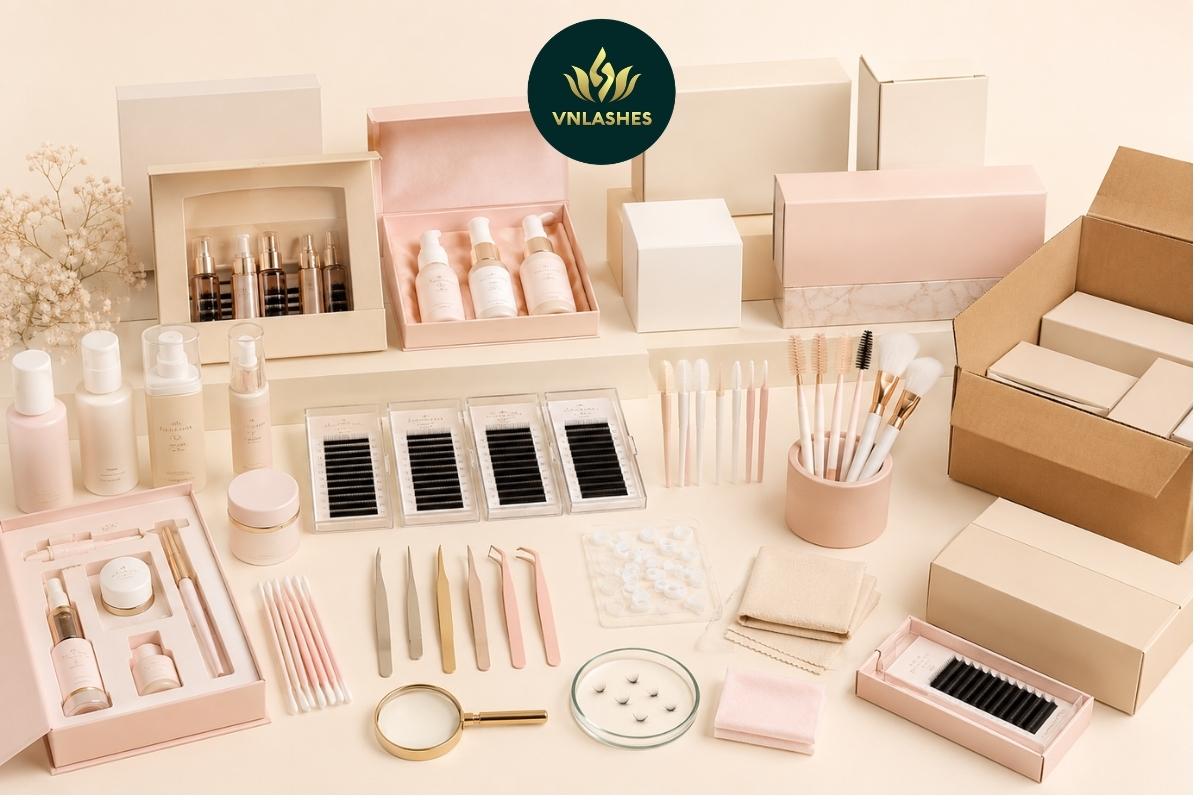
Professional aftercare products can include:
- Lash shampoo
- Cleansing brushes
- Cream remover for professional use
- Gel remover for trained technicians
- Aftercare cards
- Private label packaging
- Sample kits for salons and academies
As a wholesale lash manufacturer, VNLASHES supports B2B buyers with lash extensions, aftercare products, OEM packaging, and private label solutions for professional lash brands.
MOQ, Sample Order, and Lead Time for B2B Buyers
For lash salons, distributors, academies, and private label brands, VNLASHES offers flexible wholesale and OEM support.
- Standard wholesale orders: from 10 boxes
- OEM/private label orders: from 100 boxes
- Sample orders: available before bulk production
- Lead time for 10–300 boxes: usually 3–5 business days
- Lead time for 300–1000 boxes: usually 5–7 business days
- Lead time for larger orders: usually 7–10 business days
This helps new lash brands test product quality, packaging, and market demand before scaling to larger wholesale orders.
Wholesale and OEM Lash Aftercare Solutions
VNLASHES works with lash brands, salons, academies, and distributors that need stable supply and private label support.
We can support:
- Wholesale lash extension products
- OEM and private label packaging
- Lash shampoo and aftercare product sourcing
- Professional lash remover options
- Custom branding for lash product lines
- Sample orders before bulk production
If you are building a professional lash brand, aftercare products are a smart add-on. They help increase order value, improve customer experience, and create a more complete product system.
FAQ About Removing Lash Extensions at Home
Can I remove lash extensions at home safely?
It is not recommended. Removing lash extensions at home can damage natural lashes if you pull, pick, or use the wrong product. Professional removal is the safest option.
Can oil remove lash extensions?
Oil may weaken the bond slightly, but it usually cannot fully dissolve professional lash adhesive. It may leave residue and clumps behind.
Will my natural lashes grow back after bad removal?
In most cases, natural lashes grow back with the normal lash growth cycle. However, repeated pulling or damage can make the lash line look thin for a period of time.
Is cream remover better than gel remover?
Cream remover is often preferred for full removal because it has a thicker texture and better control. Gel remover can be useful for partial removal or small areas.
What should salons tell clients about DIY lash removal?
Salons should advise clients not to pull or pick their extensions. They should recommend professional removal and provide proper lash cleansing instructions.
Final Thoughts
Removing lash extensions at home may sound convenient, but it is not the safest choice. The biggest risks include natural lash damage, eye irritation, adhesive buildup, and poor removal results.
For individual clients, the best option is to book a trained lash technician. For lash salons, distributors, and private label brands, the best strategy is to educate customers and offer professional aftercare products.
VNLASHES provides wholesale lash extensions, OEM/private label lash products, lash trays, premade fans, and aftercare product solutions for global B2B buyers.
Need professional lash products for your brand? Contact VNLASHES to request samples, wholesale pricing, or OEM/private label support.


Bài viết liên quan
Magic Fan And Zero Time Promade Fan – A Faster, Time-Saving Lash Extension Solution
In the professional lash extension industry, application speed and product consistency are important factors for...
Oct
Custom Magic Fans Manufacturing and OEM Services: Production Process
When sourcing Magic Fans in bulk, buyers need more than just an attractive lash tray....
Aug
Lash Extension Removal: Common Mistakes and Safe Techniques
Lash extension removal is an important part of professional lash care. When extensions are removed...
Jul
Lash Foam Cleansers: A Practical Guide for Lash Professionals
Lash foam cleansers are essential products for cleaning natural lashes, eyelids and eyelash extensions. They...
Jul
Lash Adhesive Remover: A Must-Have Product for Professional Lash Businesses
In the lash industry, a beautiful lash set is not only about application. Safe, clean,...
Jul
L Family Special Curl Lashes: LJ, LB, LC and LC+ Guide
L Family Special Curl Lashes are a progressive curl collection created for lash professionals who...
Jul